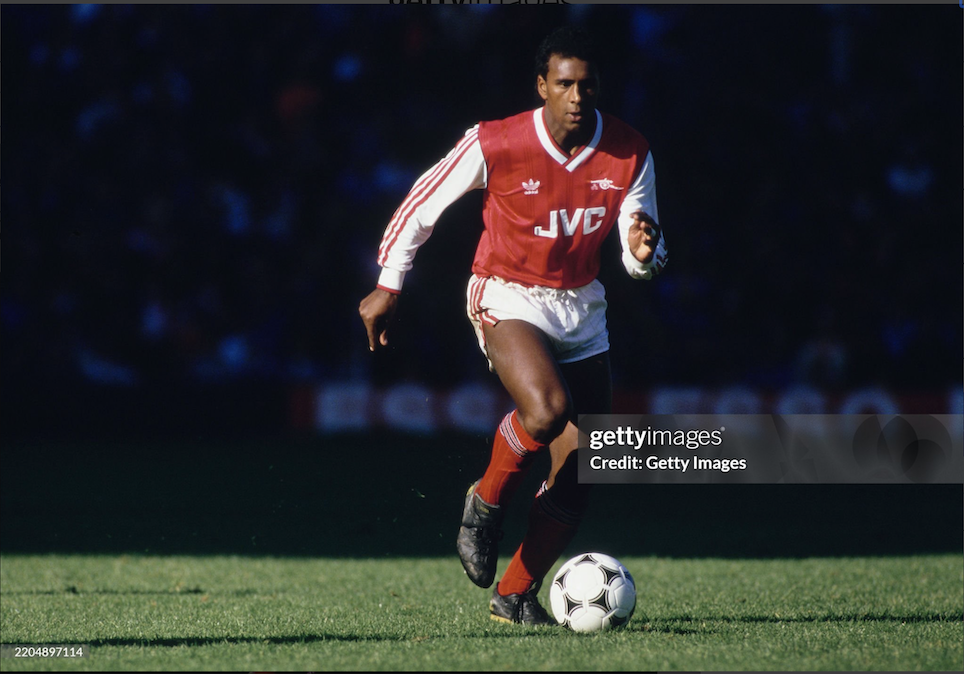
At certain times we have seen a plentiful supply of homegrown players coming through , many starting at a young age and building their careers. Our first double team was composed entirely of British players and eight came through the ranks at Arsenal, nine if you count our substitute at Wembley, Eddie Kelly. In 2002, five of the regular team were British and three homegrown. The Invincibles had Cole as our homegrown regular player and a few other squad players in Parlour, Keown and Bentley but the majority of the side were foreign. We had a wonderful mix of homegrown players in George Graham’s side and one, David Rocastle holds a special place in our hearts because he sparkled in our two title-winning sides but started to fall prey to injury and it was suggested that an arthritic knee condition was behind the decision to sell him to Leeds, which broke so many hearts at Highbury. Rocky was a special player and person and his premature death is one of the saddest moments I have experienced in my time as an Arsenal supporter.
Some foreign players join at such an early age that they feel very much one of our own and a very good example was Cesc Fàbregas. Arsène Wenger had a remarkable grasp of the talent emerging around Europe and persuaded Cesc who was hugely admired at the Camp Nou that he could accelerate his career by joining Arsenal. Fàbregas had graduated from Barcelona’s famed La Masia academy in September 2003, aged just 16 years and 177 days. Arsène Wenger had spotted his exceptional technical ability and believed Arsenal could provide a pathway into senior football that Barcelona couldn’t yet offer him.
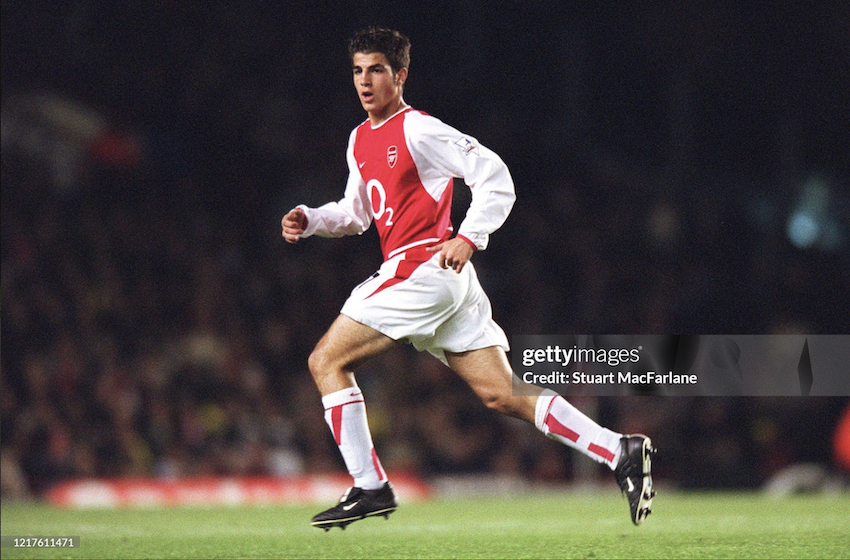
He made his first-team debut against Rotherham United in the League Cup on 28 October 2003, becoming Arsenal’s youngest-ever first-team player at the time. I remember that first game. A diminutive fellow with a mullet looked an unlikely superstar but when the game began his ability to play with his head up, an exquisite first touch and eye for a pass marked him out as a huge prospect. Remarkably, he scored on his next appearance, against Wolves, becoming Arsenal’s youngest ever goal scorer at the time.
The fast track opportunity accelerated Fàbregas’s development. In 2004–05, aged only 17, he played 33 Premier League matches, scoring twice. He was no longer simply a promising youngster – he was becoming an important member of Wenger’s midfield. He won what was to be his only major honour with Arsenal in the 2005 FA Cup Final but his greatest early achievement came in 2005–06.
He played a major role in Arsenal’s run to the Champions League final, including the famous quarter-final against Juventus, when Arsenal eliminated Fabio Capello’s formidable side and Fàbregas dominated Patrick Vieira in midfield. He also started the final against Barcelona in Paris at just 19 years old. After Thierry Henry’s departure in 2007, Fàbregas increasingly became the creative heartbeat of Wenger’s side. The 2007–08 season was arguably his breakthrough as a genuine world-class midfielder.cHe scored 7 Premier League goals and supplied 17 assists, while contributing 13 goals in all competitions.
His football was wonderfully suited to Arsenal. He had an exceptional range of passing, outstanding vision , great maturity and game management and an increasing eye for goal. The 2007–08 Arsenal team played some magnificent football and looked capable of winning the Premier League, but the Eduardo injury and subsequent loss of momentum contributed to the title challenge fading. Arsenal eventually finished third, after spending much of the season at or near the top. Fàbregas was appointed Arsenal captain in November 2008, following William Gallas’s removal from the captaincy (well deserved as Gallas’s meltdown at Birmingham had a huge effect on team morale). He was only 21 years old, making him Arsenal’s youngest-ever captain. It was an extraordinary responsibility for someone who had been playing senior football for only five years. Unfortunately, the 2008–09 season was disrupted by a serious knee injury suffered against Liverpool in December.
His greatest Arsenal season was 2009–10. This is probably the season that best demonstrates just how good Fàbregas became. He produced 15 Premier League goals and 13 assists, an astonishing return for a midfielder. His most memorable individual performance came against Aston Villa in December 2009. He came off the bench despite carrying an injury and scored twice, including a wonderful free-kick, to rescue Arsenal’s position in the match and then had to leave the field injured. It became almost symbolic of that period: Fàbregas was carrying an enormous creative burden.
By this stage Barcelona wanted their former academy player back.
Fàbregas was understandably attracted by the possibility of returning to his boyhood club, particularly after becoming a World Cup winner with Spain in 2010. But Arsenal resisted.. and Fabregas had previously signed a seven year contract in the days before Chelsea made such things commonplace! He remained for the 2010–11 season, although injuries restricted his appearances. He still produced 3 Premier League goals and 11 assists as Arsenal came agonisingly close to ending their trophy drought.
They reached the League Cup final against Birmingham City in February 2011. Fàbregas played despite injury, but Arsenal lost 2–1 after the infamous defensive mix-up between Wojciech Szczęsny and Laurent Koscielny. That proved to be Fàbregas’s last realistic opportunity to win a major trophy with Arsenal although he played a massive part in that wonderful night when Arsenal beat Barcelona 2-1 in the first leg of their last 16 game in the Champions League.
In August 2011, the inevitable happened and Arsenal finally agreed to sell Fàbregas to Barcelona for a deal worth around £35 million, with potential additions.
Arsenal’s own historical records list him with 303 appearances, including 266 starts and 59 goals. He is credited with 70 assists in the Premier League. He had a successful career with Barcelona but was never the major influence he had been at Arsenal and he returned to England to play for Chelsea in 2014. We had recently signed Mesut Özil and rejected the opportunity to re-sign him. Fàbregas won two Premier Leagues with Chelsea but has always appeared to have huge affection for Arsenal when commenting as a pundit. He has been a highly impressive young coach with Como in Serie A and has taken them into the Champions League. If I had to suggest the next manager of Arsenal Football Club, it would be Cesc Fabregas. You heard it here first!
Our next prodigy is a tale of what might have been rather than one of glittering achievement. It is the story of Jack Wilshere.
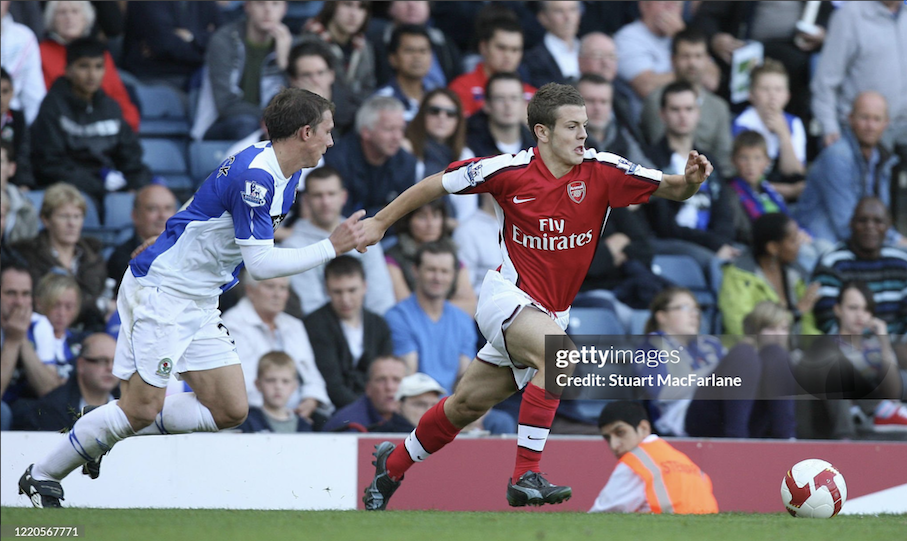
Jack joined Arsenal’s academy at just nine years old and progressed exceptionally quickly. He made his first-team debut against Blackburn Rovers in September 2008, aged 16 years and 256 days, becoming Arsenal’s youngest-ever league player at that time. He had the best left foot I had seen since Liam Brady (OK, Özil might have run him close) and an incredible surge after he had beaten an opponent.
He was only 16 when he made his debut, but Arsène Wenger clearly regarded him as an exceptional talent. In 2008–09 he also helped Arsenal win the FA Youth Cup, scoring in the final against Liverpool. Wilshere’s first team opportunities increased during the following season, although Wenger was understandably careful with such a young player. He was sent on loan to Bolton Wanderers in January 2010, where he made 14 Premier League appearances. The spell was valuable because it gave him regular first-team football and experience of playing every week against physically demanding opposition. Allardyce had departed the club so Jack wasn’t infected with Fat Sam’s football ‘philosophy’.
2010/11 was the season when Wilshere appeared to announce himself as a genuine world-class midfield prospect.
He became a regular alongside Cesc Fàbregas, and his performance against Barcelona at Emirates Stadium in February 2011 became perhaps the defining performance of his Arsenal career. Arsenal won 2–1, and the 19-year-old Wilshere was outstanding against Barcelona’s midfield, displaying remarkable composure, technique and courage against players such as Xavi, Andrés Iniesta and Sergio Busquets. He was arguably the best player on a field full of world-class talent.
His performances earned him:
- PFA Young Player of the Year, 2010–11
- PFA Premier League Team of the Year
- England recognition and, eventually, a place in the senior international side.
It really looked as though Arsenal had found their next great midfielder. Sadly, a recurring feature of Wilshere’s career became a succession of serious injuries.
A significant ankle injury in 2011–12 effectively wiped out the entire season. Wenger subsequently had to manage his rehabilitation extremely carefully. Wilshere himself later reflected on how frustrating it was to have established himself at such a young age and then lose a whole season.
He returned in 2012–13 but struggled to maintain the extraordinary momentum of his breakthrough, although Jack nevertheless produced some superb football during this period. One of his most memorable moments came in the 2–0 victory over Norwich City in October 2013, when he scored a magnificent flowing team goal involving a remarkable sequence of passes. I still think it is the best team goal I have ever seen, either live or on television.
He also scored the spectacular individual goal against West Brom that enabled him to win the Match of the Day Goal of the Season in successive seasons.
And, importantly, he finally got his hands on major silverware.
Wilshere was part of the Arsenal teams that won the FA Cup in 2014 and 2015. Those were particularly significant trophies for Arsenal because the 2014 FA Cup ended the club’s nine year wait for a major trophy.
Unfortunately, the injuries continued.
There were problems involving his ankles, legs and other areas, and he was increasingly unable to put together a sustained run of matches.
In 2016–17 he went on loan to Bournemouth, where he played regularly enough to rediscover some rhythm, but another injury curtailed his season.
He returned to Arsenal for 2017–18 and actually produced some encouraging performances. There was a feeling that Wenger might have found a way to bring him back into the team. But Wenger’s departure in 2018 changed the situation.
Wilshere later revealed that Wenger had told him that Arsenal would not offer him a new contract and advised him to consider finding a club willing to give him a longer-term deal. After 17 years at Arsenal, Wilshere left the club in the summer of 2018.
His final Arsenal statistics were:
- First-team appearances 197
- Goals 14
- FA Cups 2
The really interesting question is what might he have become?
This is where Wilshere’s career is particularly poignant.
At 18–19, he looked like something very unusual: an English midfielder with the technical ability and confidence to play Wenger’s possession football at the highest level. His brief England career under Roy Hodgson saw him excel on the international stage. Of all his great moments the Barcelona match is the obvious pinnacle. It was an incredible performance and made us realise the potential that he had. His close control, acceleration with the ball, ability to receive under pressure and willingness to carry the ball through midfield were exceptional.
But his body simply wouldn’t allow him the sustained run of football needed to fulfil that extraordinary potential.
And there is something rather fitting about his subsequent career at Arsenal: after retiring as a player in 2022, he returned to Arsenal as Under-18 head coach, helping develop the next generation of academy players. They could scarcely have a better mentor. He now manages Luton Town.
So, in a sense, Wilshere’s Arsenal story runs from nine-year-old academy player → youngest league debutant → teenage star → two-time FA Cup winner → injury-plagued senior career → Arsenal academy coach. For Arsenal supporters, though, I suspect he will always be remembered particularly for that night against Barcelona in 2011. It was the night when you could genuinely believe that Jack Wilshere might become one of the great English midfielders of his generation.
In 2017 I went to the FA Youth Cup semi-final second leg, a big victory over Blackpool that took us through to the Final. With about ten minutes to go Arsenal prepared a final substitution. The man next to me tapped me on the shoulder and pointed out a family group in front of us. “This boy is going to be very special,” he said, “That is his family there. They have been waiting for him to break into the first team since he was a little boy.” That boy was Bukayo Saka. Frankly I’d heard claims like this so often before, Graham Barrett, Paolo Vernazza, Gedion Zelalem and subsequently Charlie Patino were all going to be the next big thing. But Bukayo really was exactly that!
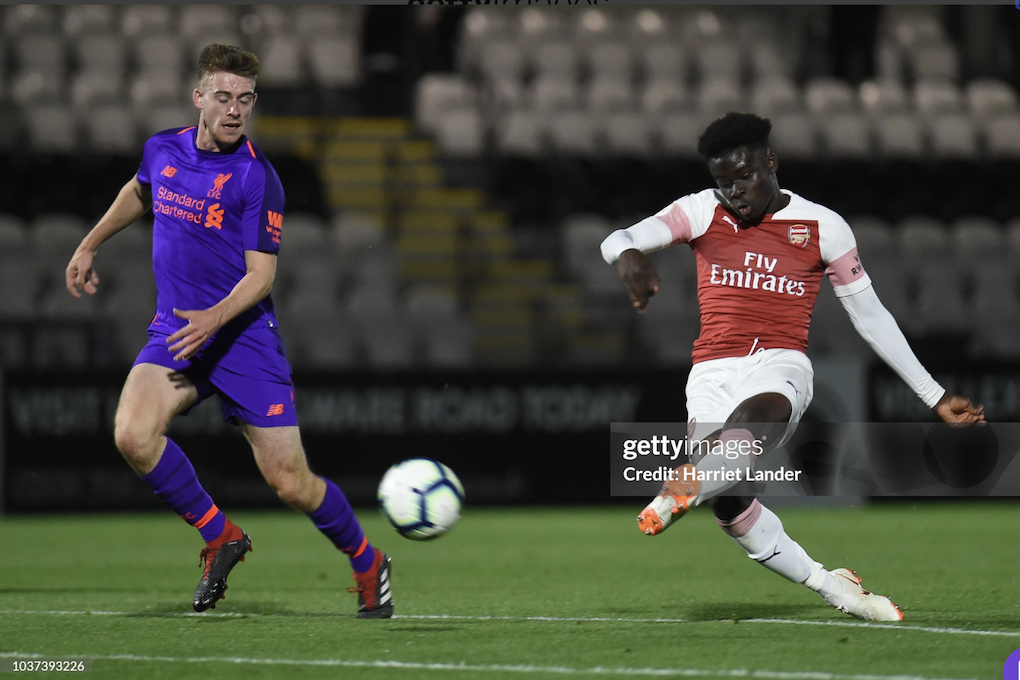
Saka joined Arsenal’s academy at eight years old in 2010 and progressed through every age group. He was already regarded as an exceptional prospect, frequently playing above his age group. Interestingly, he was used in several positions, including left-back, before eventually settling on the right wing.
He made his first-team debut under Unai Emery in November 2018, aged just 17, against Vorskla Poltava in the Europa League.
It wasn’t long before he became a regular. Not long afterwards he was an indispensable!
Under Mikel Arteta, Saka’s development accelerated dramatically. Initially used on the left, he eventually moved to his now-familiar right-wing position, where his combination of pace, close control, intelligence and ability to deliver the final ball made him indispensable.
The remarkable thing is how quickly his numbers developed. By February 2026, he had made 278 appearances under Arteta, more than any other player during Arteta’s Arsenal tenure, with 76 goals and 63 assists.
Bukayo was involved in Arsenal’s memorable 2020 FA Cup triumph. He was an unused sub in the Final but progressed to the Community Shield team against Liverpool where he set up Aubameyang’s goal.
The 2021–22 and 2022–23 seasons saw Saka establish himself as one of the Premier League’s outstanding young players.
His consistency was particularly impressive. Rather than producing occasional flashes of brilliance, he became a player Arsenal could rely upon almost every week.
By 2023–24 he had reached another level:
20 goals in all competitions, including 16 Premier League goals, made him Arsenal’s leading scorer in both categories.
He also became Arsenal’s principal penalty taker and one of the team’s major creative outlets.
The biggest milestone so far came in 2025–26, when Arsenal finally won the Premier League title, ending a 22-year wait for the championship.
Saka was a major part of the team that achieved it. The Premier League subsequently highlighted his journey from Hale End schoolboy to one of the stars of Arsenal’s championship-winning side. That gives him a particularly satisfying place in Arsenal history – an academy boy who stayed at his boyhood club and eventually helped bring the league championship back to Arsenal. Our Starboy!
His numbers are extraordinary.
One statistic particularly illustrates his importance.
In October 2025, when Saka made his 200th Premier League appearance, he scored against West Ham and reached 100 Premier League goal involvements for Arsenal — 55 goals and 45 assists.
By early 2026, his Arsenal totals had reached:
- 278 appearances under Arteta
- 76 goals
- 63 assists
- 20 goals in 2023–24
- *Premier League champion, 2025–26
- *FA Cup winner, 2020
And he has continued to add to those figures in 2026–27; after five league matches this season he has three goals.
Of course, Saka’s Arsenal career has been accompanied by a substantial England career.
He made his senior England debut in 2020 and subsequently became a major part of Gareth Southgate’s team.
His most painful international moment was undoubtedly the Euro 2020 final penalty shoot-out, when his penalty was saved by Gianluigi Donnarumma. The way Saka responded to that disappointment has become an important part of his story but he has since established himself as one of England’s leading attacking players. He scored a hat-trick in the third place play-off against France despite the nagging feeling many of us have that he was nowhere near fully fit during the tournament.
What makes Saka particularly special at Arsenal?
For me, the most interesting aspect of Saka’s career isn’t simply the statistics. It’s the continuity. He has graduated from Hale End youngster to first-team teenager to regular starter to England international to Arsenal’s principal attacking player to Premier League champion. That gentleman next to me back in 2017 was entirely correct!
And, unlike many modern stars, he has, to date, done it entirely at Arsenal.
There is also a fascinating parallel with the Jack Wilshere story we looked at earlier. Both were Hale End products who became first-team stars as teenagers. But whereas Wilshere’s Arsenal career was cruelly interrupted by injuries, Saka has so far been able to build season after season of elite-level football.
At 25, his Arsenal story is therefore far from finished — and the new long-term contract he signed in 2026 means Arsenal have secured the player who has become one of the defining figures of the Arteta era.
This look at special players who emerged at Arsenal as young stars and grew into major first-team players highlights a rich part of Arsenal’s heritage. Big money signings are exciting but the development of those who are genuinely one of our own is ultimately perhaps the most satisfying thing about supporting Arsenal . And now we see the emergence of Max Dowman, potentially the most exciting young player we have ever seen, someone marked out for stardom since his early teens. Let us hope Max goes on to reach his full potential. If he does he will be a glorious addition to our rich history of Wünderkinder!