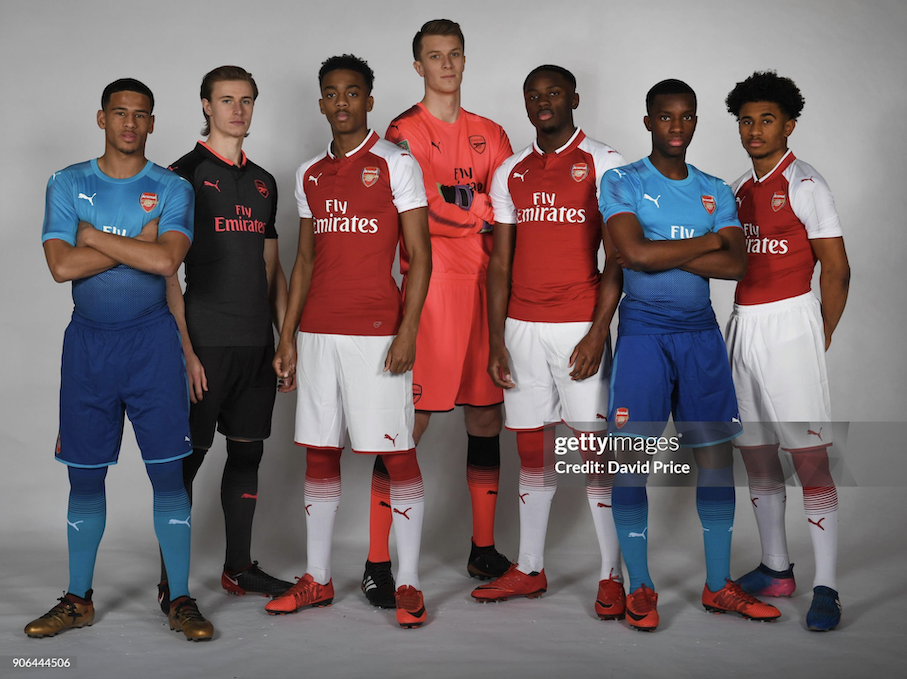
Over the years, I have been fortunate enough to see many players come through the ranks of the youth team and go on to become undoubted greats.
I was a little too young to see Charlie George come through but even so, social osmosis for a 5-year-old Islington boy made sure that I, along with everyone else in the playground, was aware of the greatness of Charlie. A few years later, we had the great Irish contingent to idolise – Brady, Stapleton and O’Leary. In those days, it was normal for top clubs to scout youngsters across the UK and Ireland, with Liam coming over at the age of 15 in 1971. Islington, and certainly the area around Highbury was very Irish at that point. In my primary school classroom, it used to take 5 minutes to get from the Mac’s to the O’s in the morning register, so in many ways Arsenal was perhaps something of a natural destination for these lads. Of course, by this point we already had Rice and Nelson and would go on to add others, such as John Devine. Aah, happy days!
After this golden period, there was something of a drought, from memory, until Paul Davis came along. He joined while at school and signed professionally in 1979, making his debut in 1980. He was a lovely languid player, but that laid-back appearance hid a core of steel. His debut came away at That Place, in a heavily changed side, necessitated by the fact that we would play at home to Juventus in the Cup Winners Cup in a game watched by 55,000 at Highbury, which saw us kicked off the park by a team which had so many Azzurri greats in it – Zoff, Scirea, Cabrini, Tardelli, Causio, Bettega and the laughably inappropriately named Claudio Gentile. Gentile can be rendered as “kind” or “fair” in English. Something he assuredly never was on the pitch. Away in Turin two weeks later was that glorious game in which the young Bermondsey boy Paul Vaessen, another Arsenal youth product, would famously score the winner. Returning to Davis, he was hugely unfortunate to come through at a time when we lost both Brady and Stapleton and were in a transitional period. As a result, he was forced to play in a dysfunctional team and for a while became the butt of a certain amount of barracking from the Arsenal crowd, some of it very unpleasant. Shame on you! On us!
As the youngest player in a frankly pedestrian midfield, he rightly ought to have been shielded from this criticism, but at the time far too many teammates were just not up to the job and left him out on a limb. On the other hand, perhaps it was exactly this tempering in the fire that helped make him the fine, strong player he was. Perhaps it also played a part in his subsequent mentoring, on and off the pitch, of other young Arsenal kids who came through a few years later, particularly the Black kids from South London with whom he shared a common background- Rocastle, Thomas and later Campbell. This was an undoubted golden era for Arsenal products. A bloke called Adams came through, as did Keown and Merson, along with Martin Hayes who never quite hit the heights of the others but deserves his place in the Anfield ‘89 season pantheon, having scored the crucial winner during the run-in, away at Middlesbrough. More recently, we saw the likes of Cole and then Wilshere, and more recently still, Iwobi, Maitland-Niles and then Saka and ESR. For sure, it’s a heritage of which the club, and we, ought to be proud.
For every one of the above-mentioned greats, however, there are far, far more players who started with dreams of playing in front of us, only to have those dreams snatched away. A 2023 study by Idsoccer Consultancy indicates that only 0.012% of boys playing in organised youth football will play a single minute in Premier League football. Less than 0.5% of players signed by professional teams as a whole at under 9 years old – already the cream of the crop – go on to play for the first team.
As a result of these numbers, it is unsurprising that youngsters coming through such hot-house treatment seek to clarify their pathways, the closer they move towards to key older age groups, particularly at 16 where they receive their first “apprentice” contract. Then again a couple of years later there is the first professional contract which may be offered. While most of us are suffering this same “culling” at these ages in terms of O (GCSE’s) and A levels in the UK educational system, the cliff edge for boys – becoming young men – is considerably more vertiginous, as shown by the numbers above. If the clubs are essentially culling numbers each year, it is only logical for those potentially on the receiving end to look after their own interests. By the time they get to youth team level, they will have seen a large number of friends already cut, some of whom will have struggled to find new clubs. Suddenly the childhood dream is confronted with harsh reality.
Thus, we have a situation where the two parties – player and club – engage in something of a dance. For all but the most talented – and therefore in demand – youngsters at this age, the power balance is firmly on the side of the club. For the small fraction for whom first team promotion is seen as the likely next step in their development, the balance is tilted in favour of the player. These players can, to a certain extent, make demands of the club. Chief of these has become that the club needs to set out a pathway to first team. For the top teams, this can be very difficult indeed, as invariably they will already have a top player – or multiple top players – in the position into which the budding young first teamer is likely to be suited. The incumbents will already have fought their way up the same near vertical slope themselves. We have reached a fork in the road at this point and for the player to continue at the club there needs to be a coincidence of desires.
The Loan Approach
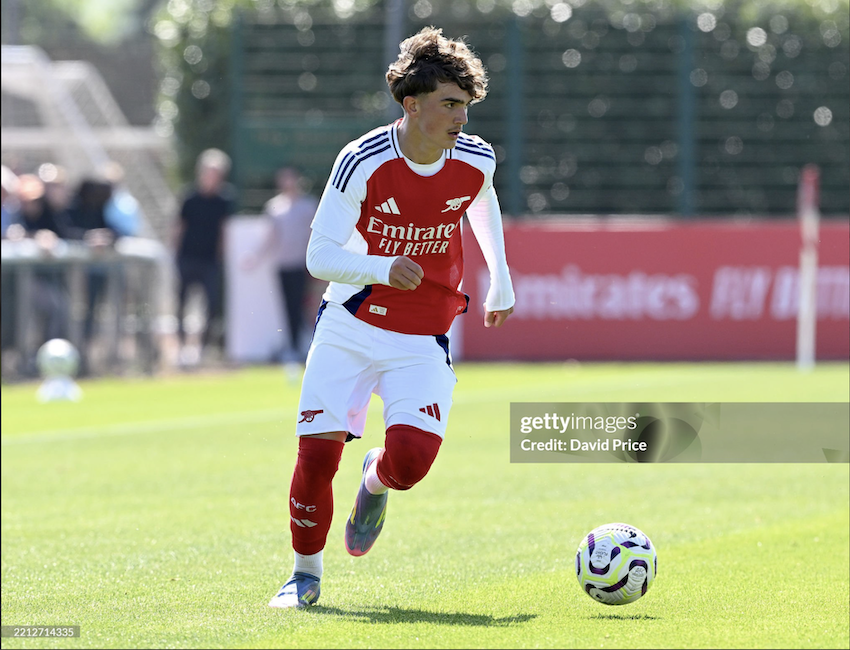
One pathway the club can offer to a young player considered too good for what used to be called reserve team level, but not yet ready for the first team is the loan. Lest we forget, at 15, Ødegaard moved to Madrid and played a total of 124 minutes in 2 seasons for the first team. This was followed by 3 seasons of loans at lower-level clubs in Holland before he made a breakthrough, while on a 4th season loan, at Sociedad, at the age of 20. Less haste, more speed perhaps.
At the same time, Arsenal don’t have a great recent history in sending players out on loan and then bringing them into the first team. Lord only knows what Wenger was thinking, if he was at all, when he sent Gnabry to West Brom to play for the high priest of low brow football that was Pulis. No wonder the player left. Most recently those players selected for a loan seem to be destined to leave the club. Brooke Norton-Cuffy looked a promising right back, but was sent out in loan to Lincoln at 18, followed by further loans to Coventry, Rotherham and Millwall before leaving for pastures new in Italy with Genoa in Serie A. Perhaps his experience is indicative of just how difficult it is to break through at a Premier League club, and Arsenal in particular. He would have seen Bellerin ahead of him, and then more recently White, Tomiyasu and Timber – All full internationals. Another example is that of Balogun. He was tearing it up as a striker at under-21 level and didn’t get a loan until he was 21, spending a season at ‘Boro, before another at Reims where he really broke through. Impatient for first team football, he was sold to Monaco at 23, for a reported fee around €30m. One of Edu’s better sales.
One loan which might be seen as instructive by the parents and advisers of bright young midfield rising stars is that of Charlie Patino. Seen for a number of years as being a star in the making, Patino was sent on loan at 19, after a couple of substitute first team appearances, to Blackpool in the Championship. Here he shone and was regarded so highly by the fans that he quickly had his own song. The following season he was also sent out on loan, also to the Championship but this time to Swansea City. This time his experience wasn’t so great and he found opportunities limited. At the start of last season at the age of 21 he left for Deportivo La Coruna. He made 7 appearances in the Spanish second division.
All of the players highlighted above were considered exceptional and all have gone on to play at a high level. None of them can be said to have seen a clear pathway to the first team. It is of course hugely pleasing to see them making a career in high level football and hopefully earning a good living. There is no hardship involved in living in Monaco or Genoa or La Coruna. The loan route is certainly a pathway which both club and player can use to develop further. It is also, however, an opportunity to put the player in the shop window, and it seems as though this has been the favoured approach at Arsenal for a while.
Leaving at the End of the Apprenticeship, Before The Initial Breakthrough
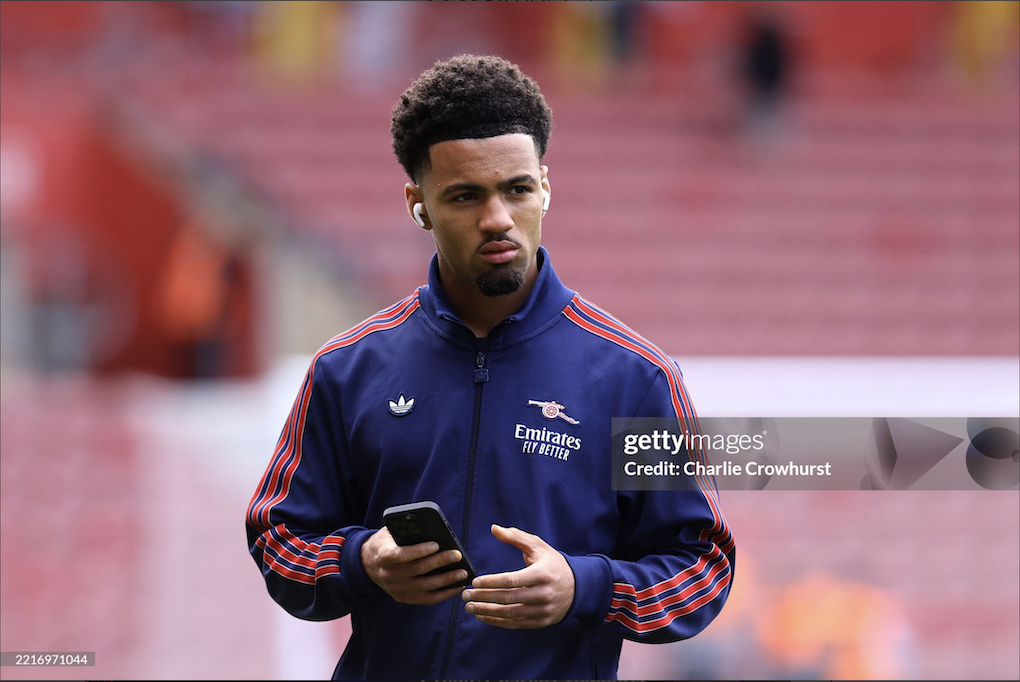
The road to professional football success is strewn with examples of players who have seemed to have it all in front of them but who subsequently failed to meet their potential. Often this is through poor decision making. Many of these kids-becoming-young-men are from backgrounds which haven’t afforded them or their families exposure to a wider commercial world. It can be as daunting for working class parents as it is for the boys themselves to be faced with a wall of information relating to financial and investment advice, legal advice, as well as agents and commercial offers. How are they to discern what is in their best interests when they have a limited frame of reference? Finance is an important building block of the whole package they seek. It is tempting for a kid and his family to be blinded by the numbers and look at the short term. However, for the most talented and in-demand, understanding how the club in question sees the development of the player is the key element.
There are a number of building blocks which the club can put in place to assist on the pathway. Gently folding players into the first team set up is one such. One aspect is inviting the more talented players to join on pre- or mid-season training trips. At these, the young players get to mix with and hopefully learn from the first team in a less pressured environment. It shows that the club considers the player highly. The club also have an opportunity to assess the players social and mental maturity in an alien environment. Each year it is instructive to see which of the youngest players are allocated the limited number of these slots. It is a signpost on the way, however, and not the destination. In the past we have seen many promising players taken along, who have then not made the final cut.
Arsenal clearly also use intra-season first team training access as a significant tool for winning young players over by showing that they are regarded as being on a first team pathway. From the club’s perspective, both of these approaches are as much developmental as assessment opportunities. There is no such thing as a free lunch. MLS, Nwaneri and most recently Max Dowman have all been invited into first team training sessions at certain times while in their youth team phases. Clearly this has be managed as they are still boys at this point and even if they have an advanced degree of physical development, it is unlikely that they will be able to sustain extended exposure to the power of full grown men. There are exceptions of course. We think back to the adolescent Wayne Rooney. These tend to be the exceptions that prove the rule, however. Neither MLS, Nwaneri nor Dowman stood/stand out as being physically super-developed. Most recently, we have seen Chido Obi leave for the perceived greener pastures of Manchester United (you, boy, at the back, why are you laughing?). He was clearly physically in advance of his years while at Arsenal and played for the U-21’s while only 15 and attended first team training around this time. His sheer physical size stood out at this point. Clearly he was being shown a pathway, one trodden by the likes of Fabregas, Wilshere and to a lesser extent thus far, Nwaneri. However it didn’t seem to be enough and he eschewed signing the pro-contract he was offered in order to move to United last summer, for whom he made 7 appearances for the first team, totalling 165 minutes, as well as another 53 minutes in the FA Cup 5th round match against Brighton, also with no goals, all by the age of 17 and a half. He also played 360 minutes at U-21 level, scoring twice and assisting once. It has to be said that even with our paucity of options up front, it is difficult to see how he would have gained the first team minutes with Arsenal. Perhaps there were other reasons behind Obi’s move. Perhaps he looked at Højlund and Zirkzee and fancied himself against such clearly limited opposition. Perhaps the financial offer, in the light of the competitive journey through youth football as set out above, was just more compelling. We will never know. He has made his choice and good luck to him. At the same time, Nwaneri (of whom, more later), born in the same year but 8 months older, played 895 Premier League minutes, scoring 4 times and assisting twice in a team challenging for the Premier League and 224 Champions League minutes as well, scoring twice for a team which reached a CL semi-final. If you’re good enough you’re old enough. Clearly, Arsenal offer a pathway, but it is highly selective and needs to be appropriate to the player. I am sure that Max Dowman and his family and advisers are watching closely. Dowman looks to me to be in the mould of a number 10 type player, as perhaps does Nwaneri, rather than the wing role each has been played in for the most part when playing above their age groups.
Post First Pro-Contract, Pre- First Big Contract
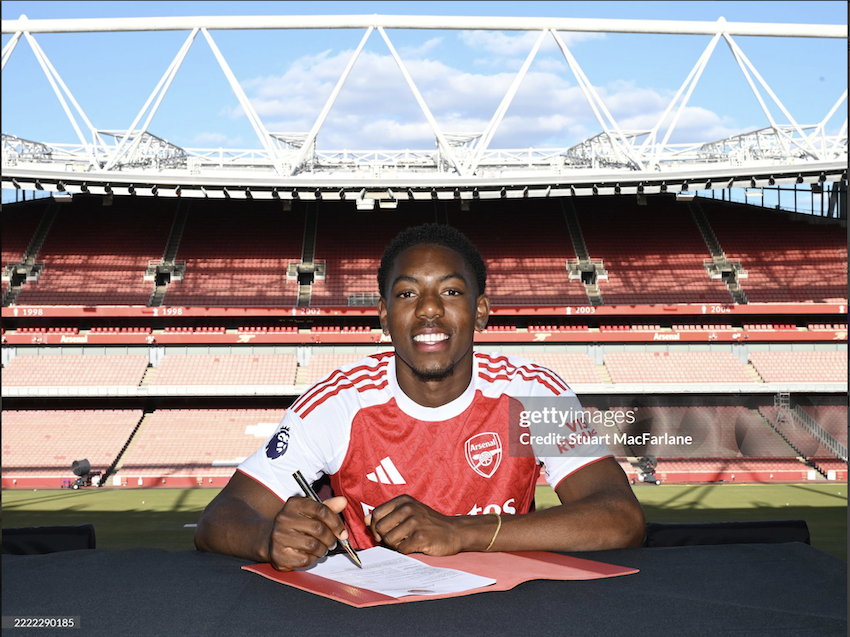
This is a key turning point for many players. They may have been invited on pre- and mid-season tours; been on the bench multiple times; made a few appearances for the first team; have individual development plans for the most talented. As such they can almost, but not quite, touch the big time and the fame and riches the upper reaches of the game can offer. They may well be impatient for it. They may well have seen others get close and then not make the final push and will be determined that this doesn’t happen to them. Crucially, they are likely to have offers from other clubs, against whom they will have been playing at U-21 level, as well as being watched at any or all of the junior international levels up to u-21. The club will need to convince them that there is a pathway to the first team if it is to have any chance if keeping them. How do you do that when someone like Bukayo Saka is ahead of them in their favoured position? This, I suspect, is exactly the position two shining stars of the youth set up have faced in the last few years. First Omari Hutchinson, who left for Chelsea just short of his 19th birthday. At this age, when you leave out of contract, the signing club is required only to pay a fee to cover development costs for the player. They are, to all intents and purposes, free transfers. Something of an enigma, this decision, given that he had already been released twice by Chelsea by the age of 10 and that their bulk-buying of talent at first team level makes it difficult to see how his pathway into their first team could possibly have been clearer than had he stayed at Arsenal. Perhaps there were other forces in play. Indeed, having signed for Chelsea in the summer of 2022, he went on to play a grand total of once in each of the Premier League and FA Cup. Both times as a sub, for a total of 51 minutes. He was then loaned and then sold to Ipswich where he has subsequently become a regular. The galling thing here is that he was sold for a reported club record fee for Ipswich. A clear case of Arsenal leaving money on the table. Could the set-up not have figured a way to orchestrate such a loan? Indeed, this approach may well have been replicated a mere two years later, when Amario Cozier-Duberry decided not to sign his second pro contract and leave for Brighton, also on a relative free. ACD too had Saka in front of him. In his case, Brighton didn’t even try to integrate him into the first team and simply put him out to loan at Blackburn last season and Bolton for the coming season. Both clubs have a record of flipping players for outrageous profits. I suspect both players may well have been offered contracts more fulsome than we offered, given that an obvious pathway wasn’t available directly at their new clubs either. Food for thought.
Next in line in this category is Ethan Nwaneri. The difference with him is clear in that he has made the transition firmly into the first team and is now fighting for a starting role. He has both Saka, again, and Ødegaard ahead of him. Both generational talents themselves. Ødegaard will only be 27 in December and Saka is still, unbelievably, only 23 until September. How does the club sell a genuine first team pathway to a player who has himself been regarded as a generational talent at all levels thus far? We cannot afford for him to run down his contract and leave for a relative pittance. He will know that. He will also know that he can walk into a first team slot at any club outside the top 4, on a particularly good financial deal. Or tread the well-worn path to European clubs with a record for player development, such as Dortmund. He would almost certainly attract more first team playing time. He wouldn’t necessarily have the degree of physical pressure on him, and he could build into his contract a sell-on in 2 years giving him a route to global stardom. This will come down to whether the club’s representatives, chiefly Berta and Arteta, can convince him that he is best served by taking an apprenticeship at a club genuinely pushing for trophies, European and domestic, and that he will be allowed space and time to develop physically and mentally. Arteta will be looking to call on examples he has seen at City. Foden springs to mind. At Nwaneri’s age, 18, Foden had played 18 times in the Premier League for City, for a total of 384 minutes, with 3 starts. Nwaneri has played 28 times in the league, with a total of 910 minutes and 11 starts. More than comparable. Martin Ødegaard is currently 26 and a half and approaching his peak. It is not difficult to see how Nwaneri can be groomed to replace him over a decent time period, if he has the patience to stick around. Arteta and the team will explain about the problems of overplaying at an early age. We can all remember the cases of Fabregas and Wilshere who were played, out of necessity perhaps, to destruction, far too early in their careers. The player and his advisers will also need to see a contract which backs up this view financially. Over to you, chaps. Get it done.
As the club continues to develop and moves to being a genuine European top table mover, providing Academy players with a route to the first team will become increasingly difficult. As I write, we have just signed Christian Norgaard, a full Norwegian international and captain of Brentford, effectively to understudy for Martin Zubimendi, club captain of his former club and Spain regular. This makes it imperative for us to offer the best deal to genuine talent and convince young players that their best interests lie with us. We have recently managed to do this very successfully with Myles Lewis-Skelly. The next players are clearly Nwaneri and then Max Dowman. Neither of these players look like loan candidates as they are both regarded as being in the very top drawer of national talent. As a result, they need to be convinced of short, medium and long-term plans customised for each. They also need to be remunerated appropriately. At the same time, you can’t have a 15-year-old being paid the same as the first team captain. Agents are not renowned for being subtle and there is, no matter who they are (with the possible exception of MLS’ mother who is also his agent, I believe) the possibility of an inherent conflict of interest. This is what Berta and his team get paid the big bucks for. A job, frankly, to which they are welcome.
We need to maximise returns for those in the next category – not prodigies, but highly talented players who, with the right nurturing, can develop into first team players, either here or elsewhere. In these cases, the loan route may well be more appropriate. We can’t just allow money to be left on the table. Hopefully, our new Director of Football can oversee an improvement in what, in the past, has largely been a disappointment.
Finally, we as fans need to accept that even young players, once they have gone through the meat-grinder of the Academy system, don’t necessarily retain the same blind love of the club that we do. Some will simply choose to leave. What we have to do, in a highly competitive market, is make that decision as difficult as possible.
There are no easy answers.









It seems like the good work is continuing….
https://www.arsenal.com/news/marcell-washington-signs-professional-contract
Looks like some serious write-up there. Think I’ll save it for my train journey tomorrow. Cheers!
Superb, CER. Comprehensive, interesting and very readable with some great detailed examples of names we all know and have probably, mostly (me) wondered about. I hope Ethan Nwaneri is as relaxed about signing a deal as his dad appears to be.
Thanks, chaos. I thought it merited a long write up. Good for train journey, the test match lunch period or the gap between tennis matches at Wimbledon!
Chaps, not chaos!
Although possibly Freudian.
A thoughtful and thought-provoking piece, CER. Success for a club is the acquisition/development/retention of the 0.012%. I struggle to think of another industry that faces a similar employment challenge, especially since child labour became illegal. 🙂
The secret sauce for a youngster may be having a mother like MLS’s. She gave up a job as an IT professional to do an MBA in Sports Management and then qualified as an agent so she could oversee his career. Quality clearly runs through that family.
CER
Another in the long recent run of superb articles . This raises so many key points.Just to tackle a few disparate ones .
The conventional wisdom was that home grown players got better support and receive more patience from the fans than those transferred in . One of my favourite home grown players was Jon Sammels . Slightly older Holics like Clive , Pangloss and Uply will remember him and the excitement he brought . He left because of continual booing from parts of the home crowd . After five plus years of stellar service . Awful – it isn’t just Madueke that gets a hard time . Moral -Arsenal have always had a fair number of arseholes in their support
There is always a desire to find the next superstar-remember the multi-national Gedion Zelalem? He looked, like Patino , a world beater but he faded from view quicker than Charlie . Moral is I think that for every Brady or Wilshere there are literally thousands who don’t make it and sometimes you can’t tell until they break through that really they aren’t good enough to sustain it
When Dave Faber was alive he asked me to write about my nine year old grandson and his encounter with the Arsenal Development squad . Six teams of tiny hopefuls egged on by ambitious parents . Don’t put your son on the stage Mrs Worthington get him to become a Premiership footballer – looking at the odds in Julian’s article it shows how hard it is. Lots of little hearts broken and lots of dreams dying. Twas ever this but it’s tougher than ever now . My grandson’s team beat Arsenal 7-0!
Good stuff CER.
I struggle to reconcile the difficult and nuanced situation you describe with the type of “My granny could run a football club better than this” comment we read so regularly. It’s almost as though it’s actually quite complicated.
COYG
Ned@6&7- aah for the good old days. Actually, I need my chimney swept…..Mrs Lewis-Skelly has a very interesting offering for parents of kids going through the system. She’s a very smart cookie. Good for her.
Pangloss@9- A generation or perhaps 2 raised on Football Manager computer games is probably what is behind the ludicrous short term “trophies today” focus by the hard of thinking. As you say, these people seem to have little comprehension of nuance. It is always fun to ask these self proclaimed mensches: “Okay, so you have sacked Arteta. Now what?”. I have yet to encounter a response beyond what you would expect from your common-or-garden village idiot.
Mrs Lewis-Skelly’s website.
21CG and I were at Borehamwood today for the u-21s. Actually, it was a very young team, with a few missing training in Spain with the first team. Some good players on show, not least new signing and son of Ryan Bertrand Marcel Washington. 21CG’s match report will be up this evening in The Gooner site
https://www.onlinegooner.com/
I am so delighted to see 21CG’s journalistic career take wing, under the mentorship of Layth Yousif at The Gooner. More power to his elbow!
A very thoughtful insight into the development of footballing youth. Excellent work.
A superb review of the challenges facing youth players, CER. This piece would grace the pages of the best sports journals. My heart goes out to all those lads who fall off the ladder at every pinch point. The further they go before they don’t make the cut, the more painful the fall will be. I’m glad I failed at the first hurdle.
Top researching, CER. Cheers!
(I thought I’d take a break from ‘drinking’ during the off season, but you all keep coming up regularly with interesting pieces. ;-)).
Ollie
It’s been our intention to look at the big issues facing the club when we’ve got a bit more time to consider and discuss them . This excellent piece is a really provocative look at one of the big challenges facing a modern “super-club”. I don’t really like that term but it reflects the fact that the Arteta era has taken us into territory we have rarely occupied and certainly not since the very best times under Wenger . The board appear to be realising the need for major investment to make us a giant in Europe . The competition for that tag is immense
A brief note on Saturdays u-21 game. I was impressed by a few players I had never seen before. Callum Hamill- 16 and signed for 100k from St Johnstone,at rb and r centre half was paricularly impressive. Sam Chapman, 17, at left ch and Marcell Washington at lb. Theo Julienne, 17, and Ceadach O’Neill, 17n central midfield and Alex Marciniak,17 in attacking midfield and Lucas Nygaard,19, in goal all stood.out.They all went off at half time. No guarantees that any of them will make it, of course, as per my piece above. But the academy and scouting teams are doing a damn fine job..
Many thanks fo that excellent article, CER. Saka and his successors have been the finest fruit from a very healthy tree as you have documented so well, and long may the strain continue. Cheers!
Haven’t been able to post for a while but have been reading so thanks to Trev, NBN and CER for some terrific posts – interesting, informative and thought-provoking all.
Also been watching the accelerating ins and outs of players.
MA will face a new problem next season – how to keep everybody happy. It’s going to be interesting to see how it all works.
UTA.
Thanks, Noosa G 🙏🏻
They have been a pleasure to read – and write 😉
Glad you’ve enjoyed and got something from them 👍🏻
What Trev said @21.
And a tip of the hat to the editors behind the curtain for commissioning the pieces.
Thanks for an interesting piece CER and a few names to watch @18.
There are no easy answers is an excellent summary of the situation!
Livestream all the preseason games for a tenner
https://www.arsenal.com/news/stream-our-202526-pre-season-friendlies
>>>>>>>