Our plans for a nostalgic Arsenal interlull have been rather overtaken by events following Friday’s initial announcement about the commission’s verdict on Manchester City’s 115 ( or possibly more) charges. It has provoked huge debate around the football world, albeit a rather uneven debate. Some of the calls I have heard broadcast from C114y fans have bordered on the farcical. One caller suggested this was a massacre of the Manchester populace akin to Peterloo! One challenged Andy Goldstein to tell him one thing that C114y had done wrong, seemingly not realising that they had been handed down a verdict that found them guilty of almost every charge; charges that were around three years old. Another suggested that “We will do what we always do – circle the wagons and win the title,” all delivered in charmless Mancunian tones with a cynical cackle to boot.
So, where are we and what might this mean for football and what might it mean for Arsenal? This is a summary of what the Premier League released on Monday in a redacted report of the findings of an independent commission.
The Findings of the Commission
The independent Commission appointed to hear the Premier League’s case against Manchester City has found the club guilty of all the charges relating to serious breaches of the League’s financial rules over nine seasons, from 2009-10 to 2017-18. It also found City guilty of three of the four charges relating to its alleged failure to co-operate with the Premier League’s investigation.
The case arose from 115 charges brought by the Premier League in February 2023. The allegations covered two broad areas. The first concerned the accuracy of Manchester City’s financial reporting, particularly revenue from sponsorship agreements, operating costs and related-party transactions. The second concerned alleged failures by the club to assist the Premier League’s subsequent investigation.
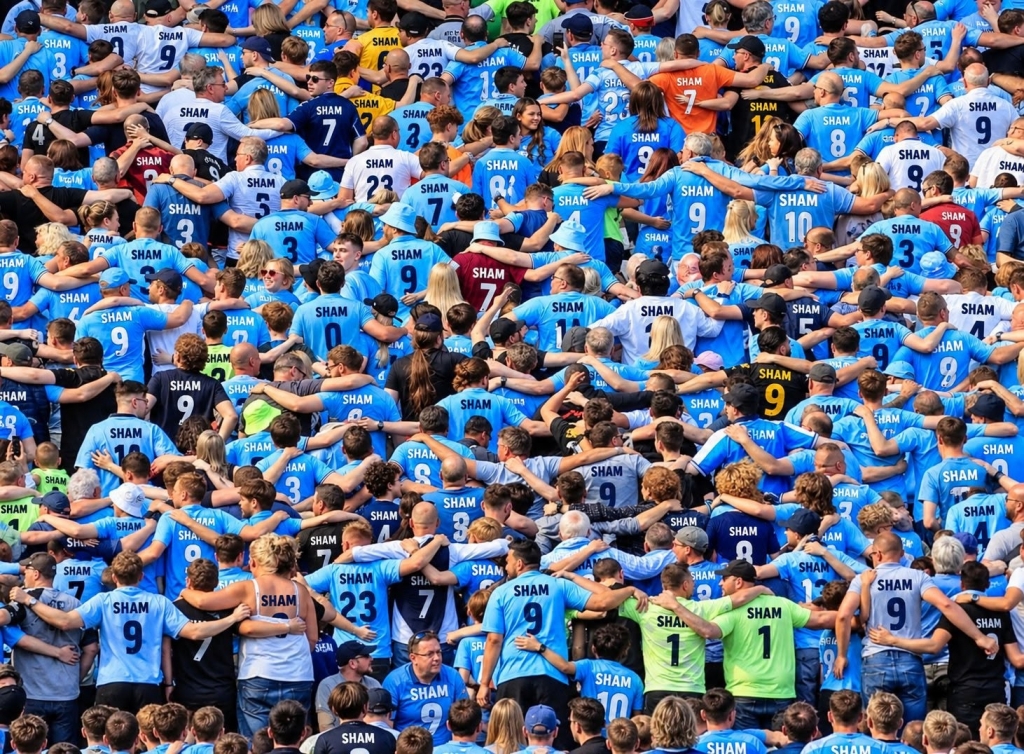
The Commission’s central finding is that City used a series of ‘sham’ commercial contracts which did not represent the true financial arrangements between the parties. According to the Premier League’s account of the findings, these arrangements artificially increased the club’s reported revenues and reduced its reported costs. Some sponsors were apparently required to contribute only a small part of the amounts recorded in their contracts, with the club’s ownership group, Abu Dhabi United Group (ADUG), supplying the much larger balance.
The effect, according to the Commission, was substantial. Had the arrangements been recorded accurately, Manchester City would have exceeded both the Premier League’s spending restrictions and UEFA’s financial rules by a very substantial amount. The Premier League says the arrangements affected more than £900 million of revenue and costs. The Commission therefore rejected the idea that the disputed accounting arrangements were merely technical breaches, concluding that the club intended to circumvent the rules.
The Commission also found that City submitted misstated accounts and failed to disclose the true position of its finances to auditors and football regulators. In addition, during the Premier League investigation, the club was found to have breached its obligations to co-operate and to act in the utmost good faith. Three of the four alleged failures to co-operate were upheld. The Premier League says the Commission found that City made concerted efforts to obstruct or frustrate the investigation.
These findings are particularly significant because Manchester City has consistently denied wrongdoing. Following publication of the findings, the club said it was disappointed and surprised and maintained that it was innocent of the accusations. City has stated that it possesses a “comprehensive body of irrefutable evidence” supporting its position and intends to appeal, arguing that the Commission’s decision contains “material errors of law, principle and fact”.
Importantly, the Commission has not yet imposed a punishment. The Premier League’s rules give the Commission wide discretion, including the ability to impose fines, points deductions and other sporting sanctions. Any sanction will therefore be a separate and potentially very consequential stage of the process.
Manchester City also has a right of appeal to an independent Appeal Board. That Board can uphold the decision, overturn it or vary the Commission’s order. Consequently, the findings announced this week represent a major stage in the case, but they are not necessarily the final legal position.
The Premier League has described the case and the decision as the most significant disciplinary matter in its history. Nevertheless, several issues remain unresolved, most importantly, the sanction and the outcome of any appeal. The full Commission decision has not yet been published and the continuing proceedings remain subject to confidentiality requirements.
In essence, the Commission has accepted the Premier League’s case that Manchester City systematically breached its financial rules over a prolonged period and deliberately concealed the true financial arrangements behind some sponsorship and expenditure. The next major questions are therefore what punishment will be imposed, whether City will succeed in its appeal, and what consequences – if any – the findings will ultimately have for the club’s historical results, titles and European participation.
Let us look at those three issues with a view to getting the opinion of Holics examining the case:
What punishment should be meted out?
The independent Commission’s findings against Manchester City are potentially much more consequential than an ordinary financial-rule breach. The Commission found that City had used “sham” commercial arrangements, misstated accounts and significantly breached Premier League and UEFA spending limits over all nine seasons examined. It also found City guilty of three of four alleged failures to co-operate with the Premier League investigation.
However, no punishment has yet been imposed. The sanction will be considered at a separate hearing before the independent Commission. City also has the right to appeal the findings, with the deadline currently 2 October. An appeal would be heard by a new three-person Appeal Board, rather than by the Court of Arbitration for Sport, to whom they have no right of appeal.
The obvious potential sanction is a very substantial points deduction. There is no established tariff for conduct on this scale. Everton, for example, received a 10-point deduction for a much smaller PSR breach, subsequently reduced on appeal to six points. City’s case is fundamentally different in both the duration and the nature and scale of the alleged financial manipulation. Consequently, any points penalty cannot sensibly be calculated simply by applying the Everton precedent.
A points deduction could potentially be applied to the current season, although the precise timing would depend upon the sanction and appeal process. A sufficiently large deduction could have consequences for City’s league position, including the possibility of relegation. That is a possible consequence, not a decision that has been announced. But many commentators feel even this may be inadequate punishment.
Another possibility is a substantial financial penalty. The Commission has found that more than £900 million of revenue and costs were affected by the arrangements. The eventual sanction is likely to take into account not merely the financial scale but also the Commission’s findings concerning deliberate conduct and the club’s failure to co-operate.
There is also the much more complicated question of past Premier League titles. If the Commission’s judgements ultimately survive appeal, the Premier League could potentially seek retrospective sporting consequences. Reports have raised the possibility of titles being removed or seasons being retrospectively altered, but, as yet, there has been no ruling that City’s titles will be stripped. Such a step would raise extraordinarily difficult questions about whether runners-up should become champions, how prize money should be treated and whether other clubs could bring financial claims
The new Independent Football Regulator (IFR) is an important additional factor, but its role needs to be understood carefully. The IFR has statutory powers concerning the suitability of owners and directors. It can assess whether an incumbent owner or director remains suitable where it has grounds for concern, and, in appropriate circumstances, can require an unsuitable owner or director to leave or disqualify them.
Might City succeed in their appeal ?
Despite the apparent bullishness of Ferran Soriano, C114y are in a very deep pit. Presumably, their ‘irrefutable evidence’ was used in the original hearing and signally failed to impress the commission. The word ‘sham’ is used no less than eight times in the report published yesterday and specific reference is made in the judgment to the ‘Disguised Funding Scheme’ set up by the club to mask payments from ADUG . There is also the matter of the unreliability and dishonesty of some of the witnesses put forward by the club. They will not be recalled. Thus, for an appeal to succeed the club has to produce significant new evidence that fundamentally strengthens City’s case and overturns the judgments made by the original Commission. I am inclined to agree with Jamie Carragher (not words I often write!) that Soriano is indulging in gaslighting.
The original Commission took considerable time to consider the evidence and have been painstaking in their evaluation so unless it can be proved that they have made significant errors, or C114y produce evidence they did not share with the original Commission it seems highly unlikely that the Commission’s judgment will be substantially reversed. This is the opinion of a couple of legal friends and tallies with the view of Stefan Borson who seems to be one of the leading authorities in football’s financial / legal space.
What are the likely consequences?
This is the hardest area to predict with any certainty and any suggestions I make are pure speculation.
Firstly this is likely to become a very strange season. The atmosphere when C114y are playing away will be very hostile. At the Etihad the wagons may indeed circle but there will also be C114y fans disgusted at the state of the club. It will be very hard for C114y players to sustain their form and motivation throughout a season when whatever the outcome of games, they may be relegated anyway.
Any appeal may apparently take several months to be fully completed and the final judgment to be given. It is not yet clear whether sanctions will be announced before any appeal. The Premier League has said its intention is for the full process, including any appeals, to be concluded as soon as possible. Lisa Nandy, the Sports Minister echoed this when interviewed yesterday.
So, I would expect the League to want the sanctions process to move forward rather than to wait for potentially many months for the appeal process to be completed. However, we don’t yet have a published timetable saying that the sanction will definitely be announced before the appeal is heard.
There is a precedent for sanctions and appeals being dealt with separately. In Everton’s case, for example, the club’s two-point deduction was imposed and then appealed, with the Appeal Board subsequently varying the punishment.
My view as to an appropriate punishment if any appeal fails is that it should fall into several parts:
1. C114 y should be expelled from the Premier League. Their dishonesty and cynicism towards the competition merits very severe action.
If they are expelled they would have to apply to join the EFL at the bottom of the pyramid (Division 2) and if accepted, must work their way back up.
2. A significant fine should be levied. A fine is the least important aspect because the owners of this club have almost inexhaustible cash reserves, but it should reflect income illegally gained leaving individual clubs to pursue claims for compensation although a class action could still follow. It might be a very substantial sum indeed.
3. The club should surrender all honours it has won during the period under review but the titles should not be reassigned. They should be categorised as ‘not awarded’ simply because it is too difficult to reassign them accurately.
4. The Independent Regulator should order a change of ownership and the club should be sold. It may follow that the Regulator eventually bans Nation States from owning League football clubs but that is for another day.
These four steps would effectively destroy the club, stripping it back to the lowest league status, taking away titles won in the era under review (whether the Premier League extend its investigations from 2018 to 2026 is a moot point), effecting a change in ownership and reducing a once proud club to Ground Zero. It should however be a clean and honest club for the first time in eighteen years.
What thoughts do other Holics have?