Feed on
Posts
Comments

While the midfield was still an uncertain muddle, and the defence reliable enough though lacking any genuine match winning quality, except Kieran Tierney (and Bernd Leno on certain days), Arsenal went into the 2020-21 season with a reasonable degree of confidence in the consistency and reliability of their attacking force. The ever-smiling Pierre-Emerick Aubameyang had ended the previous season with a cup winning high, continuing to impress with his eye-catching conversion rate that allowed him to run to 71 goals for Arsenal in two and half seasons, despite playing in front of what can generously be called an uneven creative supply. Never quite a ‘back to goal’ traditional number 9, and not really a modern-day winger (though that is how he started his career) who is going to provide consistent defensive cover and help out the midfield in ball retention, Aubameyang thrives in a fluid forward line where he uses his pace, movement off the ball, and a well-honed ability to anticipate and finish chances in and around the penalty box to great effect. One wonders what we could have achieved if he were playing with Messrs. Cazorla, Özil, Alexis, Ramsey, Rosický … 

An excellent signing though Aubameyang had proved to be, Arsenal never really quite resolved the issue of how to get him and his good friend Lacazette to play together in a tactically cohesive manner. The easiest solution had typically been to put Lacazette down the middle, Aubameyang on the left wing, and there have been times when that combination looked very good, but there have also been times where the opposition defence had simply dropped deeper and kept close track of Auba’s movements to nullify his primary threat of scoring goals, especially given the relative rarity of defence-splitting through balls coming from the Arsenal midfield. Running at a defence with the ball at his feet is not the Arsenal captain’s forte, and neither is Lacazette very good at it. Even though Lacazette at his best is technically good enough to create goals in a congested penalty box by manipulating tight spaces, it is not an ability that he demonstrates consistently enough to compensate for drops in Arsenal’s goal-scoring numbers whenever a tactically disciplined and technically competent defence decides to stay deep in a low block. 

Despite these well documented limitations, Arsenal did find different ways to score goals in the 2019-20 season, albeit relying overly on Aubameyang’s career best conversion rates, especially in the Premier League. But in the first half of the season, when the collective performance of the team started to drop to alarmingly low levels — not helped by frenetic tactical tinkering by then coach Unai Emery as he started to lose his grip on the squad – and the goals in the PL had also started to drop, in the Europa league and the League Cup Arsenal fans were introduced to a new young goalscoring talent. It is fair to say that Gabriel Martinelli and the combination of his directness, pace and goalmouth threat were not just pleasant diversions from the implosion in league form, but also a source of excitement and hope for the future. 

While the young Brazilian had surprised us with his rapid adaptation to top level football, record signing Nicolas Pépé was somewhat underwhelming in that first half of the season. There were flashes of individual skill and some examples of a unique ability to create and score chances – but they were too often undermined by a lack of nuance and variation in his approach and a sense of disjointedness in his overall game. Compared to the more assured performances of another rising youngster Bukayo Saka, he looked less reliable and consistent as an attacking outlet.      

When Arteta took over mid-season, he focused primarily on tightening up the defence and bringing a modicum of structure and shape back into our game plan. He had initially used his old teammate Özil to provide more security on the ball and, one suspects, hoping to bring back to Arsenal’s attack a decisiveness and creativity at which peak form Mesut was a master. But that experiment didn’t last very long, and Arteta quickly adapted to the reality of the Arsenal he had inherited by morphing into a predominantly counter-attacking team with a three man defence, two wing backs willing also to cut inside to overload the midfield, and relying on the movement and finishing of the front three. This worked particularly well when Kieran Tierney was fit as he added a stellar combination of defensive strength and attacking outlet, and his overlapping runs encouraged Aubameyang to play more freely as a left sided attacker. This 3-4-3 structural approach also started to bring more out of Pépé, and signs of some personal coaching started to become more evident in the manner he was now more engaged with the overall game and more effective in making the decisions in the final third. The Premier League form improved enough to arrest the slide and make a modest rise up the table. Then the team raised hopes by winning the FA Cup playing true to the tactical blueprint set up by Mikel, where the back-to-the-wall defensive togetherness was complemented by the effectiveness of the front three following quick transitions, a formula that worked especially well against superior opposition as demonstrated in the semi-final and final of the successful FA Cup run. 

So, we entered the 2020-21 season with Aubameyang in a rich vein of form, now the captain and with a renewed contract, Lacazette a more than able center forward, young Martinelli and Saka full of talent and maturity beyond their years, and the mercurial Pépé showing signs of becoming a key player in the new season. Even though Martinelli suffered an unfortunate injury in training that was to keep him away from the matchday squad for a while, Arsenal fans were looking forward to what this group of talented attackers, including a truly world class striker in Aubameyang, could do now the team was playing with more poise and purpose. 

However, that excitement and hope didn’t fully turn into expectation. We knew that the team still lacked offensive variety. Especially against opposition unwilling to try to dominate the match, even this quality forward line would fail to score consistently in the absence of a true playmaker in the attacking midfield. Furthermore, given the over-reliance on the captain there were also doubts that any injury, loss of form, or even dips in Auba’s hitherto stellar conversion rates would also see us struggling to score. 

In the pre-season transfer window Arsenal made the type of miscalculation that by now should really be trademarked by our beloved club: ‘club X had “Arsenalized” it’s last transfer window etc’ . We most needed a creator in the attacking midfield, and we failed to address that problem, eerily reminding us of all those times when we had needed a new central defender or defensive midfielder to solve just the last piece of the puzzle and we simply ignored those needs and paid the consequences. Just a little bit more lucid evaluation of the squad and some acumen in acquiring what was absolutely needed would probably have seen us making a better go at the PL or European successes in the last fifteen or so years, especially when the team was filled with creative and attacking talents and was managed by someone who had earned his legendary status not just by the virtue of his transformative effect but also his early successes. 

Instead of an attacking midfielder we brought in a somewhat aging but high quality winger with great experience of both Premier League and European football. Willian was the most traditional winger we had in our line-up and given his remarkable consistency in the last few years Arteta decided to start the season with him, keeping Pépé on the bench. 

The first match – away at newly promoted Fulham – seemed to have completely vindicated Arteta’s trust in Willian as he provided key assists, including a cross-field pass to Aubameyang who thrives on that type of service. It had seemed we are all set. 

Unfortunately, that was as good as it got for Willian in an Arsenal shirt, and that was as good as it got for Arsenal until a revamped first eleven triumphed over Chelsea in a Boxing Day match, relying on the youth brigade of Saka, Emile Smith-Rowe and returning from injury Martinelli.   

Between these two matches, form started to drop steadily and Arsenal played their worst football in the last 25 or so years. Turgid, uninspiring, over-orchestrated and lacking any speed of thought or action to allow thoroughly planned moves to actually make any material difference on the playing field, Arsenal started to score fewer and fewer goals. Aubameyang and Lacazette both started to miss more chances compared to the last couple of seasons (in the case of Auba I think it was unreasonable to expect that he would be able to maintain the previous season’s conversion rate) and the team as a whole created fewer and fewer chances. Goal-scoring became an issue. Arteta tweaked frontline personnel by playing Willian on either wing or sometimes even at the tip of the midfield, bringing Saka in on the wings and starting to get Pépé more involved.  

In contrast to the Premier League, Arsenal continued to score goals in the Europa League group stages, albeit against opposition less technically and tactically strong, but most of those goals came from individual pieces of skills by Willock, Pépé, Saka, Lacazette et al. where they were afforded time and/or space in and around the penalty box that they would never find in Premier League matches. 

All the pre-season apprehensions about our over-reliance on Aubameyang came true as he had unfortunate personal struggles with his family, then later in the season with his health after contracting malaria while away on international duty. Lacazette, ever the hard worker and willing fighter for the cause, started to suffer from a loss of pace which appeared all the more magnified as he needed to drop deeper and deeper to bring the ball forward, and by being surrounded by other practitioners in the art of slow football. 

With Willian’s form and contributions remaining at a stubbornly unacceptable level, it probably took Arteta a bit longer than it would have taken a more experienced manager to find out that there is no magical transformation back to past excellence. However, both Pépé and Saka started to enjoy more game time. Our offensive game plan remained lopsided to the left, even when Aubameyang wasn’t playing. One suspects this was to maximize Tierney’s attacking potential as well as to optimize the peculiar set of strengths-and-weaknesses of Xhaka. Meanwhile, not unrelatedly, Pépé continued to find it difficult to bring consistency into his attacking output, even though he, now encouragingly, started to demonstrate better overall engagement with the build-up, much better defensive awareness and work rate, and looked as if Arteta might be able to push him to a higher level as he had allegedly done for a few other talented wingers in his previous role as assistant manager elsewhere. 

League form and results started to bounce back following the introduction of Emile Smith-Rowe and, later in the winter, with the loan signing of Ødegaard. Whereas ESR brought a ball-carrying verticality and the willingness and technical ability to exploit spaces between the defensive lines, Ødegaard brought composure on the ball in the final third, defence-splitting passes and an ability to play to the strengths of the players around him which can sometimes be an overlooked quality in number 10s. Saka – ESR – Ødegaard combined well. Ødegaard now brought Pépé’s attacking qualities to the fore and this overall improvement of movement and technical quality in the final third brought out flashes of old excellence from Lacazette and even Aubameyang who never really recovered from the post-malaria malaise (hopefully the summer break will get him back to his physical best). We had very few memorable attacking performances in this season and they all came in the second half of the season where some combination of Saka – ESR – Ødegaard was key. None of them scored a lot of goals or notched up a high number of assists but they were pivotal to the attacking improvement in the second half of the season, allowing the more experienced finishers in Aubameyang, Lacazette and Pépé to contribute more consistently in the goalscoring column. Saka maintained his impressive consistency throughout the season, only starting to drop his level towards the end as the fatigue of a long and mostly dispiriting season took over.  Gabriel Martinelli was used sparingly even when he was fully fit and even though Arteta might have felt that his direct, tenacious, all-action approach may need some tactical fine-tuning before he can become a regular member, many of us thought that his unique combination of pressing from the front, causing chaos in the opposition penalty box and quality finishing deserved more game time, especially when we were again begging for a spark of inspiration in matches.    

The attacking improvement was noticeable enough to bring some smiles back to the Arsenal fanbase but not nearly enough to end the season with any sense of achievement. We lost to Villareal in the Europa League semi-final with an extraordinarily poor attacking performance across both legs when the limitations of the team were exacerbated by questionable tactical choices. We ended the Premier League season with a run of positive results, helped by a goal-scoring spree by Pépé, Martinelli and Laca chipping in the odd winner or two, and Saka – ESR – Ødegaard providing just enough quality in the attacking third to support the forward line.

Eddie Nketiah & Reiss Nelson – both having played promising roles in the last season’s successful FA Cup run, and even contributing enthusiastically in league matches when called for – were mostly absent from matchday appearances, Reiss more so than Eddie. Again, as an Arsenal fan used to seeing talented youngsters in the squad getting necessary chances and encouragement over the years, this felt a very un-Arsenal like cautiousness. There were many matches where our attack had turned pedestrian – one might be tempted to stay “literally” pedestrian, so slow was the pace of the build-up – when the directness brought by Reiss Nelson — who has always shown a willingness to run at defences and take shots at goal – at the expense of secure but pointless possession in the middle of the park, might have yielded a few more goals.  

Eddie played a few matches, scored some goals, but it was slowly becoming obvious that his strength as an excellent poacher and his technical imitations on the ball may lead us decide to sell him to another top division club (in England or abroad) but with less than our own immediate need to drastically improve our overall performance and league standing. That impression became further solidified as the club successfully renewed Folarin Balogun’s contract. Balogun has been the shining star of the Arsenal youth teams for the last few years and even in his brief involvement with the first team managed to impress by playing with both flair and strength in the penalty box. 

The attacking stats for the forward line, across all competitions, truly present a picture of overall mediocrity: 

Lacazette:         17 goals, 3 assists;

Pépé:               16 goals, 5 assists;

Auba:              15 goals, 4 assists;

Saka:               7 goals, 7 assists;

Eddie:              6 goals, 1 assist;

Martinelli:        2 goals, 2 assists;

Willian:            1 goal, 7 assists;

Balogun:          2 goals, 1 assist;

Reiss Nelson:  1 goal, 1 assist.  

Adding the attacking midfielders to that list:  

ESR:                4 goals, 7 assists;

Ødegaard:        2 goals, 2 assists. 

While these numbers taken altogether are not entirely unrespectable, a season with such a relatively mediocre output from the frontline can only be salvaged if there are goals (and assists) coming from central midfield where the Arsenal numbers are likely to compete with the relegated clubs. The most prolific of the central midfielders were Joe Willock — who only played half of the season before being loaned out to Newcastle where he scored more premier league goals in half a season that all of our central midfield combined — who had 3 goals and 3 assists, Xhaka with 1 goal and 2 assists, Elneny with 3 goals and 0 assists, and Partey with 0 goals and 0 assists. The total number of times an Arsenal midfielder arrived in the penalty box from deep with a late run couldn’t have been more than 10 across the entire season.  

If we are to harbour any hope of returning to a Champions League position in the league table – which really has to be the absolute minimum target for next season – our goalscoring output has to significantly improve. That means improving the quality of the supply line, improving the dynamism of the central midfield to facilitate their contribution to the goalscoring column, and improving the output of the forward line where the qualities of unpredictability, movement, progressive attitude, and efficiency should determine the matchday squad and starting eleven rather than reputations or experience or the sense of tactical comfort provided by them. The depressing fact that we play in no European competition this season can only be assuaged by making that extra rest and preparation time between league matches count.

Embed from Getty Images

Arsenal ended the 2019-20 season with a newfound degree of optimism which was entirely unanticipated when earlier in the winter, floundering on the bottom half of the table and playing undoubtedly their worst football in this millennia, the club had no option but to bring in a new permanent coach as a desperate attempt to at least stop the slide.  While the fact that the new face on the sidelines and matchday interviews was a rather familiar one from his playing days at the club where he evidently had left behind admirers, had helped the fanbase to not be overly critical of the appointment, his complete lack of any experience as the main man in charge at any level in any club left even the most ardent supporters of Arteta’s long-term potential to be hoping primarily for some cohesiveness and quality to return to Arsenal’s game, and to hope to finish the season on an upward curve, without necessarily any significant immediate improvements.  

It is fair to say that by winning the FA Cup in his first (half) season at the club Mikel had raised hopes in his ability to turn things around faster than otherwise expected. But at the same time, it was equally obvious that the squad he had inherited was a deeply unbalanced one, lacking quality in some fundamental aspects of the modern game, most of all in the middle of the park. 

He was able to put together a successful cup run by tightening up the defense – for which he should get a lot of credit given the disastrous, ill-disciplined, shapeless mess of a backline he had found himself to work with, though the goalkeeping duo of Bernd Leno and Emi Martinez were performing regular acts of heroics to save the team from worse embarrassments – and by using the specific attributes of the high-quality frontline in a tactically astute fashion. A tactics that worked well enough against opposition better than us, but whenever faced with a team who were willing to concede possession and sit deep themselves the paucity of creativity and control in Arsenal’s midfield was made painfully obvious. 

It was also becoming equally obvious that the midfield not only lacks quality, it would soon lack numbers. Guendouzi had fallen so far out with the coach (soon to be named manager) that he couldn’t even manage to congratulate his team mates on winning the FA cup, and it was a foregone conclusion that he wouldn’t be playing any part in Arteta’s team. Energetic and passionate though his performances were in red-and-white, the underlying numbers identified a player with potential who still has a very long way to go to hope to become mainstay of any top team’s midfield (an impression that his subsequent tenure at Hertha Berlin solidified).  

Lucas Torreira, much more of a professional than the French teenager, and for a brief period in Unai Emery’s earlier days looking like the player we need, was unsettled in England. A family tragedy brought on by the pandemic made it worse, and he was allowed to leave on loan in October. Even though Mikel had started his old teammate Mesut Özil in his first ten premier league matches in charge, by the end of the 2019-20 season they too had suffered what looked from outside to be irreconcilable differences and it was merely a matter of time (and the club finding a way out of the financial logjam they had created) before the German playmaker left the club, an eventuality that dragged on long enough to drive Arsenal supporters to seething frustrations about the club, or the player, or the manager, and in many cases about all of them. 

Dani Ceballos remained in the club for his second season on loan, after showing sparks of brilliance under Mikel, but more often failing to impose himself on the game or make match-winning contributions. It was hoped that with a year of experience behind him in the English football he would step up to the next level in his career which had by now, started to stall after early promise with the Spanish youth teams. 

Among the academy graduates neither Joe Willock nor Ainsley Maitland-Niles were initially sent out on loan, the latter having played a more prominent role under Arteta, albeit as a wing back and not in his preferred midfield position. Mohamed Elneny came back from loan in the pre-season, participated in the successful Community Shield season opener, and Mikel – one supposes based partially on their familiarity from their playing days – put his trust on him as a reliable squad option. 

Following a nearly non-existent pre-season the English league season opened in mid-September with Europa league group stages to follow later in the Fall. The world reeling from suffering, chaos and uncertainty with no easy way out of the crisis yet, football felt to be a privilege, a distraction, and an act of defiance, all at the same time. In the absence of the energy feedback loop between the players on the field and the supporters in the stadium, a lack that led to less spontaneity and less individual initiatives from the playing eleven, the matches took on a more cagey and tactical nature, and in a team like Arsenal where the midfield was already suffering acutely from a lack of creativity that caginess quickly morphed into a dull, pointless monotony that was neither easy on the eye nor beneficial to the standing on the table. 

For the start of the season at Fulham Arteta had continued with the 3-4-3 formation that had brought the cup success, with Xhaka and Elneny in the middle of the pitch. Even though Arsenal had won the first league match 3-0 away at Fulham it soon became obvious that this formation was easy to play against, with the midfield existing primarily to keep and rotate possession around the center circle and look to rely on the wingbacks to carry the ball forward or the wingers to cut inside, drop back and act as auxiliary midfield players. The midfield lacked a ball carrier as well as a creative playmaker. 

As the summer transfer window was coming to close Arsenal were frantically looking to fill these positions. The club was able to bring in Thomas Partey on transfer deadline day, understandably to play as the retainer-carrier to add both muscularity and verticality in the midfield. However, the problem of lack of creativity in the midfield continued to plague the team. 

The problem was further compounded by Arteta’s insistence on playing Willian and using him in an inverted winger-playmaker role that the Brazilian in his impressive career had never played, neither for club nor country. As the midfield lacked any cutting edge, the teams started to find it easier and easier to cut off the supply to the forward line. Lacazette starting in the middle of the front three started to drop deeper and deeper to play almost as a number 10, and Aubameyang, with no one spotting his runs and the opposition often just crowding him out, looked more and more forlorn. 

In contrast to the league, Arsenal played with a bit more flair in the Europa league group stages where oppositions didn’t possess the tactical discipline or defensive muscle to follow the blueprints of premier league teams to play against this one-dimensional Arsenal team. Also, the fact that in Europa league players like Pépé, Nelson or Willock – not fully trusted by Mikel yet to play his tactical game in the league – found chances to express their individuality, helped a bit as well.

Thomas Partey indeed brought in a much-needed dynamism in the midfield but a combination of injuries and the typical first season adjustment problems didn’t allow him to take control of the games the way that Mikel would have hoped for. There were a few impressive performances in between, most noticeably in a rare away victory at Manchester United where Partey in tandem with Elneny – Xhaka earning a rare rest on the bench in PL – dominated and controlled the midfield. That 1-0 win – the solitary goal coming from Aubameyang’s penalty after Bellerin was fouled by Pogba in the box – raised false hopes. Performances and results in the league plummeted after that, and the wretched run continued way into December.

Partey got injured in the away loss in the North London Derby, and Arsenal seemed to have given up trying to play through the middle. There was a patch of games where the team even resorted to throwing in a barrage of crosses which were fruitless in absence of a target man. Saka in the frontline continued his upward arc, and both Lacazette and Aubameyang showed flashes of their individual qualities but their conversion rates, especially in case of captain Auba, fell significantly away from the dizzying heights of the last two seasons and, given the paucity of chances created, that meant we were struggling to score goals. 

Granit Xhaka kept his place in the team and continued to divide opinions. One could understand why Arteta – and two managers before him – trusted him to do a certain job: keep possession, rotate, offer positional protection to allow fullbacks to attack. Mikel further solidified that tactical focus by deploying Granit in a primarily left sided role, especially when Tierney was fit, and given the extraordinary left-sided skew of Arsenal’s attack Xhaka would often play as an auxiliary left-back, providing protection for the space opened by overlapping Tierney. While this approach might have yielded a consistent playing pattern for the manager to use as his basis, it also led to a ponderous predictability that Xhaka’s innate slow tempo of moving the ball made even worse. This excessively left sided approach to attack also meant Saka or Pépé (whenever given the chance ahead of Willian or coming on as a substitute) needed to provide a lot of support to the build-up play by often playing as right sided midfielders, further nullifying their potency in the attacking third. Saka, a more versatile player than either Pépé or Willian, and more capable of playing in pockets of space in the midfield fared better in that role, but the overall effect on the midfield was not beneficial. 

We were still playing 3-4-3, and with Partey injured Ceballos or Elneny would accompany Xhaka. After Xhaka was sent off at Arsenal’s 0-1 home loss to Burnley, Ceballos and Elneny played in the middle of pitch for the next two league games, amply demonstrating that they do not at all complement each other. The limitations of Elneny were well-known, and the consistency of his work-rate and tactical discipline meant his performances came less under scrutiny. Whereas Dani continued to frustrate by failing to put his considerable technical skills on the ball to any meaningful use in a consistent manner. The glimpses of ability in possession and the infrequent creative sparks in passing were more than sabotaged by untidiness and lack of focus.      

In the last match before Christmas, away at Everton, Arsenal lost 2-1 in a low-quality encounter. That had put Arsenal on 15th position on the league table, with just 13 points from 12 games and a negative goal difference. Though the concerns about relegation might have been a little bit exaggerated, the team was in dire need for change, even if that meant a change of manager. 

A few days later we lost 1-4 away at Manchester City in the Carabao Cup, and it seemed liked the Boxing Day home game against London opponents Chelsea would further deepen the gloom surrounding the team.

Arteta chose to freshen things up for that match – it may be too simplistic to attribute his change of plan and personnel to either the virtue of courage, or forces of necessity alone; it might have been a combination of factors where desperation and insight found themselves arguing in favour of the same choices – and used a 4-2-3-1 formation, with Emile Smith-Rowe starting at the top of the midfield, just behind the front three of Martinelli (another fresh introduction to the PL starting line-up), Lacazette and Saka. 

ESR and Saka interchanged positions, and both played superbly between the lines to create opportunities and bring verve, unpredictability and penetration to the Arsenal attack.  That 3-1 win further highlighted the desperate need for more creativity in the midfield as surely Arsenal couldn’t go through the rest of the season relying only on the 20 years old ESR to play that role. 

That win gave the team a necessary boost and Arsenal played well enough through the hectic winter schedule, and the most enjoyable performance came among swirling snows at the Hawthorns where Arsenal put four past West Bromwich Albion. Though Tierney rightly took the headlines with his sumptuous solo goal, ESR continued to impress with his effervescent movements, technical composure, and maturity of decision making. The good run of form was spoiled by an away loss at Southampton in the FA Cup, but PL and Europa league still offered enough possibilities to salvage the season. The despondency of the early Winter days gave way to a bit more cheerful outlook.

The club took the winter transfer window seriously enough, and in addition to successfully moving out the unwanted, and managing promising loans for the promising youngsters Willock and AMN who needed more game time, it also managed to bring in the creative talent of Martin Ødegaard on loan from Real Madrid. Like many precocious talents before him the Norwegian never settled in Real Madrid, spending most of his playing days since joining Madrid as a teenager out on loan. His last loan spell at another Spanish club Real Sociedad was a highly successful one, and the prospect of him combining with the likes of Emile or Saka was an enticing one. 

Ødegaard’s first appearance was as a substitute for ESR, in a somewhat insipid 0-0 draw with Manchester United at home. His first start came against Leeds at Emirates, where he started at the top of the midfield with ESR and Saka flanking Aubameyang. 

Whereas Emile was more powerful and dynamic while running with the ball past defensive lines, Martin was more of an orchestrator who played to the strengths of his team-mates, and quickly formed effective partnerships with ESR, Saka, Lacazette and later Pépé. He was instrumental in Arsenal’s North London Derby home win, scoring his second goal for the club after a long-distance stunner away at Olympiacos in Europa. The fluidity and intelligence of his game earned him Arsenal’s player of month award for March. He returned from the international break nursing an ankle injury, and after playing the full ninety minutes against Liverpool in a demoralizing away loss, he was sidelined for a while. And then when he returned from that injury-forced absence it took him a while to recover his form, by which time Arsenal’s season had slipped back into irrelevance. 

Arsenal’s league form remained inconsistent in the Spring. Though much better than the horrific sequence of results in the Fall, it was still not good enough to cover lost ground in the league table and it soon became apparent that unless an extraordinarily favorable set of results involving all of others the clubs fighting for positions 3-6 were to coincide, the only way Arsenal could play in Europe next season was to win the Europa League. Despite stuttering against Benfica, Olympiacos and then Slavia Prague, Arsenal had just enough quality to manage to win these ties, with their most impressive performance coming in a whirlwind 30 minute spell away at Prague when ESR, Pépé, Saka and Lacazette combined to produce our best football since the home win against Chelsea. ESR again showcased his impeccable pedigree as a highly promising versatile modern midfielder, not only adept at creating chances and breaking through defensive lines, but also when necessary, dropping back to provide balance and defensive protection.        

The focus shifting onto the Europa League, Arsenal lost the semi-final tie to a limited Villareal team where the lack of dynamism at the heart of the midfield was further accentuated by some questionable tactical choices. Lacazette was out injured, and Aubameyang having just recovered from malaria was on the bench, so Mikel decided to start ESR as a false nine in the first leg of the semifinal. The front four of Ødegaard, Saka, ESR and Pépé looked potent on paper, but Villareal simply crowded out the midfield to cut off supply, and the inability of Xhaka, Dani and on this occasion Partey to spring quick attacks in transition from deeper midfield positions, combined with a very poor ball retention in the midfield meant that the front-line could never build a sustained attack. ESR’s natural tendency and ability to drop deeper and carry the ball forward through the defensive blocks was wasted as a result of him playing high up, and when he chose to drop deeper there was no focal point in the attack. 

That game again highlighted the key concern about the Arsenal midfield – its inability to collectively create sustained pressure on the opposition defensive lines through quick interchanges, and its inability to create quick transition from defence to attack. Despite the individual qualities and brilliance of ESR and Ødegaard on the ball, Arsenal midfield as a collective remained mostly dysfunctional.  

After the hapless loss in Europa semi-final, Arsenal’s performances and result picked up a bit in the league with Pépé scoring a cluster of goals, and the defence playing reasonably well. Elneny scored his first PL goal, and that made the collective contribution of Xhaka, Partey, Elneny and Ceballos towards the goals scored column in PL to be two!! There were no late runs into the box, or enough shots from the edge of the box. Even if we add ESR’s one league goal, and Ødegaard’s one league goal, that is altogether four goals from the midfield in an entire league season! That is an astoundingly poor output by the midfield, and nowhere good enough if Arsenal were to reclaim the Champions League position anytime soon. Even though the comparison may not be entirely fair, it is tempting to point out that Joe Willock, out on loan at Newcastle, managed to score eight goals for them in 14 appearances. 

Arsenal ended the season without any trophy, and for the first time in 25 years without any European competition to look forward to, and more often than not playing unexciting, unimaginative football. It often felt that the limitations of the midfield were further exacerbated by the overly orchestrated tactics employed by the manager. But it may also be possible that the manager decided on these tactics to compensate for the limitations of the midfield, whereas some midfield players (especially the attacking midfield players — I think ESR and Ødegaard both would have scored a few more goals playing in a more free-flowing team) may feel that the micromanaged tactical aspects had inhibited their natural creative instincts.

To make progress next season it is mandatory that the quality of football played in the middle of the park must improve significantly, and that improvement will need to come both from improving players – some existing players improving as well as improving on some existing players – and less inhibited tactics. I personally would love to see us play a 4-3-3 formation, using players like Saka, Pépé, Martinelli in the wider positions supported by a fluid three-man midfield where Partey plays the deeper role and ESR and another creative playmaker float between the lines, interchanging positions with the wide players, and while defending dropping deep to initiate quick counterattacks after regaining possession. 

That is, I would love to see Arsenal play true to the footballing philosophy of positive, attractive football and build on that to achieve success. The first step towards that must be to improve the midfield.  

The defence improved. Thirty-nine goals were conceded in the league against 48 the previous season; third-tightest defence after Chelsea and Man City as opposed to eighth-best in 2019-20. Twelve clean sheets were two more than during the previous league campaign and fifth-best in the league (ninth-best in 2019-20). Yet, the improvement was not consistent enough to prevent 13 league defeats and 18 in all competitions.

Arteta’s priority was defensive stability, both to stop shipping goals and because it is his platform for attack. He made progress, as the switch to a default back four from a five attested. Eight of the ten highest-ranking Arsenal players in the CIES/InStat Performance Index, which measures players’ contribution to team success across the season, were defenders — Gabriel, Chambers, Mari, Cédric Soares, David Luiz, Bellerín, Tierney and Holding in that order.

Better organisation, fewer, though far from no individual mistakes, and the rediscovery of a capacity to dig in and defend when backs were to the wall were the key. Without turning this into a stats-fest, the numbers show the defence got better at defusing attacks while the double pivot protected the back line more securely.

On average, Bernd Leno had 30% fewer shots to deal with each game than the previous season. Consequently, we conceded one goal or less in 47 of our 59 games in all competitions.

The defence also became more comfortable playing out from the back to break high presses — even if that was not necessarily true of those watching them doing it. It still looked vulnerable to counterattacks when run at directly and at speed. When the backline got pulled out of shape, it could quickly look extremely ragged.

Thirty-three-year old David Luiz and Gabriel, ten years his junior, settled as first-choice centre backs with Holding and Mari as backups, following the January clear out that saw Sokratis and Mustafi released. David Luiz’s various absences meant Rob played the most games. He benefited from regular football, settling into Arteta’s way of playing and improving all-round, particularly in forward passing.

At full back, neither Bellerin nor Soares could make the right-sided position their own, providing an unexpected opportunity for Calum Chambers to grab. On the left, Tierney, when fit, was an automatic first-choice, but Arteta had to make do as best he could for the frequent periods when KT3 was out, especially after Kolasinac was shipped out on loan. Xhaka was fine there defensively, but at the cost of midfield stability, just as using Saka meant less attacking creativity.

With David Luiz gone, whether Arteta brings in an experienced centre back to partner Gabriel will indicate how much he trusts Holding as the senior right-sided centre back and how much opportunity he will give Saliba to establish his credentials. The manager can probably box and cox his way through another season at right-back if necessary, depending on whether Bellerin and Soares leave. Still, an upgrade would be welcome now and essential at some point. Buying cover and competition for KT3 is an urgent priority.

Goalkeepers

1. Bernd Leno — A couple of howlers that cost goals and some rough spots, especially early in the season, reopened the argument about whether selling Martinez and keeping him had been the right decision. But he consistently produced crucial saves, and his overall performances improved as the season progressed. The final record shows 48 goals conceded in 49 games in all competitions and 16 clean sheets. With ter Stegen injured, Leno will be Neuer’s backup for Germany at the Euros, which speaks to his quality and recovered form.

StartsSubUnused SubMinutes
PL35023,132
All comps49064,422

13. Alex Rúnarsson — Precious little was seen of the Icelander, which was for the best. An underwhelming if emergency signing that should be undone in the summer.

StartsSubUnused SubMinutes
PL012115
All comps5127465

33. Mat Ryan — On-loan from Brighton since January, the Australian international looked good enough to be competition for Leno, not just an experienced backup. He should be signed permanently or at least secured on loan for the full season.

StartsSubUnused SubMinutes
PL3011270
All comps3012270

Out on loan

Dejan Iliev — At 26, he is too old for the U-23s, but the closest he has got to a first-team appearance is sitting on the bench three times. Likely be let go this summer or next when his contract runs out with better-regarded prospects coming up.

Coming up through the ranks

Arthur Okonkwo and Karl Hein, who will likely be keeping for Estonia at the Euros, look the pick of a herd of young keepers at the club. Both 18-year-olds trained regularly with the first team and will be looking to be the ‘third keeper’ next season if Rúnarsson goes.

Full backs

2. Héctor Bellerín — Improvement on the previous season was there but mixed. Hector was still short of his pre-injury best. The conviction grows that he always will be, having lost the half a yard of pace that was crucial to his attacking and defending. Unable to make his old spot his own again, he may leave in the summer after ten years with the club. A fresh start may rejuvenate him.

StartsSubUnused SubMinutes
PL24192,093
All comps323142,775

3. Kieran Tierney — A player of commitment and character, KT3 was one of the first names on the team sheet when fit. However, injury again restricted his minutes, even if he is the embodiment of Irn Bru — made from girders. Our attack was a more dynamic threat on the left whenever he played. Few defenders in Europe matched his attacking and possession stats, but his defensive ones were disproportionately down the pack. He needs cover and competition.

StartsSubUnused SubMinutes
PL26102,301
All comps32632,927

17. Cédric Soares — A touch error-prone, but did well enough when called on, including to fill in at left-back. His defensive stats were better than Bellerin or Tierney’s, although worse than his previous season’s. He fell from Arteta’s graces for reasons obscure towards the end of the season. His long-term contract makes it likely the club will try to move him on in the summer if Arteta is not going to play him.

StartsSubUnused SubMinutes
PL3011745
All comps195201,779

21. Calum Chambers — Last summer, who would have expected him to end the season as first-choice right-back, or even when he returned from injury in December? His experience at CB and DM helped him play the way Arteta wants of his right-backs, and he crosses better than Bellerin or Soares. At 26, he is yet to establish himself in the side. With a year left on his contract, next season will be make-or-break.

StartsSubUnused SubMinutes
PL828752
All comps115131,306

Emergency cover —Xhaka and Saka filled in competently at left-back but at the cost of weakening the team in other areas. A backup left-back is a priority summer signing.

Out on loan

31. Sead Kolasinac — Shipped out to Schalke in January to no one’s dismay, despite being the only cover for KT3, which says it all. He is likely to be sold or given away this summer even though he still has a year left on his contract.

StartsSubUnused SubMinutes
PL103unknown
All comps823unknown

15. Ainsley Maitland-Niles — Possibly cheating to include him as a full back, but most of his appearances before going out on loan were in that position and he had the potential to make it his own if he had followed Lauren’s example and overcome his misgivings about being converted from a central midfielder into a full back. Hard to see him not being sold unless he has a conversion on the road back from the Hawthorns.

StartsSubUnused SubMinutes
PL568485
All comps138101,183

Coming up through the ranks

Ryan Alebiosu and Daniel Oyegoke on the right and Joel Lopez on the left appear to be the nominated up-and-coming full backs, but none is ready for prime time. The U-18’s Brooke Norton-Cuffy is a longer-term hope.

Centre backs

6. Gabriel — The pick of our defenders across the season, despite only turning 23 in December, playing his first season in the Premiership and contracting Covid-19 mid-season. A big, burly defender, he was powerful in the air but skillful enough to carry the ball out off defence. The flip side was some ungainly challenges and newbie decision-making. Improvement should come with experience. The raw material of a top-class centre-back is there.

StartsSubUnused SubMinutes
PL221111,996
All comps311152,806

16. Rob Holding — A solid season re-established Rob in the team after injury. With David Luiz’s missing many matches, he ended up the fourth most used player, with performances improving as the season progressed. He is an unflashy but determined defender first and foremost, but at 25, he still has to make himself an automatic first choice for Arteta. That may happen next season, absent new arrivals, but he will be looking over his shoulder at Saliba’s progress.

StartsSubUnused SubMinutes
PL28252,557
All comps363113,321

22. Pablo Mari — Like Soares, a loan signing given a permanent contract. Injury restricted him to a handful of games before February. Calm and mostly assured, he paired well with Holding. He is a better defender than he is often given credit. Yet, it is hard to see him displacing Gabriel as first-choice left-sided CB. He will remain a quality backup.

StartsSubUnused SubMinutes
PL1007900
All comps160131,470

23. David Luiz — An influential and enthusiastic figure on and off the field, but missed many games because of injury. However, unlike another Chelsea pensioner, he justified the high price paid for his experience and leadership. One of the best long-range passers at the club, but his defending could be as erratic as heroic. Not renewing his contract was the right decision, and at 34, he leaves the club in good standing.

StartsSubUnused SubMinutes
PL17321,396
All comps27352,281

Out on loan

4. William Saliba — A rocky first half, mainly with the U-23s when he would have been better out on loan. Once he got to Nice in January, his season picked up, earning increasingly good reviews. Will get a fresh start with Arteta in preseason to determine whether the 20-year old super-prospect is ready for a first-team squad place.

StartsSubUnused SubMinutes
PL0000
All comps2020

Konstantinos Mavropanos — A second season-long loan in Germany at Stuttgart, was blighted by injury but earned decent reviews when he was fit. The 23-year old Greek last played a senior game for us in December 2019. It is difficult to see him playing another one.

No Arsenal appearances

Released

5. Socrates Papastathopoulos — Left out of the Premier League and Europa League squads at the start of the season and given only a couple of U-23 games. He was released in January, joining Olympiacos with whom he won the Greek Super League.

No Arsenal appearances

20. Shkodran Mustafi — Another frozen out by Arteta as a suspected member of the Özil cabal. Joined Schalke on a free transfer in the January window. With Schalke relegated and his six-month contract expired, he is now without a club.

StartsSubUnused SubMinutes
PL03643
All comps637534

Coming up through the ranks

Daniel Ballard won plaudits and promotion with Blackpool and inclusion in the Northern Ireland squad. Of the young centre-halves at the club, he looks to have the best chance of breaking through to the first team. The U-18s’s Zane Monlouis and Alex Kirk are longer-term prospects. But it is a long time since an Academy centre back made the grade.

For those of you keen to learn the results of the HolicsRopeyLeague annual contest, the long wait is over. 

I would like to announce that TTG emerged triumphant after a last day that saw the coveted title change hands several times over a nail-bitingly tense final 90 minutes. I would like to, but I can’t as with the honourable exception of GSD and his masterfully marshalled mastodons, the rest of us folded quicker than a kwik-fit fitter’s mum with a basket of towels, or a billionaire big club boss if you prefer a more recent analogy. As went Pep’s season, so went TTG`s – some early hovering around the fringes before taking a lead that was never likely to be threatened from around March.

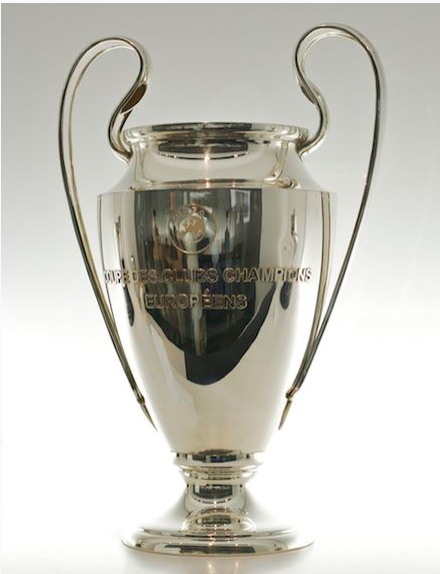
So, it is once again through gritted teeth, as I am a very poor loser, that I must congratulate The Kentish Magician on his jamminess tactical acumen.  He even managed to hog the Berkley’s Manager of the Month Awards too with the top score in three of the nine months. Honourable mentions to Bath, GSD, BTM and myself for snaffling the others. The Trophy pictured above is I think a fair and fitting reward for TTG and his practically perfect picking – just tell the Russian bloke I said it’s yours, TTG.

However, enough of the congratulations what is an awards ceremony without some special awards too?

Top Tottsless Team

The award goes to All Aboard in a highly creditable third place. Modestly, obviously, forbids me from mentioning the manager so I shall just say “well done me”. Oh, it seems it didn’t forbid after all.

Top Team With No Good Players

This special award goes to the Mighty Pangloss for not selecting any players from the other big clubs and spuds but still finishing in the Top Ten. Well played indeed sir. 

The Social Distancing Award

This award is to be shared by all the members who at no point during a long and difficult season approached within two metres of each other (to the best of my knowledge, and if they did, I didn’t see it, so it can’t be true).

A fitting end as everyone has now won an award and, as I am sure we all agree, it is not the winning but the taking part that counts. 

To the future then and all I can tell you about next season is we shouldn’t call it the RopeyLeague anymore now that the club has decided not to take part in that silly competition again. As a wiser man than me recently asked “is that progress or change?”

I do believe that it is quite enough nonsense for one announcement and so finally, a sincere thanks to all who joined. It was fun, I hope we do it again!! 

Embed from Getty Images

In the business world there is an entire industry devoted to managing change within organisations. Most large organisations now have a Change Management function within them. I find the linguistics of this fascinating.  You will notice that the term used is “Change”.  Not “Progress”.   It is almost as though there is acceptance at the outset that the end result might not be for the better, an implied management downwards of expectations of outcome.  There is a school of thought within the strategic change literature that in order to bring about large-scale change there needs to be an existential crisis, focusing minds on the near future in order to ensure the necessary changes can be brought about within the organisation.   Arsenal, as an organisation as well as a football team most certainly has both needed and is undergoing that change process.  So how are we doing and where do we go from here? 

Organisational Change

Given the years of stasis towards the end of Mr Wenger’s reign, I don’t think anyone underestimated the size of the task at hand.  The implementation of a more modern approach off the pitch to spread the load in terms of squad management, signing, developing and selling players and separating the coaching side from these other activities were all required.  To date, I think it is fair to say that the popular opinion is that we have seen mostly change rather than progress. And there is plenty to be unhappy about.  I suppose that the passing of 2 administrations- those of Gazidis and then the Sanllehi-Edu-Emery triumvirate – can be seen as a good thing given the dysfunctionality and lack of genuine direction that each engendered.  Both of these groups to my mind had, to borrow the immortal words of Ann Widecombe when talking of Michael Howard, something of the night about them.  Even their demise can hardly have been said to have been in any way planned rather than necessary, as a result of what can kindly be called a haphazard approach to running the club.  Of course, in an organisation with a functioning board and some form of external executive level oversight, these fault lines might well have been spotted and dealt with earlier. The policy of not- terribly-benign neglect followed by the owners is ultimately to blame here.   

Over the last season there have, however, been some signs of a change of approach in terms of the off-pitch running of the club.  Having discarded all the internal custodians with so many years’ experience and tacit knowledge both of football and of the club itself, the owners last summer belatedly took on an external adviser, in the form of Tim Lewis, a senior partner at Clifford Chance with a background in corporate law and M&A.  I’m not clear as to his credentials in terms of post-transactional restructuring.  However, he seems to have arrived with that as his remit as he immediately set about a review of the off-field setup, resulting in several high-level changes, most notably the departure of the Howardesque Sanllehi.  He has also been involved in the hiring of Richard Garlick from the Premier League as Director of Football Operations.  Garlick comes with a good reputation in football administration and is, like Lewis, a lawyer by trade.  We can only hope this change is reflected in better oversight of transfers than the last administration showed.   Of course, Edu and Vinai are still at the club and time will tell for how much longer.  Both have some markers against them and a good summer in terms of the ins and outs will need to be had to give them any security of tenure, I would have thought, especially with the arrival of the aforementioned Garlick.

We have also witnessed a restructuring of the sales and marketing side and the spectre of redundancies at the lower levels of the commercial side.  Never pretty but this is the way of the world. I seem to remember a statistic being bandied about that while Manchester City had around 300 permanent members of staff in the organisation, Arsenal’s was over 500. Given the radical difference in business model between the two clubs, and the fact that Manchester City doesn’t have a business model as it is clearly not run as a business at all in any meaningful sense, this just didn’t stack up and so I can understand the need to slim down, notwithstanding the odious human impact of the loss of jobs.  The optics of this couldn’t really have been much worse though, given the pandemic and the performance of some of the more egregiously overpaid members of staff, both on and off the pitch.

I would venture that the structural and organisational changes at the club have ultimately, although belatedly, been very much for the better.   We have now a structure which is beginning to look as though it is approaching fitness for purpose, although I wouldn’t be surprised to see a couple more changes with a view to weeding out underperformers over the coming year.  To my mind, this should be a natural feature of a well planned and run organisation with the executives held to account and not simply kept in place irrespective of their performance.

The Football Side

The football side of the club has clearly undergone considerable upheaval. As on the organisational side, this was necessary.  However, I would posit that the changes on the footballing side are far from being as advanced as those off the pitch. The state of the first team squad, the detail of which I will leave others to discuss in detail, is still well short of where we need it to be.   This was in no way mitigated by the club’s appalling contract strategy, to aggrandize the pin-the-tail-on-the-donkey approach seemingly followed up until the season before last.  Allowing players to run down contracts; over-rewarding others with a history of fragility and caprice with respect to performances; signing others for at best opaque reasons; This all has to end.  It is as yet far from clear that we are out of the woods, but we can hope and expect that having cleared out some of the dead wood at executive level and with the eagle eye of Mr Lewis around the club, these mistakes ought not to be repeated.  We saw the first signs of what we hope will be a professional approach towards squad management at in the New Year with the departure of several of the lower and indeed non-performers.   Unfortunately, far more of this is needed simply to rationalize the playing staff without even thinking of then improving the quality, although I dare say the former will of itself lead to the latter.  There are several positions which I think most supporters would agree we need to improve including most obviously right back and central midfield where we are way short of what we used to and indeed want to see.  The extent to which these positions and others can be strengthened will be determined for the most part by the amount we can reduce the wage bill and pull in from transfer fees for the outgoing group of players.  I can count off 10 players, loanees and signings, whom I would happily see leave the club, of whom only Luiz is out of contract in the summer.  I expect to see the great majority of these players go. I wish them well.  But I wish them gone.

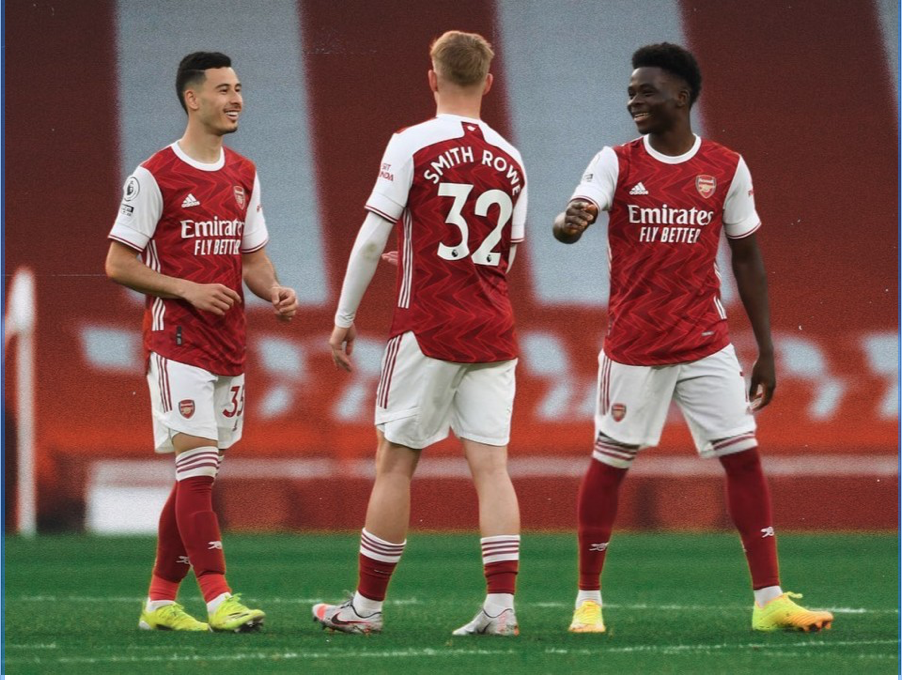
The outstanding success of the last year or so has been the breakthrough and development of 3 players in particular. The two from the academy are the source of greatest pride and pleasure.  We all dreamed of being that player, and through them we vicariously live our dreams. Both Saka and Smith-Rowe have come to the fore this season and it has been a pleasure to watch them.  I can’t remember the general level of excitement about the development of young players being higher since the mid-late 80’s saw the youth setup throw up Davis, Adams, Keown, Thomas, Rocastle and Merson in quick succession. 

The other one is Martinelli.  I can only hope that his non-appearance this year has been down to learning from mistakes of the past in terms of overplaying youngsters and nothing more sinister.  It would be churlish not to mention that he was an Edu signing, and under Sanllehi’s watch, so credit where credit is due.  

The re-signing of Balogun, when until the new year it really looked as if we would lose him, was, I think, a genuine sign that we may be beginning to get our house in order. From the admittedly small sample size I have witnessed, he looks to be a genuinely excellent prospect combining lethal finishing with speed, physicality and nous.  We are led to believe there are several others capable of making the step from Walthamstow to London Colney and on to the first team next season and this is a genuine reason for hope.

Much of the groundwork for these players development was done years ago, so I am not sure how much credit the Academy administration under Per Mertesacker can rightly receive.  Clearly though the Academy has been doing something right, notwithstanding this year’s poor performance for the U-23’s.  It should be said that a large number of players who would have expected to play at that level were loaned out this year which will have led the poor overall showing in the league. Steve Bould it would appear has fallen on his sword.  Its always a shame to see a club legend go, but on the understanding that his successor will be an improvement rather than just a replacement, I am happy to postpone making a call on that one.

Which leads on to the performance of the manager.  Let’s put this into context.   A first-time manager, managing a club in disarray off the pitch and sharp decline on it, during a period of global crisis. I don’t know about you, but I think I might well have wilted quite a while ago.  Given the performance in the second half of last season, culminating in very good performances to win both FA Cup and Charity Shield against two of the best sides in the country gave us hope for real development this season.  Unfortunately, the first 15 games of the season gave us a metaphorical kick in the nethers as far as those hopes were concerned.  At times during that period, and even since, we have appeared as incoherent and plan-less as at any time under Emery or the later days of Mr Wenger.   The second half of the season saw a spectacular improvement in terms of points gained if not necessarily performances.  I think Arteta can rightly be criticised for overplaying some players, one in particular, quite outrageously.  Also tactically there have been times when he seems to have outthought himself.  Playing Xhaka at left back works to an extent but really shouldn’t be contemplated beyond anything other than the most extreme of circumstances.   He has to learn from these mistakes, not just so as not to repeat them. He also needs to develop a coherent style.  There are just too many games when it is just not apparent what he has asked the team to do on the pitch beyond maintain possession of the ball.  This is all very well and I’ve yet to see the team that scored when they didn’t have possession.  But for too many games we have had to witness aimless “Horseshoe Football”.  Next season, with (deity of choice willing) the crowd back in the ground, I don’t think this will be tolerated.  There are times this season when I think the chorus of disapproval which has sadly been present for much of the 5 years or so would most likely have made its presence felt.  I hope he appreciates this and uses what will be his first genuine off-season period to reflect accordingly.

To return to where I started, I am hopeful that there are signs of progress off the pitch. More, much more, of the same please. On the pitch, we’re still in the change rather than progress state for me. I do however see the green shoots of recovery. Certainly, enough to look forward to next season and get behind the club and manager.  

« Newer Posts - Older Posts »