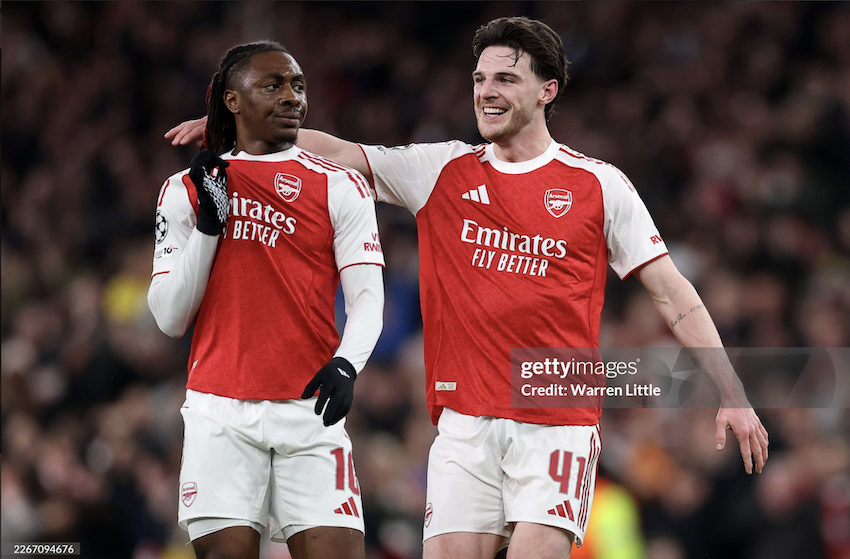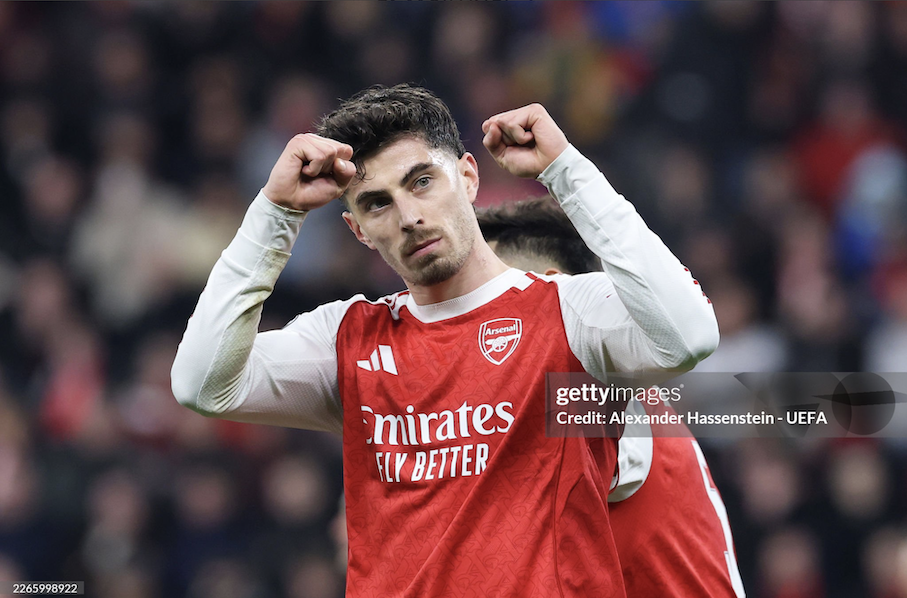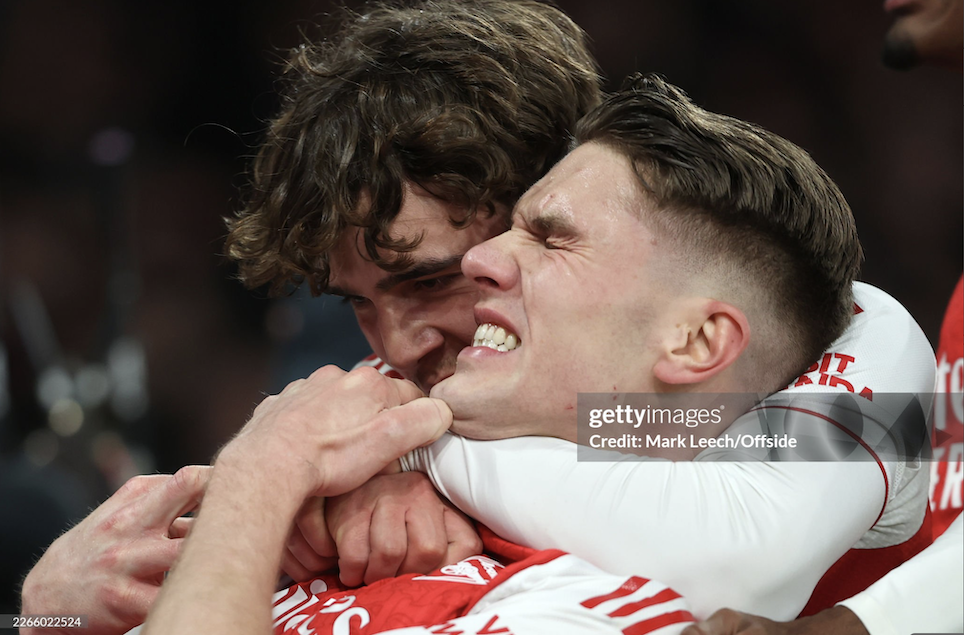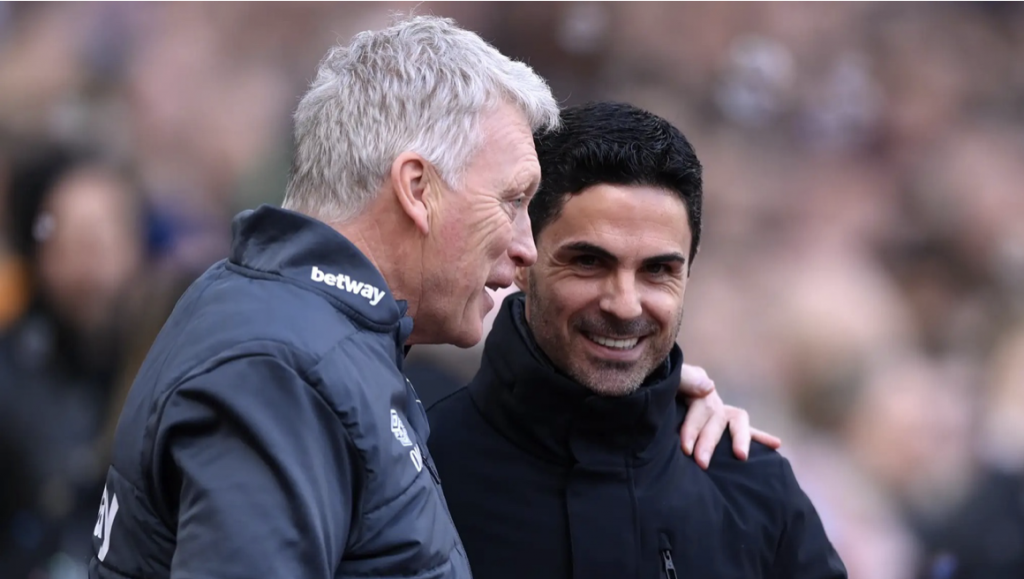
(Trust me. We’ll get there, together.)
“At the Arsenal match, I am told by someone who was there, a British and a Russian player came to blows and the crowd booed the referee…I noted with interest, as an instance of the vicious passions that football provokes, that the sporting correspondent of the Russophile News Chronicle took the anti-Russian line and maintained that Arsenal was not an all-England team.”—George Orwell, The Sporting Spirit. Tribune, 468, 10-11 (1945) available at, https://www.orwellfoundation.com/the-orwell-foundation/orwell/essays-and-other-works/the-sporting-spirit/). (Note, we’ve been taking pelters from the media for a very long time. 😊 )
During my research for this preview, I came across George Orwell’s account of a 1945 exhibition football match between Dynamo Moscow and Arsenal played under “adverse” weather conditions (pea-soup fog) at White Heart Lane. Writing for that venerable Labour weekly, the Tribune, Orwell used the contentious sporting event (Dynamo pipped Arsenal 3-4 in a match featuring a 12-man Dynamo, playing spectators, and sending-offs) as a backdrop for a more damning assessment of sport as a source of enmity which could erode international goodwill. Going so far as to conclude that “[S]erious sport has nothing to do with fair play,” he concluded that serious sport is “war minus the shooting.” Although I disagree with Orwell’s conclusion, I fully understand how the horrors of the recently-concluded World War informed his sensitivities regarding nationalism, and I also am very much persuaded by his structural arguments that a foundational element of sport’s appeal (especially competitive team sport) is tribalistic ritualism.
Even without Orwell’s more darkly contemptuous criticism and conclusions, competitive sport as a ritualistic proxy for combat is a compelling proposition. Teams and individual players with their various ties of class and kinship make readily useful avatars for polarization and have done so for millennia. Sporting competition, where participants consent to the suzerainty of obscure rules and abstractions in the service of creating a framework for a mutual contest of wills, provides a physical and psychic venue where sides can “battle” without wanton violence (unless Stoke-on-Trent is involved). The psychic and physiological effects of sporting outcomes on supporters, let alone competitors themselves, are well documented. The National Institutes of Health compiled numerous studies (back when the NIH actually practiced science) documenting vicarious experiential fluctuations in fan testosterone and dopamine blood levels with concentrations increasing for fans of victorious teams. (Bernhardt, et al, Physiol Behav. (1998) available at, https://pubmed.ncbi.nlm.nih.gov/9811365/). Numerous cultures across the ages have utilized competitive sport as a kayfabian stand-in for combat from the Mesoamerican ballgame (Ulama) to the Greek Olympic games to Mongol wrestling to Han Dynastic football to Roman gladiatorial competition to modern professional iterations. All this preamble is basically a lot of words to say that my self-serving interest in analogizing competitive sport and warfare is not a prima facie absurdity.
If you accept the premise that competitive sport and warfare analogies can yield fruitful discussions, you can travel down many intellectually-stimulating rabbit trails. For example, I have long considered drafting an article investigating the flexibility of this Arteta-led Arsenal analogizing it to a combined-arms army within the analytical framework of a (very) rudimentary melee-combat army classification system (heavy-infantry centric, combined arms, cavalry centric). Mercifully, this preview is not that article. However, there is a particular historical engagement that rhymes well with the occasion that brings you to the bar today…
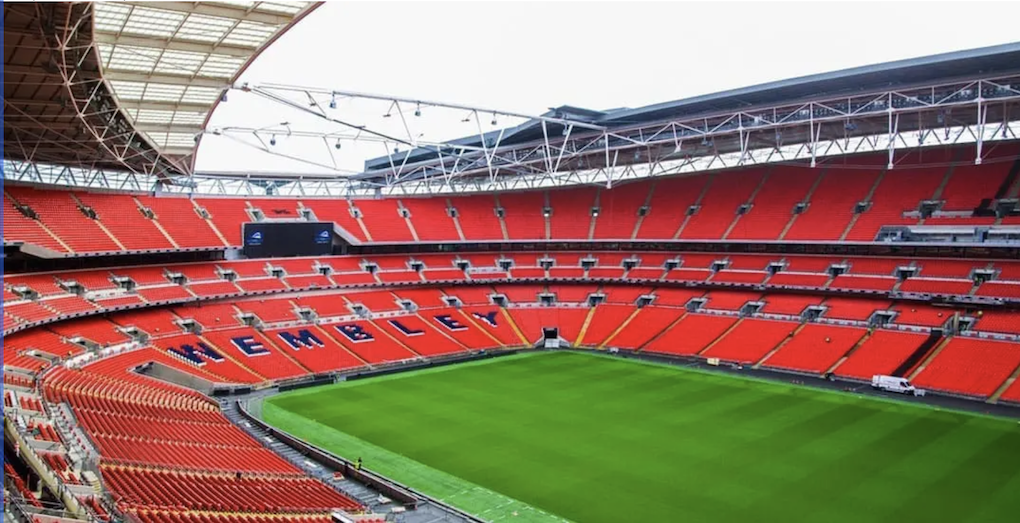
In late summer of 48 BCE, an ambitious Gaius Julius Caesar was on the ropes and, quite literally, fighting for his life. Only months earlier, he had openly defied the Roman Senate by crossing the Rubicon under arms. His political, military, and financial alliance with the other two most powerful men in the Republic had dissolved. His daughter, Julia, had recently died in childbirth, and, now, as rebel and enemy of the Republic, Caesar found himself bottled-up in central Greece, short on money and supplies, facing a larger Roman consular army led by one of the most decorated generals in the Republic’s history…his former ally and former son-in-law, Gnaeus Pompeius Magnus. Although the details of that battle, interesting as they may be, are unnecessary for this preview, it should could as no surprise to you, my dear reader, that for purposes of this particular analogy when Arsenal meet Manchester €115y at Wembley Stadium for the Carabao Cup Final, Arteta is Caesar and Pep Guardiola is Pompey.
This comparison works on several levels. Firstly, in the civil contest between Caesar and the Republican Legions under Pompey, Pompey was the elder statesman. He had the more storied military career with numerous campaign victories in Spain and Asia Minor. Pep has won titles in Spain, Germany, and England, and, through the alleged financial perfidy of the Abu Dhabi United Group, he has created a football juggernaut that has won the Premier League six times in the last seven seasons. Given that Arteta was quite literally Guardiola’s lieutenant at €115y, Pep is definitely the senior manager in this contest. Secondly, although Pompey’s army outnumbered Caesar’s, the latter’s troops were hardened veterans of higher quality than Pompey’s new recruits. We need not waste many lines of copy here detailing the egregious and rule-breaking spending €115y has employed over the past decade, but just this January, they led the Premier League in spending approximately £85M to recruit Antoine Semenyo and Marc Guehi. Arsenal continues to be outspent, but for this final we have assembled a squad of players whose quality from top to bottom arguably surpasses €115y’s (more on this anon). The Gunners are also battle-tested. What the “second-again” trope misses is the fact that, since the 2023-24 Premier League season, no team has accumulated more total points than Arsenal (233). Finally, as the two armies arrayed for battle, Caesar’s legions, roused by his rhetoric and their very real logistical need to fight a pitched battle, had a burning martial spirit; whereas, Pompey, goaded into battle by his Senate allies when he preferred to starve Caesar into submission, was resigned to fight, and his army fought like it.
On Sunday, a confident Arsenal, having lost just three matches in all competitions this season and undefeated since January 25th, will face a demoralized €115y that was ignominiously dumped out of the UEFA Champions League Round of Sixteen by Real Madrid. On Sunday, a younger, tactically-adept Mikel Arteta will lead his team of physically stronger and emotionally hungrier players against an older, yet wily, Pep Guardiola who manages a team whose reputation may belie its current potency.
The Opposition
Let me dispense with any notions of objectivity from the outset. I despise everything about Manchester €115y. From their no-mark, obtusely cynical, plastic fanbase to their, alleged, systematic financial rule breaking, €115y (and their other fellow petrostate/oligarch-owned Premier League clubs) are the standard-bearers for all that is wrong with modern sport. I revel in any setback for that odious lot from the Eastlands.
However, the team we will face on Sunday remains a dangerous opponent. €115y’s shrewd January acquisition of Semenyo has returned significant dividends. In a team whose prolific goal-scorer has somewhat recently gone off the boil (my Fantasy Premier League sacrifice by captaining Haaland will hopefully continue its deleterious effects on Sunday and throughout May), Semenyo’s seven goals in sixteen appearances are the primary reason why Arsenal’s Premier League lead over €115y (having played one more game) is only nine points. Haaland has scored three Premier League goals since the New Year. Hopefully this rich vein of poor form will continue on Sunday. Jeremy “Count” Doku and Omar Marmoush return pace and tricky movement to a recently bereft strike force, but Semenyo is the key threat for me.
In midfield, Nico Gonzalez and Bernardo Silva, that cretinous chode, provide technical balance to an older and less physically imposing Rodri, but key new additions Rayan Cherki and Tijjani Reijnders offer offensive cunning. Given that Phil “laid-it-on-a-plate-for-Eze” Foden has been less productive of late, I would isolate and press Rodri (if €115y play him as a lone “6”) or, if €115y deploy Gonzalez and Rodri in a double pivot, go man-to-man and impose our physicality.
The €115y backline, however, may pose the greatest concern for Pep. Gvardiol is injured and Marc Guehi is ineligible, so Khusanov and Dias will likely feature as the center back pairing. I would expect Nathan Ake (instead of Ryan Ait-Nouri) to feature on their left side and Nunes on the right. We should be able to exploit Khusanov who, while rapid, is young and frequently positionally daft. If €115y do play Ait-Nouri, I would expect Saka to torture the poor sod. On our left, Leo’s guile, tenacity, and technical skill should keep Nunes well occupied. Finally, although Pep has publicly stated that James Trafford will stand in goal, I think it’s a clever ruse for the media. If Trafford starts and we rock his world, Pep has a handy excuse, but I expect to see Donnarumma between the sticks.
Regardless, €115y has weaknesses in midfield and defense. They have dropped four points in their last two Premier League matches. Given their recent soft underbelly, I have a sneaking suspicion that €115y will eschew the low block tactics they employed at the Emirates in favor of a more expeditious, attacking approach. Although I would welcome that tactic, €115y’s potent strike force warrants a disciplined, if aggressive posture.
The Arsenal XI
The Arsenal enters the hallowed Wembley ground riding an ebullient wave of positive results. We lead the Premier league table by nine points. We are successfully into the Champions League Quarter Finals off the back of a comprehensive victory over Bayer Leverkusen. We have advanced to the Emirates FA Cup Quarter Finals where we will face Championship side, Southampton. After Eze’s thunderbastard against Leverkusen and Max Dowman’s revelatory exploits against Everton, the team’s morale has never been higher. But, although the confidence and enthusiasm of players and supporters alike are at a zenith, we do have some personnel and selection challenges. As of Friday, Ødegaard and Timber were not yet confirmed as eligible. Merino remains sidelined due to foot surgery, and there is a twenty-man roster limit for the final so some big names will be left out of the squad. Arteta also has to decide whether Kepa or Raya will start in goal and how he will deploy his forwards. Will he start Kai and bring Gyökeres on in the second half to run at tiring defenders? No matter the decision, it will be vital to physically dominate €115y and give them no hope. Furthermore, I believe Big Vik is ready to step-up, so I think Mikel will go with:
Kepa
Timber — Saliba — Gabriel — Calafiori
Zubimendi — Rice
Saka — Eze —Trossard
Gyökeres
In addition to thinking that Arteta, as a man of his word, has promised the Carabao Cup matches to Kepa, I have also heard that Kepa has done the media appearances in advance of the Final. Also, Raya and his wife just welcomed their first son’s birth, so it feels like a Kepa game to me. I also remember the 2014 FA Cup where Fabianski started (Fabianski at Wembley his arms out wide…IYKYK), so there is historical precedent. I also have a gut feeling Timber will be ready for this match, but, if he isn’t fit, I would expect White to start with Mosquera to substitute on sixty minutes or so. Calafiori and Trossard pair well, and Eze…well, I just want him doing boss, Eze things on either side of the “D”. Hopefully, Saka will terrorize his left back taking early shots and feeding early channel runs to Gyökeres. Finally, I also have a feeling this match might just feature a Zubimendi moment. Watch this space.
No matter who starts, it will be vital to take shots early, often, and from distance.
The ‘Holic Pound
I expect a cagey initial thirty minutes. Like a heavyweight boxing match, when both fighters possess the power to land a knockout punch, early rounds are about finding a rhythm and not making a fatal mistake. But we can impose ourselves on the €115y midfield and use that platform to target Khusanov. Since January, €115y have shown a tendency to drop their physical levels in the second half. Shots, shots, shots. If we can take a lead into halftime, I like our chances, and I fancy the team to deliver a dominant performance, 3-0 to the Arsenal.
Although Pompey’s and Caesar’s actual motivational rhetoric has been lost to time, Caesar’s apocryphal closing words were, “[Tonight,] we will pitch our tents in that rampart, from where their troops come about to perish.” (Lucan’s Tale of Two Leaders: Rhetoric and Syntax Preceding the Battle of Pharsalus. Jones, available at, https://share.google/hv1Cjz1eay7eFhHGR). After the battle, Caesar’s surviving troops did, indeed, sleep in their defeated countrymen’s tents. The younger general had defeated his elder counterpart, and a new age was at hand. May Sunday’s results follow a similar, albeit less violent, theme, and lay the foundation for a new age of Arsenal footballing accomplishment.
Enjoy the game tomorrow fellow ‘Holics and Gooners. What did she wear?
Come on you Gunners!
MCMBD