Feed on
Posts
Comments

Squad review 3 – Midfield

A Polo Mint, An Aero Bar, But No Turkish Delight
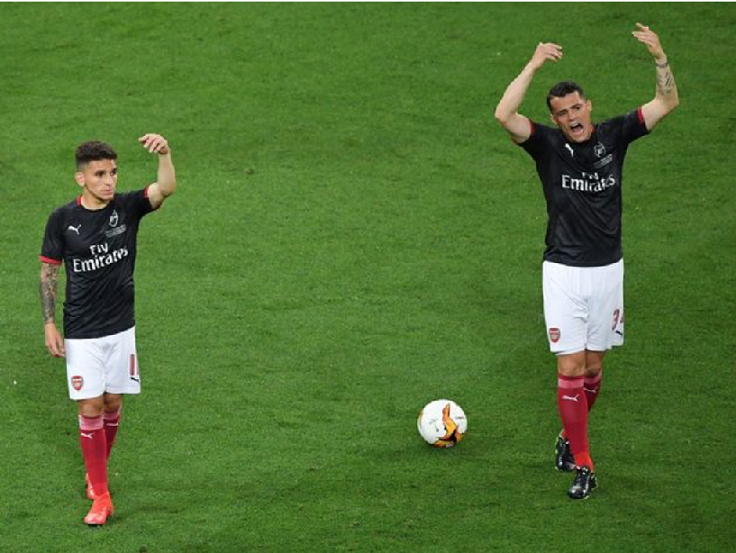
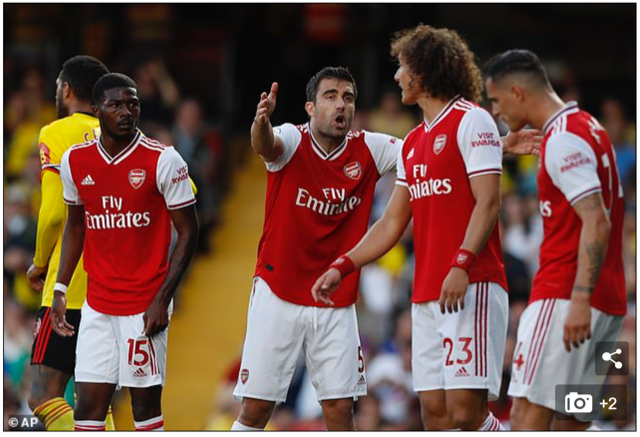
It’s apparently all in the arm movements. From 90min.com

Some thoughts on Arsenal’s midfield play in EPL Season 2019/20

What Do We Want?

The crown of creativity and skilled at unpicking the lock of the most tightly parked defensive bus; a ring of steel providing a nearly impenetrable barrier in front of our defence; the heartbeat that drives the whole team along at the tempo required by the master conductor; great contributors of extra, often unexpected, goals at critical moments; the showcase for the technical skills of a team hallmarked for a brand of football that has tens of thousands turning up week after week to be thrilled.

Your subconscious will by now have thrown right to the forefront of your minds the names and visual images of most of the players you’ve seen deliver excellence in all of these dimensions for Arsenal in midfield roles and so I won’t dwell on a single one. I know that you all know exactly whom I’m thinking about.

Did We Get It?

There have been times in the fairly recent past when several or even all of the above descriptors might have been used to characterise the contribution made by Arsenal’s midfield as a unit to the team’s collective play.

Season 2019/20 was not, by any stretch of the imagination, one of those times.

In fact, for much of the season a neutral observer might well have wondered at times whether Arsenal actually had a midfield, or any players who were acknowledged specialists in midfield positions.

Did we get it? Did we heck as like.

Mediterranean and Nordic Menus

Context is important and it goes almost without saying that quite apart from the ingredients in the mix, there are other factors that need to be considered before the perfect cake can be baked.

It’s critical that there is an overarching strategy and a consistent style of play that the players understand and buy into. While tactics may vary to cater for the style of play of opponents, they have to do so in a measured, not an apparently random way. The likelihood of success is increased significantly by regularly selecting the same players and playing them in the same positions. In this way, they master their roles, both individually and collectively.  This is a case where familiarity certainly does not breed contempt.

And as for the players themselves, it really helps if they can cover ground quickly, play with both feet and their head, see opportunities going forward and have the speed of thought and skill to action against each; and likewise, see danger coming, tackle well to win the ball and use it effectively when defending. The basics.

And so to the season that almost never finished; a season that has already been described magnificently here in the blog in preceding posts, saving me the effort of doing so!

2019/2020 – The Cast of Characters

Three different chefs. Three different dishes.

After more than 20 years of stability under Arsene Wenger, this was a season in which Arsenal endured the turmoil of three different ‘Captains at the wheel’, three very different characters.

Arsenal.com lists our midfield players as:

Mesut Özil, Lucas Torreira, Ainsley Maitland Niles, Joe Willock, Matteo Guendouzi, Granit Xhaka and Bukayo Saka. There is still no mention of Dani Ceballos.

We should feel encouraged to see three academy-graduates feature in this list alongside the captain of Switzerland, our famous German World Cup winner, Guendouzi the new sparkling talent, and Torreira, a Uruguay lynchpin.

On paper, particularly when Ceballos name is added, this is a list that encourages optimism with the caveats that i) all players play to their full potential and ii) the team is set up to play to a consistent set of tactical plans that key off the players’ strengths and individual talents.

And it would be remiss of me not to mention that when we played (often) with three at the back the two wing backs Bellerin and Kolasinac became part of a five-man midfield. Alexander Lacazette too was often charged with coming back there, either to win and carry the ball forward, or to ‘mark’ an opposing player.

And finally, lest we forget, in his report on the opener at Newcastle, Goonerholic wrote “Henrikh Mkhitaryan was accompanied in midfield by Joe Willock and Rhys Nelson”.

In short, we were not short of numbers in the midfield of 2019/20. Quality was another matter.

Act 1: Basque Soup – From League Leaders to the Danger Zone

An away win at Newcastle followed by a home win against Burnley had Arsenal sitting briefly at the top of the pole. The latter of these two games was the more notable from a midfield perspective because it was on that day that Dani Ceballos announced himself with a swashbuckling display that engendered real hope.  That game also signalled our first coach’s cautiousness when Lacazette and Ceballos, who had both looked capable of creating more, were substituted by Kolasinac and Torreira resulting in a nervy finish to a game that should have been won easily.

Emery set the team up unsuccessfully to defend and win on the break at Liverpool using Ceballos ahead of Xhaka, Guendouzi and Willock in midfield. The Xhaka/ Torreira double pivot with Guendouzi as creator fared better in a 2-2 draw with Spurs

At Watford, Özil, Guendouzi, Ceballos and Xhaka all started in a midfield that didn’t last more than an hour against the bottom club. Emery rung further changes by introducing Torreira and Willock in an attempt to find a more potent blend.  A deflating 2-2 draw resulted.

For Villa’s visit Guendouzi and Saka were introduced to add sparkle going forward. Arsenal won, but two easy Villa goals really highlighted our defensive fragility. A double pivot of Xhaka and Torreira, with Guendouzi as creator this time, brought another positive, a 1-1 draw at Old Trafford.

I was in the stadium for the next game, but still couldn’t quite believe that we beat Bournemouth 1-0.  This, for me, was the day that things began to unravel for Unai. In contrast to the sparkling football displayed by our ‘B Team’ in Europe, this eleven lacked both confidence and competence. Visibly unsure of what they were being asked to do and uncomfortable with passing out from the back, their ability to pass the ball disappeared completely and Bournemouth were able to ghost through a non-existent midfield to apply pressure that should have brought a different result.

Guendouzi, Willock and Xhaka lacked robustness in a 1-0 defeat at Sheffield. And that was followed by Crystal Palace and Xhaka-Gate. Xhaka had been a constant under Emery and on this day, Unai’s wagon lost a very big wheel and began to tilt toward the cliff edge.

Absent Xhaka, Emery turned to Özil for salvation. Away defeat at Leicester (with a back three) and two draws (Wolves, Southampton) revealed player confidence in themselves and their coach to be in the bucket, with midfield defending as solid as the centre of a polo mint.

The only surprise about Emery’s dismissal was that it came so late. Many players, many combinations, many different tactics, many, many mistakes, many incomprehensible communications left us on a dangerous vector.

Act 2: Pickled Fish – Staying Afloat.

Freddie Ljungberg’s brief spell on deck returned four points from a possible twelve, one encouraging win at West Ham, a depressing hammering by Man City, an even more depressing defeat against strugglers Brighton and a scrambled draw at lowly Norwich. Freddie quickly reinstalled Xhaka in his team, looked to Özil to wave a magic wand, liked the look of Torreira as DM and gave Guendouzi and Willock two opportunities each to display their wares. Nothing worked in terms of real creativity and at best, the midfield’s defending moved from polo mint to chocolate aero in terms of resilience.

New coach. Same players. Same outcome.  Predictably, this prompted the lazy conclusion from some that Wenger had ‘left the club with a pile of sh*te to play with’. The wiser amongst us weren’t swayed.

Act 3: Hot Paella – The Gleam of Silver in Mikel’s Eye.

Mikel Arteta’s impact on arrival was immediate and impressive. From the moment of his opening statement on arrival right through to his after-match summary of Arsenal’s FA Cup Win and Europa qualification, Arteta has personified lucidity in his communications and clarity of purpose on the task in hand.

“This is what we need to do. This is how we’re going to do it.  And, by the way, we have a great squad but we need to add more quality.”

Immediately, increased tactical coherence became apparent. Players, now absolutely clear on purpose and skilfully coached, grew measurably in confidence and commitment to meeting their coach’s demands.

And for MA8’s midfield, Xhaka was an imperative, a constant and a talisman – results were better when he played. The new boss hoped for Turkish delight from Özil, but swallowed hard after an extended run revealed that the German’s delicious days of craft at Arsenal were in a pile behind him.

Like his predecessors, Mikel fostered youth. Guendouzi and Willock, featured often with Saka, Maitland-Niles and Tierney adding midfield guile, bite and pace from central wing-back positions.

In Dani Ceballos, Arteta found a willingness to ‘work like a dog’ to meet his demands as a midfield player. In Matteo Guendouzi he found a petulant youth incapable or unwilling to fight his way off the naughty step and hence with no future at Arsenal.

Properly schooled, marvellously motivated, constantly cajoled, this time: same players, new (and much better) coach and excellent tactics, good team selections, propelled every department of the team forward and midfield was no exception.

Finale: A Hard Road Ahead

Arsenal’s successes in 2019/20 were attributable principally to Pierre Emmerich Aubamayang’s predatory instincts, some wonderful goalkeeping and Mikel Arteta’s motivational and tactical skills.

This was a season in which Arsenal’s midfield did barely enough to get by, often looked to be missing in action and in which several players were revealed to be lacking the skills, the temperament or the commitment necessary to drive the team to the level required and demanded by our coach.

On an overall average measure of the two key missions of the unit, midfield creation and defence, it would be difficult to ascribe a score higher than 5 out of 10 for either.

There was rarely ever evidence of Arsenal “bossing the midfield” and that is a situation that absolutely must be rectified as a priority in a summer in which, to quote the boss, “some hard decisions need to be taken”.

And so to the cast:

  • After an excellent start, a very poor middle, then a wonderful end, I thought that Ceballos was the standout MF player.
  • Xhaka returned from the death to become an Arteta favourite and guarantee his place for next year. Doubts remain however about his pace, his speed of thought and his tackling ability.
  • Torreira’s best role is DM and Emery’s early decision to play him further forward didn’t help him to shine in a season troubled by injury. We may need to look elsewhere than Fray Bentos for corned-beef supplies next year.
  • Özil’s race is run. Best for everyone if he can be found an exit.
  • Guendouzi, who promised much, delivered little and is the poorest header of a ball I’ve ever seen, is no longer a team sheet fixture.
  • Saka (in particular), Willock and Maitland-Niles can all be proud of significant advances in their careers. All three may not survive the summer of hard decisions (my preference is that they should).

So that’s my take. You all know I want to Partey next season. Please make that happen, Arsenal.

Have a great summer, Holics.
I said gyros, not feijoada…

Not unlike David Luiz or Shkodran Mustafi watching the ball settle into the back of our own net as I imagined, confusion, not to say panic, surrounded, my first halting drafts of this assessment of Arsenal’s defensive personnel.  Had I bitten off more than I could chew?  But where did this confusion really come from?  Was it in the players’ actual performances on the pitch, in my analysis of them, or a bit of both?  A confusing question to be sure, but further reflection convinced me there is enough blame to go around, what with back passes never reaching the keeper, red cards leaving us with 10 men when we were already under the cosh, and a litany of individual and collective errors that are harder to describe, so I won’t even try.

But to focus on some verifiable facts, Arsenal allowed an uncomfortably permissive 48 opposition goals, more than all teams above them in the table barring Chelsea. However, after Mikel Arteta’s arrival in late December their defensive organization saw both observable and measurable improvement. Only 21 of those 48 goals came under the new manager, who took charge ahead of the last match of the season’s first half. By my homemade calculations, Arsenal conceded 1.50 goals per league fixture under Unai Emery and Freddie Ljungberg, but only 1.05 under Arteta, an impressive reduction to be sure.  The most obvious defensive change Arteta made was replacing Sokratis with the nearly hopelessly-out-of-favour Shkodran Mustafi, a player who even his many critics must admit had a commendable run of games contributing to Arsenal’s stingier defensive performances either side of the COVID-19 interruption.

CENTRAL DEFENCE

One common feature of the team’s playing style under both Unai Emery and Mikel Arteta was their insistence on playing the ball out from the back, rather than launching long goal kicks to relieve the pressure. This cat-and-mouse game requires defenders who possess a very high level of ball control and passing skills, as well as pace and mobility afoot. Suffice it to explain Sokratis’ exclusion from the team, and Mustafi’s inclusion in his place, by the latter’s relative superiority in these areas.  Mustafi, at the age of 28, appeared in only 15 league matches, a surprisingly low figure considering he featured so prominently under Arteta.  But the German featured in just one of the 18 fixtures prior to Christmas. After Arteta was appointed, Mustafi’s fortunes saw a remarkable turnaround as he formed a solid partnership in central defence with Luiz. The German started 12 of 13 league matches beginning with the home draw with Sheffield United in January, but suffered a serious hamstring injury late in Arsenal’s semifinal FA Cup win over Manchester City that forced him out of the remaining games.  He was probably Arsenal’s most consistent defender under Arteta, who gave him his unwavering support, yet rumours persist that the club may sell the German this summer if they receive the right offer.

David Luiz endured a season of inconsistency, making high profile blunders while also providing important cohesion in central defence, incisive long diagonal balls to initiate attacks, and the skills to mentor Arsenal’s young defenders.  Despite his inconsistent performances, he played far more minutes in central defence than any other player over the entire season.  In June, Arsenal signed Luiz for another season, but can he be viewed as a reliable first-teamer?  He played most effectively in a back three, but will be 34 years old at the end of next season, so Arsenal really need to build the defence for the long term, playing to the strengths of younger and more mobile players.

Sokratis, whose Arsenal contract expires at the end of the upcoming season when he turns 33, started the first eleven league matches, partnering Luiz, and remained first choice through the Crystal Palace away match on 11 January. Thereafter he hardly featured at all except as an emergency right back, so despite his decent start Sokratis’ season was disappointing.  Recent press reports suggest that Sokratis could be sold this summer as well, but his experience still weighs in his favour.

The next five players are the young lions, the hope for future solidity, and the candidates to break into central defence.  The club needs at least one of them to step up and confidently shepherd opposing attackers away from danger, calm supporters’ frayed nerves, and assume a major role in helping to solidify Arteta’s excellent start.

• 25 year-old Calum Chambers, in the last year of his contract, enters a pivotal season, having shown he can be an effective Premier League player on loan at Fulham a couple of seasons ago, when he played in midfield. But while he still has significant potential as a defender, Chambers is recovering from the cruciate ligament rupture he suffered at the end of December.

• Centre-back Rob Holding, who turns 25 in September, endured another frustrating season on the fringes of the first team.  His highlights came when he featured in the teams that defeated champions Liverpool in the penultimate home league match, and Chelsea in the FA Cup final.  He rode the bench for long stretches to earn those opportunities, but he did well when called upon.

• 19 year-old French centre-back William Saliba made only 12 league appearances on loan at Saint-Etienne, due to an August hamstring injury and a November metatarsal fracture, so the value of his loan period is inconclusive. He has great physical attributes, and Arsenal have very high hopes for him.

• In January, 22 year-old Greek centre-back Konstantinos Mavropanos was loaned to Nürnberg in the second tier of the Bundesliga, where he made eleven league appearances. Last month Arsenal extended his contract, loaning him back to Stuttgart in the Bundesliga’s first tier.  Press reports suggest he could be sold.

• Having signed from Brazilian club Flamengo in January, 27 year-old Pablo Mari is unproven in the Premier League but Arsenal signed him to a long-term contract in June, so must have liked what they saw of him.  Mari featured in just two league matches before getting injured in the first game after the Covid-induced hiatus, so he has work to do to show Arteta that he belongs in the team.

Arteta worked wonders with the young players last season, so with luck the manager could see one of those five players have a breakthrough season.  With great luck (too much to ask for?) two of them could blossom next year.  In reality, it is a bit of a risk to depend on any of them stepping into a regular starting role in central defence, but there is certainly no guarantee that a new signing would do much better.  In any case, with Raul Sanhelli’s sudden departure on Saturday, Arsenal’s capacity to pull off additional major signings this summer has now been called into question.

FULL BACKS AND WING BACKS

Out wide at left-back, Bosnian international Sead Kolasinac started out as Unai Emery’s full-back in a back four, interchanging with the dynamic Bukayo Saka along the flank, but he finished as Mikel Arteta’s tentative choice as a left-sided centre-back in a back three. His propensity to bomb forward, leaving gaping holes behind, makes one wonder if he might be better suited to the left side of central midfield, but suffice it to say that Sead’s defensive skills were occasionally found wanting.

The brightest part of the defensive picture developed in the season’s second half with the return from injury of last summer’s Scottish addition, left back (or wing-back) Kieran Tierney.  His presence allowed Arteta to move Saka into more advanced positions, and Tierney gave the team an added dimension with his quietly assured efficiency, punctuated by bursts of pace and accurate crosses representing an additional attacking threat.  Tierney’s injury history remains a concern, however.

25 year-old Hector Bellerin finished the season strongly at right back after returning from the cruciate ligament and hamstring injuries that limited him to 14 starts, making this his most challenging season since he broke into the team nearly six years ago.  Bellerin no longer has quite the same burst of pace but has honed his positional skills in defence, and the youth of Tierney on the other side appears to have shifted some attacking duties away from Hector’s portfolio.

Cedric Soares, ex-Southampton and 29 years old at the end of August, was signed in January as Hector’s backup, but has not played a full 90 minutes in an Arsenal shirt.  Yet he was awarded a long-term contract in June.  Soares’ case baffles me a bit, as I don’t see what he adds to the squad other than injury cover, but I would be happy to be surprised if he proves his worth next season.

Media reports tell us that right back is not the preferred position of 22 year-old Ainsley Maitland-Niles, yet he did a decent job of replacing Bellerin without providing much attacking threat.  Showing his considerable strength and versatility, he filled in at left wing-back in the FA Cup semi-final against Manchester City and the final against Chelsea, and did a great job of shutting down opposition attacks on his side.

LOOKING AHEAD 

A few weeks of rest and relaxation will hopefully do the injury-plagued defensive unit a world of good heading into the new season, when the competition for places promises to be fierce. Writing this piece has made me realise just how many senior defenders are competing for so few places, and without naming names, the club needs to cull some dead wood in this area even without any new defensive signings.  Arteta’s task will be to hone existing and new personnel, and to mesh those defenders with the goalkeepers, midfielders and attackers to reduce those 48 goals conceded by a significant factor.  If Arsenal repeat their goals conceded performance under Arteta at the end of last season, they would concede only 41 goals extrapolated over an entire season, but Arteta and the players must have aspirations to do even better still.  It’s a big job but I think we are headed in the right direction based on our defensive improvement since January.

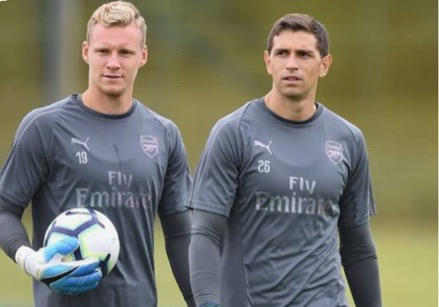
Our dynamic duo. Rivals and friends. From Pintrest.

There’s been much discussion lately over the use of scouts, data analysis and dare I mention them, agents as the best way to assess players and transfer targets.

When it comes to goalkeepers, most people will point immediately to the number of clean sheets achieved over a season and as a keeper advances in years, even over a career. This seemed to happen a lot in the case of Peter Cech, but does it really have any meaning? Cech began his Premier League career under the correctly despised Mourinho, behind the meanest defence of the day. He later played for Arsene Wenger who had a somewhat more relaxed attitude to protecting the goal – and as a consequence, the keeper found himself somewhat more exposed.

Did that mean he was a worse keeper at Arsenal? How much did age and slowing reactions have to do with it? How long did it take him to adapt to the different landmarks and metrics at the Emirates compared to the years getting tuned in to Stamford Bridge?

Thus, goalkeeping stats need to be carefully considered when assessing a keeper – and there is no shortage of them. It is hard to make comparisons for this season – Bernd Leno played a chunk more than the first half of the season behind Unai Emery’s chaotic and ever changing rear-guard and as we know, was replaced of necessity by Emiliano Martinez following a serious knee injury in the Cup tie at Brighton. Martinez has enjoyed the relative luxury of a more stable selection and formation (and organised!) in front of him, but Dixon, Keown, Adams and Winterburn it was not!

I have condensed the stats down to the following for those who like them: 

  Bernd Leno Emi Martinez
Age 27 27
Height (cm) 190 193
Weight (kg) 79 85
Premier League Starts 30 8
Premier League Minutes 2,649 771
 
Goals Against 39 9
Goals Conceded/90 Minutes 1.33 1.05
 
Shots Against 147 42
Saves 110 33
Saves % 0.776 0.810
 
Clean Sheets 7 3
% Clean Sheets 23.3 37.5

Stats for the various cup games compare similarly but I will not torture you with more figures – especially considering all the variables involved.

So, what does it all mean? All the figures point to Martinez actually being slightly better than Leno all round. However, Leno’s figures were achieved over many more matches, so does that mean he is more consistent than Martinez? That has to be a matter of conjecture and debate, so I guess as more of a “scout” than a statistician, it comes down to gut feeling – what you like – what you see…

I think we have two truly excellent goalkeepers, both of whom have performed miracles behind some frequently woeful defending. Overall, I feel that Martinez just gives us that little bit extra in terms of height, aerial dominance and reach – he is a “unit” not to be messed with when the likes of Burnley, Sheffield United and Watford are on the lookout for “cojones”. Both are brilliant shot stoppers and very good with their feet, which is very important in a modern keeper. My gut feeling is that I am just that tiny bit more confident with Martinez in goal.

I truly hope the club can hang on to both of them although neither is now going to be content sitting on the bench as a Number Two. If the club (not the owner!) has to raise money by selling one, who would you choose to sell?

I would hate to make the choice but would go with “gut feeling” – both mine and Martinez’s, who burst into tears twice, trying to explain what winning the FA Cup with The Arsenal meant to him after ten years and six loan spells, honing his trade around the leagues.

Martinez will do for me, although we cannot forget that it was largely Bernd Leno who got us to that Final (and kept us in the top half of the league table by saving points whilst every opponent was being given innumerable opportunities to score).

Super seasons for both of them but sometimes life, football and choices are tough.

Footnote: The decision about which of these ‘keepers is first choice and the inevitable corollary of which will be sold, will be postponed for at least 6 months with the bad news that Bernd Leno’s previously dislocated knee did not stand up to his return to training before the FA Cup Final. Moreover, he requires further medical input. Our thoughts are with Bernd for a full and speedy recovery from this set-back. Bernd probably feels that Guendouzi didn’t squeeze hard enough! There have also been reports that the club is looking to sign a back-up for Martinez for the start of the new season. Finally, after many years of febrile anticipation, we may sign the long-awaited Shay Given!

Part 3 – The Basque Saviour?

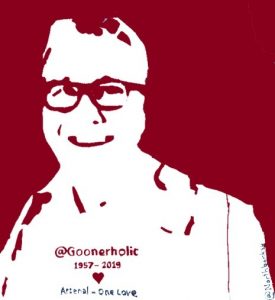
Mikel Arteta was a well-timed present from the Arsenal hierarchy to a disgruntled fan base. He was appointed just before Christmas and his first game in charge was at Bournemouth on Boxing Day. For us Holics it was a sombre time. After several months of increasingly poor health we heard on Christmas Day, of all days, that Dave Faber, Holic to us all, had passed away. So many of us felt a real sense of loss and sadness. As a new era was unfolding at Arsenal, so we had to come to terms with life without the insights, wisdom and geniality of a great man. He would have pooh poohed such sentiment and focused on the game at Bournemouth but boy did we miss him. A number of us decided to continue his admirable tradition and this blog is the result. 

Many of us on here saw, even in a rather frenetic game at the Vitality a sign of greater belief and organisation. In Arteta’s second, at home against Chelsea, a team that would loom large in his life over the rest of the season, we saw an excellent first-half performance followed by a collapse in the second half, where errors from Mustafi and Leno cost us a rather undeserved defeat. On New Years Day we welcomed Manchester United to the Grove. In the first half we played them off the pitch and led 2-0. In the second we managed the match beautifully and flattened the game in a very professional style. Belief coursed through the club again and it was possible to divine a sense of direction for the first time since Arsène was in his pomp. After disposing of Leeds narrowly in the FA Cup there followed a series of draws, most notable of which was a fight back at Stamford Bridge where, down to ten men after Mustafi sold Luiz down the river (penalty concession and red card followed), we trailed twice but saw a spectacular Martinelli equaliser followed by an unlikely late goal from Hector Bellerin that gave us the draw. After the fairly moribund draw at home to Sheffield United a number of us met to formalise plans for the blog and enjoy a delightful evening of Gooner fellowship despite the absence of our friend and mentor.

Progress at Bournemouth in the Cup was followed in February by a gradual improvement in the League and three successive home wins. During this period we won a difficult Europa League knockout tie with Olympiakos and looked enthusiastically to the second leg: a momentous game in more ways than one.

The threat of Covid-19 was becoming ever more real and after the game it was revealed that the Olympiakos president had tested positive for the virus. That was not the only big shock on the night, as we were taken into extra time and after a spectacular equaliser from our talisman Auba we conceded at the death to go out on away goals, our first defeat of 2020.

A few days later Arteta tested positive for Covid-19 on the eve of our game at the Etihad. Football in Britain was immediately postponed until further notice and the world took stock of a raging pandemic. Football was very far from our minds for some time to come.

Part 4 – Could we finish with a flourish?

Football resumed behind closed doors on 17th June with Manchester City welcoming Arsenal. It was actually the second game post-resumption, the first seeing the Villa keeper drag a ball from almost a yard behind his line to earn the point that ultimately rescued Villa and relegated Bournemouth. VAR, the innovation intended to provide fairer and clearer decisions, was not able to be used for a reason which was not properly understood by anyone before or since. VAR had been introduced in August and had done little to endear itself to Arsenal fans who usually saw us on the wrong end of decisions. In truth, VAR was not needed much at the Etihad. Arsenal had two players seriously injured in the first half, then saw substitute David Luiz concede a goal on halftime with an amateurish error…and then (there’s a theme here) concede a penalty with a stupid challenge. When we lost to Brighton after leading through a brilliant Pepe goal with Maupay, who had previously challenged Leno and caused him to seriously injure his knee, scoring at the death, our cup runneth over. It was a significant game as Emi Martinez came on to begin a fabulous run in goal in unlikely circumstances and Matteo Guendouzi (very understandably in my view)  had a flick at Maupay after the game. It was probably his last action in an Arsenal shirt. In the stand, sheltering under an umbrella, the parasitic Mesut Özil sat as an unused substitute. He had previously refused to follow almost all his teammates in taking a 12.5% pay cut to help the club through the challenges of the pandemic, and seemed happy to pick up his huge paycheque and not worry about being called on to play. Arteta, ostensibly, had problems.

They eased after a comfortable win at Southampton, and we progressed into the semi-finals of the Cup with a win at Bramall Lane secured by a late strike from the impressive Dani Ceballos. After despatching Norwich to open July we secured one of our very best wins of the season at Molineux, and may well have prevailed over Leicester at home had Nketiah not been dismissed for a challenge that was heavily debated in this bar. I thought the red card very harsh. A week later Trent Alexander-Arnold was guilty of something very similar as we came from behind to beat the champions Liverpool at the Grove. He received a yellow card. So much for VAR providing consistency. Sadly, in-between these matches we lost the North London Derby after leading through a Lacazette rocket, only to see an appalling Kolasinac backpass gift a very average Totts team an immediate equaliser. Alderweireld headed the winner with ten minutes left.

Few Gooners approached our Cup semi-final tie with Manchester City at Wembley with any optimism, but a really disciplined performance garnished by two superb Auba finishes gave us an impressive and deserved victory. Luiz, so awful at the Etihad was also superb as we repelled everything they threw at us.

Our remaining league games were something of an anti-climax, as we were very flat in losing to Villa and having lost a Europa place through our  league placing finished by relegating Watford with a fortuitous 3-2 win.

And so to Wembley and the Cup final, the denouement of our season. Could we reprise the City performance, or would the season end in another disappointing defeat to Chelsea as we had suffered in Baku?

Of course we know the answer now and it proved a very happy ending. What was most notable was the ability of Arteta to alter tactics after a torrid first twenty minutes and allow us to dominate the rest of the first half. We saw big performances from some of our most controversial players in Luiz and Xhaka but as ever we owed a huge debt to Aubameyang, one of the finest strikers we have seen even in this club’s illustrious history. For us to maintain the momentum Arteta has created we must retain Aubameyang’s services and also persuade Real Madrid to let us keep the excellent and much improved Ceballos. But we have a core of excellent young players, especially Saka, Martinelli, and particularly Tierney, who impressed enormously as the season moved towards its climax.

Much remains to be done, it always does  at the end of the season, with players needed to be re-signed or moved on, and we hold our breath as we await Auba’s decision. The roller coaster analogy is something of a cliché but is apt for this most extraordinary of seasons. At least at the end of this ride we have a sense of direction not apparent to me as I set out from Norfolk almost a year ago. It has been a marathon, one none of us hope ever to repeat, but that marathon has ended in an unlikely garland, the fourteenth such one for our club. If the trophy isn’t irreparably damaged let’s hope it kick-starts a new and very exciting era.

On a personal note I have been delighted to deepen my personal connection with some quite delightful companions; many of the denizens of this bar. Extremely sociable, caring and intelligent a bond has deepened that I believe would delight Dave Faber, and which has been a great comfort to me personally in a very testing year. Let us hope our futures are bright and positive and that we can enjoy great fulfillment through our wonderful club.

When it was decided that I should write the initial end-of-season review for a blog created in mid-season following the death of our great friend and inspiration, Dave “Goonerholic” Faber, I did, as is my wont, consider a number of ways of approaching it.

Simple chronology would be a bit bland for a season that lasted almost a complete year and the reality was that the whole tenor of the piece would be determined by what happened in the very last game…the FA Cup Final against Chelsea. I’m sure anyone reading this will know that outcome but let’s park that moment until later. I’ve written a two-part review, each part divided into two sections – effectively before and after Arteta, because I think that is the right way to tell a very complicated story. Let’s begin back last August with a bit of context.

Part One – The Fall of Emery

As I chugged towards London from my holiday home in Norfolk my mood was optimistic. Arsenal had begun the season with a solid 1-0 win at  Newcastle and were facing Burnley in our first game at the Grove. The previous season had ended on a thoroughly depressing note with defeat in the final in Baku, not just a defeat but a chaotic, depressing and mindless capitulation.

Action had been taken including the loan transfer of Dani Ceballos from Real Madrid, the acquisitions of Kieran Tierney and David Luiz on the last day of the window and the little heralded transfer of a young Brazilian, Gabriel Martinelli, facilitated by our new Technical Director Edu, one of the Invincibles. The big deal of our window was the £72 million purchase of Nicolas Pepe from Lille, a winger with a spectacular resume and a deadly left foot. Some of this was financed at the eleventh hour by the extraordinary sale of Alex Iwobi to Everton for a sum in excess of £30 million. Consider that the sale of Iwobi enabled us to finance the purchases of Tierney and Martinelli when you try to decide if last summer’s trading was a success! In all we parted company with 17 players at various levels of the club. Tidy housekeeping although we were still burdened with the extraordinary salary of Mesut Özil.

I returned a few hours later reasonably content with a hard-fought 2-1  victory in which Ceballos had run midfield in a very promising home debut and Aubameyang had done what he does best with a sharply-taken winner. When I reached Norwich I ran into ecstatic Canaries revelling in victory over Newcastle and a Pukki hat-trick. That memory shows how transient sporting happiness can be.

We went to Anfield the following week reasonably content with our lot as joint-leaders of the division only to see Emery set the team up in an extraordinary way to combat the newly- crowned European champions. We decided to give the two best attacking full-backs in Europe free rein to attack us out wide but countered this by putting Pepe and Aubameyang upfront to test the speed of Liverpool’s central defence. That might just  have worked if we had gone long and hadn’t tried to play through the thunderous gegenpress developed by Klopp, which eventually overwhelmed us. Add to that a stupid penalty conceded by Luiz (one of five during the season) and our goose was cooked. Ironically Pepe and Aubameyang had missed good chances early on but we got back into the game only when we completely rejigged the formation and our chances of any sort of result had long disappeared. That result started a number of supporters (myself included) wondering what Emery was really about. A 2-2 draw in the North London Derby saw us concede a poor goal and a totally unnecessary penalty after a horrendous Xhaka challenge but respond with a spirited comeback and a beautiful link-up between Guendouzi and Aubameyang for the equaliser. Gooner concern intensified in our next game away to Watford where 2-0 up at the interval we had to watch open-mouthed in the second half as Watford , who had zero points up to that moment, completely took over the game. Another penalty conceded by Luiz and a tragi-comic brainfart by the defence playing out from the back saw the game end in a draw and had it continued much longer we would undoubtedly have lost. Concern intensified still further after an interview with Captain Xhaka where he conceded that at 2-0 up at half-time against the league’s bottom side the team were ‘scared’.

A series of better results followed including our entry into Europe where we won our first three games. This included a late comeback at home in October to Vitoria Guimares where Pepe scored two sumptuous late free-kicks in front of no less than Scruzgooner. The chance to meet him and Countryman100 that evening was one of the high spots for me of what was about to prove a rollercoaster season. One clear bright spot was the emergence of Gabriel Martinelli as an exciting and prolific young striker. This young man who was supposed to be one for the future, started to indicate that he might have a significant part to play in the present with seven goals in five starts. Results were decent but a 1-0 setback at Bramall Lane against a very well- organised Sheffield United side highlighted a depressing lack of creativity.

Rumblings about Emery’s ability to take the team forward intensified. While results had been generally reasonable the quality of football was depressing and team morale seemed to start to suffer. We surrendered leads at home against Palace and Wolves and, in the former fixture had  ‘Xhakagate’. As we struggled to restore the lead after scoring twice in the first ten minutes and then being pegged back, Emery substituted Xhaka to the approval of the home crowd who hooted their derision. Xhaka clearly swore at the crowd, ripped off his armband and made his disgust at the crowd’s reaction clearly known. I watched the game with GSD and we were stunned by this display, especially as he was the club captain. It hinted at deeper problems in the dressing-room, and Emery dropped the Swiss international for the next five games. There seemed no way back for a man who tended to polarise opinion between those who couldn’t stand him and those who disliked him even more than that! Sport writes surprising scripts, and the rehabilitation of Xhaka has been one of the most dramatic stories in the Arsenal season.

Fan dissatisfaction was growing and for me reached a head when the late November home game against Southampton saw us give what I still believe to be the most inept defensive display I have ever seen from an Arsenal side. It really was that bad. A bemused Southampton fan I met on the tube after the game asked me how Southampton hadn’t scored at least six or seven goals. The answer was a combination of Leno and their appalling finishing. A last-minute Lacazette goal greeted with complete silence gave us a most undeserved point in a 2-2 draw.

So widespread was the disillusion that a change seemed inevitable. While there was some disagreement in Goonerholic’s bar, the majority favoured Emery leaving as soon as possible. Others felt he should be judged when he had a full defence to work with as he had been denied the services of his two first-choice full-backs, Bellerin and Tierney, and Rob Holding at centre back. The difficulty was that Arsenal were losing touch with not only the Champions League places but the Europa League as well. In fact, the spectre of relegation would start to loom if Arsenal continued to defend as we had against Southampton.

On the following Thursday we played Eintracht Frankfurt at home needing only to win to qualify for the group stage. I took my brother-in-law, a long-suffering Fulham fan, to the match. My usual travelling colleagues had warned him not to expect much but as Eintracht took the lead with about fifteen minutes to go he conceded that he had absolutely no clue how poorly Arsenal were playing. As the whistle blew on a 2-1 defeat I watched a dejected Emery tramp  towards the tunnel knowing that I would never see him in charge of an Arsenal team again. The following morning he was relieved of his duties and Freddie Ljungberg, another Invincible, placed in charge as caretaker manager.

The Emery era was at an end after less than a season and a half. He had emerged as something of a ‘bolter’ in Summer 2018 after it looked as if Arsenal were minded to appoint Mikel Arteta. The ministrations of his agent Canales, a friend of Raul Sanllehi, earned him the chance to impress the Arsenal selection committee and as the safer option he was appointed to fill the very big shoes finally left empty by Arsène Wenger.

Early indications were promising and in April 2019 we were in a superb position to qualify for the Champions League, possibly in third place, and we were poised to take part in the Europa League Final having vanquished Napoli and Valencia on their own grounds. Then came an inexplicable collapse in the league when Emery’s rotational abilities came into question; this was followed by the debacle of Baku. I am told that the idea of a new contract for Emery was floated in the close season but vetoed by the Arsenal board. That saved a pretty penny in extra compensation down the line.

Whilst as a poor linguist myself I am in no position to criticise someone who fails to come to terms with a language problem I always felt that the rather haphazard and often chaotic communication of Emery mirrored a confusion in his approach to the job. A decent man, he has resurfaced at Villareal and most decent Gooners wish him better fortune there than he enjoyed at Arsenal.

Part 2 – We love you Freddie

I have many memories of Freddie Ljungberg, nearly all of them immensely positive, but I’d never expected to see him shivering on the early December touchline overseeing an underwhelming home defeat to Brighton in his first home game in charge, having drawn at Norwich in his first match where we came from behind twice thanks to an Aubameyang brace. While Freddie of the red hair became an unlikely interim manager, and certainly the first ex-underwear model to take charge of our great club, his work with many of the younger players and his link to happier and more successful times made him a sensible stop-gap. That he was likely to be no more was evidenced by that Brighton defeat and a subsequent humiliation at home by Manchester City who had Mikel Arteta sitting on the touchline.

Freddie did shepherd us through to the knockout stage of the Europa on a chaotic night where a late Frankfurt collapse saw us top the group after we equalised late on in Belgium against Standard Liege. That seemed to sum up a very unusual and uneven qualifying campaign which had begun with a 3-0 win in Frankfurt. That encouraging win was a match notable for an excellent display by the reserve goalkeeper, Emiliano Martinez and a debut goal and stellar performance by young Bukayo Saka who began to emerge as one of the few success stories of the season.

Saka was required to deputise for some time at left back for Tierney, who dislocated his shoulder in a morale-boosting 3-1 win at West Ham where we had trailed at the interval. Martinelli and Pepe (with a cracker) put us ahead and Aubameyang clinched a game which, if we’d lost, would have seen us dragged into a relegation battle. After the subsequent City defeat Arsenal officials travelled to Arteta’s house where a deal was agreed to bring him to Arsenal. Freddie’s last game in charge was one of the worst Arsenal have taken part in during recent seasons, the pre-Christmas match at Everton – a stultifying, goalless draw. Everton themselves had recruited as manager the eminent Carlo Ancelotti. Many of the more risk-averse drinkers in ‘Holic’s bar favoured the sort of experience that Ancelotti could bring. Others felt that Arteta offered an exciting new vision of what Arsenal could be. Could he even steer us to a trophy this season? Surely that would be being too greedy.

So we waved goodbye to Freddie after a six game interregnum. In the circumstances he had done a creditable job but was clearly not experienced enough to be a long-term solution. Would appointing an even younger man who had never been in full charge of a club not be an even bigger gamble? We were about to find out.

« Newer Posts - Older Posts »