Feed on
Posts
Comments

As a failed professor of philology in Basel university once observed, thoughts are shadows of our feelings – darker, emptier and simpler. The paradox that he had to resort to an aphorism – which is but an articulated expression of thought — to convey his feeling about thought’s innate limitations was probably the kind of stressors that pushed him from the edge of harmless eccentricity to an inner world beyond the grasp of ordinariness.

While trying to accurately articulate my sense of elation, joy and a lack of that gnawing anxiety — which is otherwise so distinctive of a football fan’s daily existence – in following Arsenal this season I have often found myself lost for words. There is a genuine sense of celebration in how the team have played through the inevitable highs and lows of a season, have weathered difficult moments in matches, have come back with a sense of purpose and determination after a loss or draw, and even when the opposition had put up a stern test on days when we started slower than usual, they somehow found a spark of inspiration – collective or individual, collective and individual – to stamp their authority by winning the right moments. Watching us play, anticipating the matchday, discussing the performances after each match with fellow Arsenal fans spread around the world … it has been an exhilarating few months, and I don’t take a moment of that for granted. This has been an extraordinary season, and irrespective of how this season ends or how the future seasons unfold with this team under Mikel, I will always remember the sheer pleasure of following Arsenal in 22-23.

The home match against Leeds – after an international break that thankfully didn’t see Arsenal squad pick up any newer injuries, though players like Thomas Partey or Bukayao Saka might have benefitted more from getting rests – started with the away team demonstrating a resilient defense of low blocks which are now de rigeuer of visiting teams at Arsenal, complemented by the frenetic pressing and speed on transitions that were more of a reminder the whirlwind football of the Leeds under Bielsa. Arsenal had started a bit slow and circumspect, and it felt that they were patiently finding their way back to the groove that had the home crowd singing and dancing in the last match before the break.

The starting eleven was mostly as expected but with the surprise of Saka being given a rare break, sharing the bench with his academy friends Emile Smith-Rowe and Reiss Nelson. Eddie Nketiah was still recovering from the ankle injury that have kept him out for a few weeks already. Saliba’s back injury hasn’t healed enough over the last two weeks of rest – the young Frenchman had withdrawn from the France squad to recover – and while along with Tomiyasu’s season-ending surgery this makes us a little light on the defense, Holding has enough experience and quality to deputize, especially with Gabriel – who has been superb all season, in tandem with Saliba at the heart of the defense but also covering a large area on his left allowing Zinchenko to reinterpret the left-back role in a variety of novel ways – on his left and Benjamin “Benny Blanco” White as a right back playing some of the best football a right back can play.

Ramsdale

White – Holding – Gabriel – Zinchenko

Partey – Xhaka

Trossard – Ødegaard – Martinelli

Jesus

Gabriel Jesus, starting for the first time since his unfortunate injury in the winter World Cup, was greeted warmly by the supporters. Whether he scores goals or not, by now Arsenal faithful have realized that he always brings a rare combination of work ethics, professionalism, and technical quality that gives the team a cutting edge even when things aren’t otherwise going well. In his absence we have coped admirably well – Eddie Nketiah performed well beyond expectations and Leonardo Trossard has been a revelation since joining us in January from Brighton – and his return should make us even more unpredictable and dynamic in the attacking third.

Leeds had enjoyed the better attacking moments in the opening 15 minutes of the match, young Summerville particularly impressing with his pacy runs and ability to spin behind the defense with one touch passing. Ramsdale needed to make a save or two, and on the other end Martinelli had an effort blocked in the penalty box.

As the game progressed Arsenal started to dominate possession, control the spaces, and recognizing the danger the speedy front four Leeds possess in transition Arsenal players overloaded the midfield with captain Ødegaard dropping deeper and connecting the players, keeping control of the tempo and looking for rapid switches to find the front players in space. Jesus and Martinelli started to exchange positions and passes, and Trossard taking up various pockets of space to dynamically accommodate the two Brazilians to play their brand of more direct football.

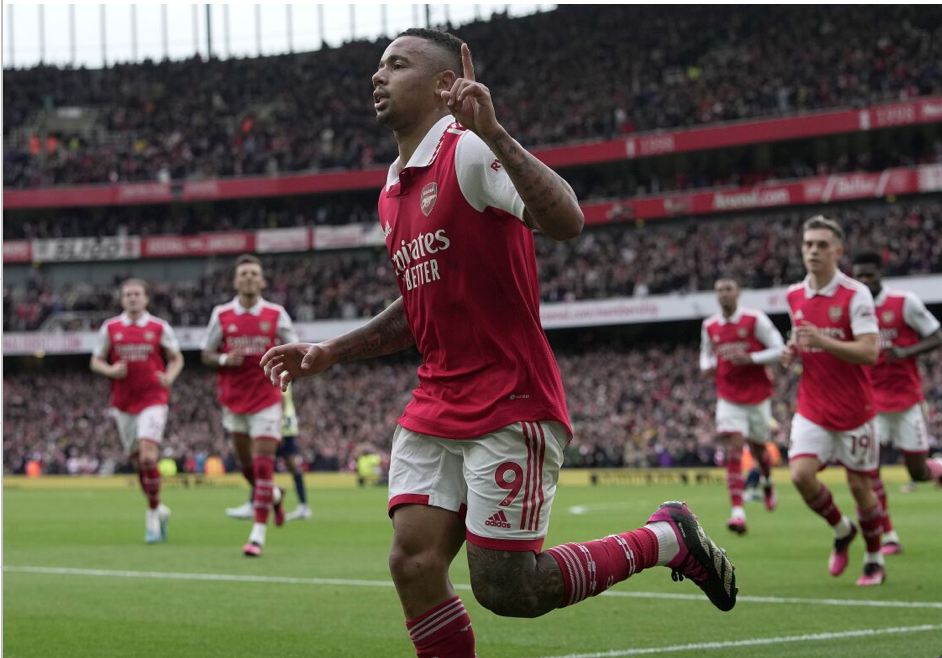
The first Arsenal goal came from such a combination. Jesus attacked the defense on our left side with ball on his feet and as he twisted past Ayling – former Gunner and a member of the 08-09 double winning academy team – the Leeds defender caught the Brazillian’s knee with the studs of his outstretched legs. As clear a penalty as they come — even VAR couldn’t possibly have overturned that decision. Ødegaard held on to the ball and gave the impression that he would take on the penalty duties in absence of Saka. But he was simply protecting it for the Brazilian center forward who stepped up to slot it coolly down the middle after sending Meslier to his right. His first goal for Arsenal since October, and the entire squad – playing eleven as well as the bench – came together to congratulate him. Afterwards at the end of the match Arteta elaborated how much his teammates love and admire Jesus for his humility, desire, hard work and how much of an inspirational figure he has become.

Arsenal 1 (Jesus 35’) – Leeds 0

The goal brought in a measure of sharpness and speed in our play that have been missing until then. And quickly after the second half started our quality and unpredictability in the attacking third helped us extend the lead. After a buildup involving Zinchenko and Xhaka, Martinelli manufactured a sliver of space for himself on the left side of the Leeds penalty box and sent in a perfect fizzing cross past the entirety of the Leeds defense for Benjamin White to ghost in and finish clinically – like the striker he could have been if he wanted to, one assumes – through the underside of the bar. It was the second goal of the season for our right back, and I come from a school of thought (feelings?) that insists that the best teams in the world always have fullbacks contributing with crucial goals.

Arsenal 2 (Jesus 35’, White 47’) – Leeds 0

After that goal Arsenal fully asserted their dominance and started to play with the signature verve and creativity that this team has formed a good habit of playing with. The third goal was an exquisite piece of art. Jesus, positioned on the right wing, fizzed in a delightful pass to Trossard who had taken up a central position at the edge of the penalty box. The Belgian cushioned the ball forward and moved away in a slanted run towards the far post while Jesus came into his vacated spot. Trossard delivered a cutting ground pass that the Brazilian then homed in with a classic striker’s finish from the outside of his boot. A fantastic return for Jesus, and let us hope he just carries on from here.

Arsenal 3 (Jesus 35’, White 47, Jesus 55’) – Leeds 0

Mikel made a couple of protective substitutions after that around the one-hour mark – brining in Jorginho for Partey and Saka for Jesus. Trossard moved back to his nine-and-half role and Saka took his customary right- wing position.

However, just a degree of complacency might have crept in our game at this time and the defense was slow to react to a rapid Leeds move down the middle. Kristensen’s shot deflected off Zinchenko to fly past the wrong-footed Ramsdale into our goal. Even though the original shot was goal bound, if not for the deflection one suspects Aaron would have saved it. He was not happy about losing the clean sheet once again and he had every right to let his displeasure be known to the team.

Arsenal 3 (Jesus 35’, White 47, Jesus 55’) – Leeds 1 (Kristensen 76’)

If Leeds had seen a slim ray of hope in that goal – and wanted to test Arsenal’s nerves in the dying stages by somehow scoring one more goal – it was quickly extinguished by our fourth goal that was simple, beautiful and beautifully simple. Ødegaard found himself with a bit of extra time with the ball on his left foot. He looked up to see Granit Xhaka making a late run straight down the middle of the two Leeds central defenders who looked puzzled by Granit’s excitedly waving raised hand; by the time the realization dawned on them of what was going to happen, it had already happened – Martin put in a cross that given that much time and space he can probably deliver with his eyes closed, Xhaka finished into the top corner with a flawlessly executed header. It was reminiscent of Aaron Ramsey goals, and white Xhaka is never going to be the kind of goalscoring midfielder Rambo was, he has shown enough times in this season that – as Mikel often mentions that if you believe you can score goals and get into the right positions you do score goals – he now has a few new effective tools in his box to continue to surprise us with the kind of contributions that no one has ever expected of him. Before Mikel, that is.

Arsenal 4 (Jesus 35’, White 47, Jesus 55’, Xhaka 84’) – Leeds 1 (Kristensen 76’)

Arteta brought in Tierney, ESR and Vieira for Zinchenko, Ødegaard and Xhaka. The team saw out the rest of the match professionally.

As this recapitulation of another enjoyable matchday outing was started with some words from the mad Saxon in Torino, let us finish this with one of his favorite phrases: amor fati. To be honest, it is rather easy for the Arsenal supporting soul to love their fate when goings are this good. In the weeks to come we might be offered a much sterner test. But whatever may happen, let us continue to love the fate of being an Arsenal fan, especially as we look around and see the rest of the clubs.

Victoria Concordia Crescit!
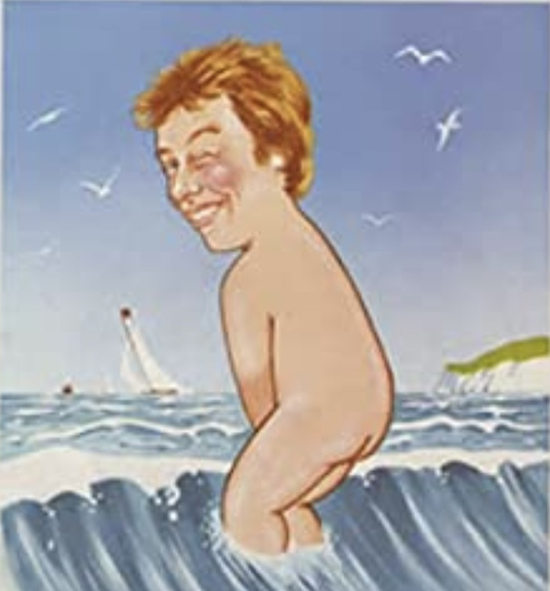
Well they were never going to fit, were they? While Emperor Spursyo claimed to be looking for something free flowing, colourful, exciting and, of course, not too expensive, he was persuaded to go for something with a very fixed structure, dour, boring and, despite that, fashioned from the most expensive fabric. He squeezed uncomfortably into the new outfit for a few months, but then a scratch here, an itch there, several awkward wriggles and one final, unbridled exhale and the whole lot burst and fell off. Just like it had, incredibly like it had, eighteen months before.

Emperor Spursyo does indeed run the most “new clothes” club you could ever imagine. Best new stadium in the world (we’re repeatedly told) with it’s very own brewery, cheese room, longest serving hatch in the world, an enormous cock on the roof, and an even bigger one at centre forward, but no trophies – well an ex-Gooner did win them one and got fired for his trouble – absolutely no football success. At all. It’s a shame the Emperor has sacked his latest tailor – I thought he was fitting him up good and proper.

Update: their managing director, Fabio Paratici, has now been handed a ban by FIFA and is barred from all football activity worldwide for 30 months following his part in the false accounting judgement against his old club Juventus. Looks like the wheels have now joined the clothes in falling off!

But enough of them – and enough of the Interlull as there it goes …… unloved by many, unwanted by most – except for some, probably mostly younger players – and unappreciated by almost everyone as yet another untimely interruption to the important stuff. The final Interlull of the season, thank whoever you pray to!

It’s a term we nearly all use these days but what exactly is an Interlull? As if we needed it in this of all seasons, it is a gap, a temporary halt to the domestic season, in order that our most prized, most talented, most pressured players can travel thousands of miles to play against Andorra, or Liechtenstein, or San Marino in some qualifying rounds to the main event which, this time, is the European Championships. I think. Or is it the Nations League? Or does the one now lead to the other? If anyone actually knows, congratulations are in order, and a request to leave a very (really very) brief explanation in the drinks.

What it really is, of course, is another chance for all our Premier League rivals to grab their most important players another couple of weeks of rest and recuperation on the basis of various spurious injuries, while Gareth Southgate runs the legs off Bukayo Saka, or flies Ben White all the way to Qatar to leave him on a bench and then fly him, humiliated, all the way home again. Oh, and money. Of course, money, as UEFA and FIFA contrive ever more ways to wring the very last drop of blood from the football stone.

It seems that Martin Odegaard is thankfully and somewhat miraculously okay after Man City agent Rodri’s failed attempt to bring his season to a premature end. The Spaniard also took out Kieran Tierney a few days later but the only report I have seen said that Kieran’s early departure from the pitch was not likely to result in an injury. Surely, Pep wouldn’t instruct his player to do that to our lads out of pure desperation? No, I thought not too. Bukayo Saka also appeared well enough after two more games, a brilliant assist and a world class goal last Sunday. I’m actually writing this on Wednesday/Thursday and there don’t seem to be any other rumours of new injuries to Arsenal players. Thomas Partey is in full training and deemed fit.

William Saliba will apparently miss out this weekend so Rob Holding, who had a very good game before the break, will fill in again. There is worrying news on football.london who are reporting that Saliba has an ongoing back problem that might require surgery. It remains to be seen whether the injury can be managed through to the end of the season. Surgery now would clearly mean an early end to his season. Takehiro Tomiyasu’s knee surgery has already decided his fate until June – something which is complicating the Saliba situation as Ben White is now our only functioning right back.

What the Interlull must not be allowed to be is an actual lull in our hunger, intent and impetus as we begin the run in to the end of this amazing season. There are just ten to go. Ten cup finals which will include games against four of the top seven and five relegation contenders. So no more lull and let’s get Inter them …. Sorry! All equally testing games in my opinion, and starting this weekend with Dirty Leeds.

So, why “Dirty Leeds”?

To be fair, I don’t think Leeds have been particularly dirty for a good many years, but for those of us who remember them from the 1970s, they will always be Dirty Leeds. Under the management of Don Revie, the spine of the Leeds team consisted of Jack Charlton, Norman “bites yer legs” Hunter, Billy Bremner and Johnny Giles in midfield, and even Mick Jones up front could look after himself, as they say.

In case there are any readers young enough, or older ones domiciled in countries far enough away, that they are unfamiliar with some of the goings on in the 70s, here is some footage of Francis Lee in altercation with Norman Hunter in a Derby v Leeds match in the 1975-76 season. Again, to be fair, Lee appears to be the aggressor here, but it followed a typical Hunter challenge which “Franny” found unacceptable, shall we say …

https://youtu.be/QALdVum0xEk

The sharp eyed may have spotted dear old Charlie George behaving impeccably, Commentary by John Motson, RIP.

And here’s Johnny Giles letting Kevin Keegan “know he’s there” –

https://www.youtube.com/watch?v=2BWAL7ADsi0

Leeds come, of course, from an uncompromising corner of the country in Yorkshire. A friend of mine moved to Leeds and asked his mate why the locals kept sticking two fingers up at him. Not wanting to hurt his feelings his friend said it was a form of respect and acceptance for newcomers to the area. “Oh”, said my friend, “that’s good ! A van passed me by this morning and I got a wave from the driver that suggests I’m already half way there!”

The friendly, helpful folk of Yorkshire have their version of the famous saying –

Red sky at night Shepherd’s delight. Red sky in the morning Shepherd’s warning.

Leeds version –

Red sky at night T’ old barn’s alight. Red sky int’ morning Bugger’s still burning.

The Teams

Leeds announced Javi Gracia as their new manager in the third week of February after seven games without a win under Jesse Marsch. Since then they have beaten Southampton and Wolves, drawn against Brighton and lost to Fulham and Chelsea. They sit currently in 14th place with 26 points from 27 games and a negative Goal Difference of -9.

In case anyone had forgotten, we are top of the league, say …. with 69 points from 28 games and a positive Goal Difference of +40.

In the wake of their financial crisis, Leeds were relegated from the Premier League in 2004 and the turbulent state of the club saw them drop again in the 2006-07 season into League One. They made it back into the Championship in 2010 and finally returned to the Premier League in 2020 after a 16 year absence. The last 5 games since then have seen 5 Arsenal wins at an aggregate score of 13-4, 0 draws and 0 Leeds wins.

It’s very unlikely that Mikel Arteta will deviate from his usual starting eleven at this stage, unless he feels Gabriel Jesus is ready to start. That will presumably see Leandro Trossard drop to the bench – a tough choice as he has done extremely well since his move in January. Nice problems to have though. Assuming all the Interlull bumps and bruises have repaired sufficiently, and considering the news above, I think we will see –

Ramsdale; White, Holding, Gabriel, Zinchenko; Odegaard, Partey, Xhaka; Saka, Jesus / Trossard, Martinelli

Leeds will be without Tyler Adams, Max Wober and Willy Gnonto. Adams has had hamstring surgery and is most likely out for the season. Javi Gracia has ruled out the other two for this weekend due to their respective hamstring and ankle injuries picked up on international duty.

The Holic Pound

It’s no surprise that we’re heavy favourites to win this one – Paddy Power are offering 1/4 on the Arsenal win, 9/2 against the draw, 9/1 against a Leeds victory. Slightly better prices are 15/2 on a 3-0 home win, or 24/5 for Gabriel Martinelli to be first goal scorer- those with Midnite and SBK respectively, although both mean nothing to me, I have to say.

Ticketing at The Emirates

There has been considerable consternation this season at how difficult it has become for non-season ticket holders to secure tickets. On the official website the club is claiming to have cancelled almost 2,000 memberships for touting offences this season. I did see online that they have also trapped thousands of “bots” that have been buying up tickets for resale abroad, with ordinary ground tickets going for up to £1,100 or £1,200. Is this the modern, inevitable result of success, or an embarrassing failure of cyber security on the part of the club?

Almost Finally

Congratulations to Arsène Wenger who was inducted to the Premier League Hall of Fame this week, along with old adversary Alex Ferguson. It seems they now get on well enough to have dinner together – pizza, perhaps? I was surprised to see that Arsene actually managed more Premier League games than Ferguson and had an admirably comparable record considering the gulf in resources. Although Ferguson won more titles than Arsene, he never went unbeaten – an incredible feat, as he recognised – and Arsenal were the only team to score in every league game in an entire season, which they achieved in 2001/02.

The Match

Kick-off is on Saturday 1st April, 15.00hrs, at The Emirates. There is no live UK TV coverage, again!, it being a Saturday afternoon, so good luck with the stream hunting. Referee is Darren England. VAR is Craig Pawson.

Try to relax, breathe and enjoy ……….

Nigel, we are most grateful to you for sparing the time to talk to us in what we know is a very busy schedule. Firstly, could you tell us about the formation of the AST and the role that it plays in the club and your role within the Trust?

The Trust was formed in June 2003 and was a joint initiative from AISA and the Supporters Direct, the umbrella body for all Supporters’ Trusts. It currently has over 3,000 paid up members and is active in many aspects of Club life. It was originally conceived around ownership and governance matters and before the compulsory purchase of all shares by KSE in 2018, the Trust owned six shares in Arsenal. When Arsenal Fanshare was in operation it had £3m of pooled funds actively buying shares in Arsenal. I have been the Treasurer of the AST since its formation along with Glyn Taylor, the Chair, also since June 2003. Campaigning against the Super League in 2021 was a key moment in the 20 years of the Trust’s existence. The AST sits on the Arsenal Advisory Board formed after the Super League debacle.

Although we are primarily looking to focus on the financial affairs of the club it is impossible not to discuss the incredible strides the club has made this year on the field. Can I ask if this has surprised you? Is there one overriding reason for our success or is it a combination of key factors coming together? 

Yes, I am as surprised as are the odds setters and pundits if you look back at pre-season predictions for this year! The addition of two big league winners such as Jesús and Zinchenko have clearly been pivotal but over three years since his appointment this is clearly now “Arteta’s team”. He has got rid of players he didn’t fancy for reasons of either attitude or ability and has been backed significantly in the transfer market over several transfer windows. After the end of season collapse last season clearly 22/23 was a make or break time for this project.

Perhaps we could begin by asking whether after three Covid-disrupted seasons of losses to 21/22, is the club back on track to re-establishing its self-sustaining financial model? 

Five seasons out of the Champions League “trough” has clearly had a massive impact on finances and outgoings have had to be pared back accordingly. The famous Josh line about having a “Champions League wage bill in the Europa League” was all about the need for financial sustainability. 

Are there any vulnerabilities around the club’s debt, which is rising again, although it is increasingly owed to the owner?  There does not appear to be much margin of error with the cash flow, although, again, it appears to be moving in the right direction?

KSE refinanced the long-term stadium loans during COVID which freed up cash trapped in reserve accounts – the Partey transfer money! This £217m KSE loan needs two years notice for repayment and is at an undisclosed interest rate, believed to be base rate related plus a margin. Arsenal also owe other clubs just over £200m for stage payments on players already with the Club. This is how transfers are structured now with a certain % paid on signing and then further payments over several years. This is debt that increased massively as Arsenal have got more active in the transfer market. And we shouldn’t forget the £17m owed to those loyal A,B, C and D bond holders who lent the club money when first building the North Bank Stand and then when there was a cashflow shortage in funding the Emirates build. 

It would appear that (tempting fate! ) we are certain to be back in the Champions League next season . It has been a long and painful road back but presumably this is transformational in boosting our finances? Fans, understandably tend to look at finances from the perspective of who we can buy with this extra money but in a general sense how will this level of increased revenue affect the club? 

A run deep into the latter stages of the Champions League can be worth around £90-100m with very little extra costs. Such revenues clearly impact wage paying ability significantly and we all know the almost perfect correlation between wages spent and final position in the league. At present Arsenal’s wage bill is the 5th largest in the PL. The wage gap to the “top four payers” is £130-170m per season or an extra 60% – the impact of CL money!

Of course, we’d love to know what scope we have for purchases in the summer. Are you able to hazard a guess at this? 

Arteta will be backed again in the summer window but as seen with Mudryk and Caicedo, Arsenal do appear to have limits beyond which they will not go. The average age of the squad is young and some say light in depth so CL money will definitely enable the wage bill to increase closer to the top four payers. The one thing Arsenal haven’t done well recently, Iwobi excepted, is “sell well” i.e., offload players for decent prices. This, though, is a reflection of the squad shambles when Arteta took over. 

There is inevitably huge emphasis on Financial Fair Play and the Premier League rules affecting financial sustainability. The dramatic backdrop of the mountain of charges against Manchester City and the extraordinary financial behaviour of Chelsea in the transfer market has been (and continues to be) a massive story. We also have the potential impact that the influx of new money coming into the Premier League through new owners (some of whom are effectively nation states) has had, which makes it imperative that we have to manage the club as effectively as we can. We don’t have the wiggle room of many of the clubs with whom we compete. What is the Trust’s view of our management model and where do you think we may have a particular advantage over our rivals? 

This is the massive debate raging. With PL clubs owned by Abu Dhabi and Saudi Arabia and with Qatar interested in MUFC, what chance do clubs who seek to be “sustainable” have? For this very reason Liverpool’s owners are seeking fresh investment as the massive midfield rebuild appears to be beyond their financial means. When you have distant and “passive” owners it is essential you have a top class executive team off the field as well as first class football related leadership. Arsenal have made several missteps in this regard but we are hopeful that the process of “upgrading” continues. 

Looking more widely at revenue, where might the club find future additional sources of revenue, especially given the current outlook for sponsorship/merchandising and broadcasting rights? We have fallen behind most of the other big clubs in growing revenue. The Emirates and Adidas deals run to 2028 and 2030 respectively, I believe, so there is not much scope for new revenue there for some time, but the PL broadcast rights run to 24/25 so one supposes this will have to be renegotiated soon? 

Gate receipts and broadcast income pretty much speak for themselves – sell all your seats, have plenty of games on TV and do well in the cups so these are “on field” revenues. You are right that we lag badly in the commercial / corporate sponsorship stakes and others continue to pull away from us. Adidas and Emirates provide about two thirds of commercial income. 

Despite the annexation of Highbury House by Gazidis and his team a few years ago we do seem to trail our closest competitors in raising marketing revenue. Are there signs that this may be changing for the better?

Not that I can see! The dubious and distasteful alliances with Rwanda and Socios have not been good signs of the “marketing” vision of the Club! But the football performance of the last 5/10 years has not warranted top level strategic partnerships. Hopefully the new era we hope to be entering in terms of competing and winning helps better deals flow. The catering and concession relationship at the ground with Delaware has many years to run so there is little chance of any improvement and uplift from this source of partnership income. 

We have achieved a very significant reduction in the wage bill with the removal of some of the higher paid (and underperforming) players. This wilil inevitably be offset by the new contracts that we have awarded to some of our most important younger players. Are you confident that we are in a healthier position in terms of revenue to expenditure than we were when Arteta took the helm? 

Most definitely. I don’t want to say it’s all about a “4th place trophy” but when you hear Klopp describe CL qualification as “imperative” you get what this means to wage paying = squad quality ability.

Might the club be able to make the development and sale of young talent a significant line item in the accounts, following the Chelsea academy model or even the Man City warehouse model that lets them sell first teamers (e.g., Zinchenko, Sterling, Jesús) lucratively as they have replacements coming along behind. Someone at one of the data analytics firms was saying recently that more of the data analysis work at the big clubs is now directed towards recruitment than first-team performance, not just to acquire tomorrow’s stars before they become stars and so can be bought for pre-star prices, but also to create a monetisable stream of youngsters to provide recurring income. Arteta has mused in the past about having ‘a squad that can sustainably be financed by itself’, which suggests those conversations have been held internally.

Arsenal currently have 28 players out on loan so maybe this is the case. Will Balogun be the first test case of a player we get under a decent term of contract, see them develop elsewhere, and then if no clear path to the first team emerges, sell them on? The Brighton model might be different as they can give young players decent Prem experience and then sell them for top fees as “Prem ready”. Arsenal trying that with Fabio Vieria appears less easy.

 And might we develop the knack of selling players for higher amounts than we have hitherto? We had lively debates last summer on the blog about the practice of selling players for peppercorn fees or virtually giving them away. Is this an area that we could improve or have football economics radically changed? 

We definitely need to improve. I mentioned Iwobi but that was more a result of the functional madness at Everton from an owner who not so long ago was “joint owner” of a 29.9% stake in Arsenal. And his co-owner is now a Sanctioned Individual following the Russian invasion of Ukraine.

In this, what seems like a surreal situation, we have seen the perception of the Kroenkes alter radically as far as most supporters are concerned. Was the ESL debacle a watershed moment in their ownership or have they just become more ‘savvy’ in their understanding of how football is run?

Don’t forget that two years on, Arsenal are still members / shareholders of the ESL. The “closed” nature of all major US sports means there is no sporting jeopardy or relegation as we call it! The US investors / owners across the board hate this and we fully expect more moves to pull up the drawbridge, ring fence revenues, keep more for the Big Boys, as this is their way. Arsenal is a financial investment for KSE, nothing more, nothing less. 

What do you think the future (next three years) might hold for Arsenal?  Do you envisage a change in ownership? If KSE remain in charge might they adopt a multi-ownership model embraced by other clubs and would you see any changes at the Emirates in terms of capacity? 

You have seen that Josh was recently appointed as co-chair with his father so the power transition might be happening. Josh was born on cup final day in 1980 and his father will be 74 this October. KSE / Stan K has traditionally not been a “seller of assets”, more an acquirer but I am sure they are looking closely at what MUFC might fetch, despite the billion or more of stadium / facilities spend that is needed at that Club. There were initially hopes about how the KSE ownership of the Colorado Rapids in the MLS might positively impact on Arsenal but again there are no signs of this multi-club model being adopted at Arsenal. As for stadium expansion at Arsenal – I just can’t see it for many reasons.

Nigel, we are enormously grateful for your insights. Can I close by asking you as an Arsenal fan what has this season meant to you and whatever happens at this season’s end are you excited for the future?

Having attended my first Arsenal match at Highbury in 1974 I have been lucky enough to have experienced some fantastic times over the last almost 50 years. I am now excited to be sharing this new dawn with my two sons who were too young to know much about the golden decade of Wenger. They have seen the years of high-class mediocrity and many 4th place trophies that led to the toxicity and eventual and inevitable forced removal of Wenger. The atmosphere this season has been brilliant and with such a young squad and a focused intense Arteta, I am really hopeful this upward trajectory leads to something more lasting. Football is precarious and fortunes can turn quickly but hopefully many of the essential on and off field building blocks are being slotted together to create something really special.

I take such pleasure from Dr F.’s literary contributions to this fine establishment that when he suggested during the World Cup that I pen a monograph on Herbert Chapman for this interlull, it would have been ungenerous to decline. So, with the editor’s indulgence, here goes.

Herbert Chapman was our first great manager. I will go further. He was the first great manager of any club and our greatest manager. Only Arsene Wenger approaches him in our pantheon, although Mikel Arteta, who has uncanny echoes of Chapman, may one day join them.

In his book on the evolution of the manager, a role as we understand it today, that Chapman created, Barney Ronay describes him as arriving from the future. What he brought with him was the warp and weft of the game decades hence.

Among Chapman’s innovations:

  • shirt numbers;
  • white balls and hooped socks for better visibility;
  • the white sleeves on our shirts;
  • tactics;
  • floodlights;
  • club branding (Gillespie Road Tube station renamed Arsenal);
  • picking the team;
  • rubber studs;
  • physical conditioning;
  • player nutrition; 
  • European matches and learning from great continental coaches like his friend Hugo Meisl (the FA frowned on that; bad form mixing with Johnny Foreigner, old boy).

The list goes on and on.

Arsene Wenger could be considered another time traveller who revolutionised how the game would be played and managed. But even in arriving from the future, Chapman was first.

North to South 

Like many outstanding managers, Chapman’s playing career was modest, a journeyman forward as the 19th century became the 20th. Eventually, he washed up at some Southern League club in the Middlesex marshes. Always in the shadow of two more successful footballing brothers and approaching his 30th birthday, Chapman decided in 1907 that it was time to pursue the engineering career for which he had studied.

Instead, a twist of fate saw him appointed player-manager at Northampton Town, a former club in the Southern League. A growing reputation as an innovative coach — and success — brought a move to Leeds City in the old Division 2 in 1912, where some sketchy allegations of war-time financial impropriety by the club resulted in a lifetime ban from football. After resigning from Leeds in 1919, he supervised a coal and coke works but was laid off at the end of 1920. A month later, Huddersfield Town, having made the ban go away, appointed Chapman ‘secretary’ as managers then were often called in a fair reflection of the nature of their job.

In May 1925, Arsenal posted an advertisement in the Athletic News:

Arsenal Football Club is open to receive applications for the position of TEAM MANAGER. He must be experienced and possess the highest qualifications for the post, both as to ability and personal character. Gentlemen whose sole ability to build up a good side depends on the payment of heavy and exorbitant transfer fees need not apply.

The outgoing manager Leslie Knighton had spent exorbitantly but to poor effect (sound familiar?). Arsenal finished two places off relegation in 1923-24 and one place off in 1924-25. With Chapman having buffed up his CV with an FA Cup and two successive Division One titles, Arsenal’s chairman Sir Henry Norris was so determined to secure him that he doubled Chapman’s Huddersfield salary and bought him a detached house in Hendon, then a leafier outer suburb of London than now. 

An English Heritage Blue Plaque adorns the red and white painted house at 6 Haslemere Avenue, east of the A41 from the Brent Cross shopping centre. Another first: no one connected with football had previously been so honoured.

Chaos to control

Chapman arrived to find a club in chaos on and off the pitch (again, sound familiar?). A return to Division 2 looked increasingly likely, while financial problems were undermining the long-dominant Sir Henry. 

Chapman seized the opportunity. He would pick the team (previously the chairman’s or directors’ prerogative), set the tactics (typically a task, such as it was, of senior players), and decide who would be bought to fit his unconventional way of playing.

Arsenal was what we now call a project, and there was no doubt about who was the project manager. Chapman was charismatic, a great motivator and held his players in thrall, but he was a firm disciplinarian. Woe betide anyone that did not buy into his plan (yet again, sound familiar?).

WM

Chapman applied his engineer’s mind to the scoring of goals. He believed these could be reliably manufactured with teamwork, discipline and organisation.

He did not invent the concept of the centre half dropping between the full backs; many teams experimented with that in response to a new offside law. Yet, he alone saw how to exploit the space this created in midfield by changing how wing halves and inside forwards played. He systemised this as the WM formation, converting the ubiquitous 2-3-5 pyramid into the 3-2-2-3 that every English team would play until 4-2-4 took hold in the late 1950s. 

WM was designed to space players around the pitch and retain possession through quick passing (‘combination play’), creating gaps through which his forwards could counterattack at speed. 

It was a tactical revolution and a prototype of Arteta’s positional play. Take a still image of Arsenal when Zinchenko moves into midfield alongside Partey with Xhaka and Ødegaard ahead, Saka and Martinelli out wide up front and Jesús in the middle, and you can trace a perfect W and a perfect M on it.

Then as now, the rapid passing and movement the formation demanded required fit players. Trainer Tom Whittaker was critical. Not the typical bucket and sponge man of the day, but a qualified physiotherapist, he introduced physical conditioning science to the game. If you think Bukayo Saka has bulked up, you should have seen what Whittaker did to transform a reedy vegetarian ex-milkman, Eddie Hapgood, into a strapping full back at about the same age.

5-year Plan

The project engineer also had a five-year plan to rebuild the team. 

His first addition was veteran Sunderland centre-forward Charlie Buchan. Plumstead-born and an amateur with Woolwich Arsenal’s reserves in his teen years, Buchan was acquired to be Chapman’s right-hand man as captain and, like newly bought Joe Hulme and Jack Lambert, to bolster an attack that had scored just 86 league goals in its previous 84 league games.

Chapman also had an eye for raw talent, such as Cliff ‘Boy’ Bastin, spotted as a 17-year-old playing for Exeter. Bastin is still the youngest player, at 19, to have won a league title, the FA Cup and an England cap. Chapman made Bastin the perfection of another of his innovations, the inverted winger, a fast, direct forward who cut in from wide and scored goals (think Martinelli or Bobby Pires, but better looking). It was Bastin’s club record of 178 goals that Ian Wright broke.

Hapgood and George Male, both fixtures in the Arsenal and England sides in the 1930s, were two other future greats signed as teenagers. But Chapman spent on stars how and when needed. He made David Jack the first five-figure signing in world football at £10,647 10s 0d (Google the old money, younger ‘holics). For his Martin Ødegaard-like orchestrator, Alex James, Chapman arranged a ‘job’ at Selfridges department store to supplement the maximum wages the club could officially pay him.

In Chapman’s first season in charge, Arsenal finished second behind Huddersfield winning its third successive title. The rebuilt attack doubled goal production. The defence, little changed, was as porous as before. Yet more goals scored than conceded brought wins (funny that!). 

The defence would not start to be rebuilt until the 1929-30 season when the Eddie Hapgood-Herbie Roberts-George Male back three was first put together. Before that, there had been three seasons of mid-table finishes, although also a first FA Cup final — the infamous loss to Cardiff City in 1927.

But in 1930, in line with the five-year plan, Arsenal won its first major trophy, the FA Cup. The first league title followed in 1930-31, and another in 1932–3. In the intervening season, we did the ‘almost’ double — second in the league and beaten FA Cup finalist. Chapman had made Arsenal the dominant team in England.

He had also made Highbury the finest stadium in England, building the West Stand to keep fans dry and coming to games in all weathers — Arsenal needed gates of 40,000 to break even — and the marbled East Stand to overawe opponents. Even the famous clock was his idea and a rebuff to the FA for preventing him from installing a 45-minute countdown clock that, ever the showman, he thought would add to the excitement of watching games.

Dynastic greatness

Chapman died unexpectedly in January 1934 in his Hendon home after developing pneumonia following a scouting trip up North. He was fifty-five and at the height of his powers. He died with his team en route to a third title in four years, secured under reserve team coach Joe Shaw, who became caretaker manager for the remainder of the season. 

To me, what makes Chapman our greatest manager is that he was dynastic. He was succeeded by the club’s managing director, George Allison, and then Whittaker. By the time Whittaker died of a heart attack in 1956, Arsenal had won another five league titles and two more FA Cups, all won by identifiably ‘Chapman teams’. How many more might there have been had World War 2 not stopped football for seven seasons with the team in its pomp?

Chapman stares back at us from grainy black and white photographs from 80 years ago, portly, suited and serious, looking more like the successful owner of an early 20th-century Northern engineering works than the first coming of the modern manager. But look again, and you will see the spirit and soul of the club we are today.

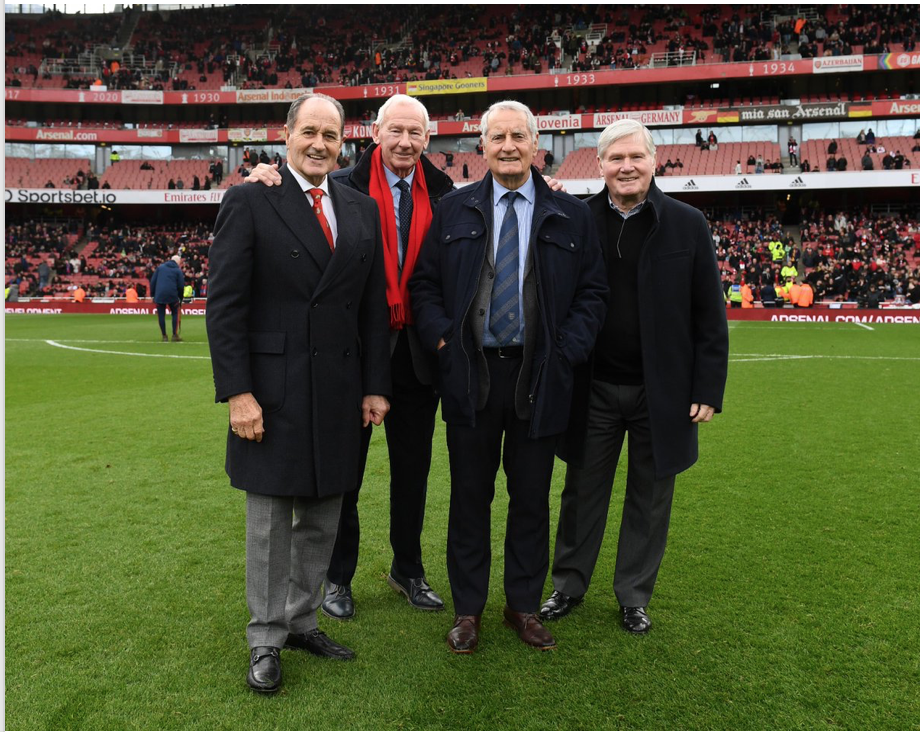
Arsenal moved eight points clear of Manchester City this afternoon with a comfortable 4-1 win over increasingly relegation-threatened Palace. As songs heralding Patrick Vieira rang out across North London, I sensed that the Arsenal family is becoming so enveloping and tight that part of the satisfaction from this win came from paying them back the insult to a bona fide Arsenal legend. And talking of bona fide Arsenal legends we were able to welcome four of them onto the pitch at half-time (see above). I’m conscious that these great stars don’t have the resonance they should have with the young supporters who inhabit the Stadium so raucously now but I could never really relate fully to Alex James and Cliff Bastin and David Jack when I was growing up. I have a chat scheduled with Bob Wilson tomorrow and I will be fascinated to learn what the legends thought of this crisp and enterprising performance.

There was no sign of a hangover from the disappointment of Thursday evening. As time goes on I consider it almost a blessing that we have now got the opportunity to focus and while I dislike Citeh intensely I see it as a huge advantage that they are committed on three fronts. Let the Cyborg go on scoring but let’s hope intense Premier League games prove a step too far for them as the season grinds on.

We picked a predictable team. Saliba was missing but his prospects seem relatively good for avoiding a long lay-off whilst I suspect Tomiyasu won’t be seen in an Arsenal shirt again this season. Trossard formed part of the three upfront and Capitola Rob Holding, the ‘bestie‘ of scruzgooner came in at centre back.

Palace hadn’t lost at Arsenal for five seasons, often because Zaha is a major headache to us and in the 10th minute he drove forward to fire in a near post shot which struck the post rebounded onto  the diving Ramsdale’s legs and then, rather fortunately, deflected past his post. Ramsdale then made a very brave save to block a Palace breakaway for the move to be ruled offside. The ‘keeper could have been seriously injured for no reason as a result of this ridiculous rule which allows play to unwind when officials know it is to be ruled offside. 

After this we started to dominate but just after the first quarter had passed I remarked to my neighbour that we had not forced their young keeper to make a save. Seconds later he didn’t save again but this was because Martinelli had latched onto a Saka pass and belted it into the far corner 

28 mins: Arsenal 1 Palace 0 

We were clearly dominating play now with Ødegaard playing brilliantly in the number 10 role, Saka shredding Mitchell, a top young full-back, every time he got near him and Ben White catching the eye with superb overlaps. I love watching this team with its complexity, intelligence and athleticism. They are so hard to contain and Palace just couldn’t do it.

Two minutes from halftime the enterprising White fed Saka and he drove it into the far corner for our second goal which survived a VAR check 

43 mins: Arsenal 2 Palace 0 

Half-time was reached shortly afterwards. One sensed Palace were extremely frazzled by the movement of the Arsenal front three and welcomed the break during which our legends entered the arena.

Half-time:  Arsenal 2 Palace 0 

I didn’t envy Paddy McCarthy’s job (was he the guy Val Doonican sang about with the goat?) trying to lift a team that had not won all year and who had been trying to halt a tidal wave of attacks. Xhaka had gone down with what seemed momentarily to be a serious knock but the man is made of Granit and is again getting forward more as he did earlier in the season. Ten minutes into the second half he scored our third latching on to an intelligent Trossard pass (his sixth assist since he signed) and bumping  the ball past the keeper 

55 mins: Arsenal 3 Palace 0 

The destination of the points was no longer in doubt but we did start to harbour some fantasies about a serious hike in our goal difference. Alas, the next goal went to Palace. Our set-piece coach might need a friendly word with Mr. Arteta as we conceded from a ‘bog standard’ left wing corner which hit Schlupp in the midriff and fell for him to knock the ball beyond Ramsdale. This passed a VAR inspection for handball.

63 minutes: Arsenal 3 Palace 1 

Zaha, who had forced a good save from Ramsdale early in the second half, then might have done better when well-placed, as he screwed the ball wide of the right-hand post. He is a player who always makes an impact when he plays against us. If he did this every time he played and if he were eight years younger he would be a no-brainer free signing but he also seems often to be afflicted with a weird form of labyrinthiitis which renders him incapable of staying on his feet when challenged. 

Arsenal continued as they began and among a rash of substitutions, Tierney took up the left-back berth and cut the ball back to Saka who lashed the ball home to make the points completely safe. Again VAR reared its ugly head but the goal was ruled onside .

77 mins: Arsenal 4 Palace 1 

Arsenal played out the rest of the game comfortably with Jesús getting more minutes and rather oddly Partey ending the game at right back, Kiwior came on for his league debut and twice we saw Arsenal defenders show exceptional pace to thwart Palace attacks firstly Tierney and then Kiwior. We have a big squad but we really don’t want to see Ben White getting injured.

Final score: Arsenal 4 Palace 1 

It’s almost surreal to find ourselves so far ahead at the top of the table playing such incisive and intelligent football. In our last four league games we’ve scored fourteen goals and conceded three. We now await what the interlull may bring and prepare to resume in just under a fortnight with Liverpool travelling to the Etihad and a few hours later us welcoming Leeds to the Home of Football. Heady times and evidence today that there is a thread of excellence that has run intermittently through the club over the last fifty years. Please may another special chapter be about to be written 

« Newer Posts - Older Posts »